
Top Commercial Food Equipment Manufacturers in China?
China’s commercial kitchen sector serves restaurants, hotels, bakeries, and institutional kitchens. Its manufacturers produce stainless-steel worktables, cooking lines, refrigeration units, dishwashers, and food-preparation machines. Choosing a supplier means more than comparing catalog prices. Equipment must suit daily service, local utilities, and the buyer’s maintenance capacity.
Look beyond product photos. Ask for material specifications, production details, quality-control records, warranty terms, and export references. For food-contact surfaces, verify the stated material grade and request documentation. Check dimensions, power requirements, temperature performance, and spare-parts availability before ordering. Small details matter. Customization may be available, but changes can affect lead times, testing, and after-sales support.
This guide explores how to assess leading Commercial Food Equipment manufacturers in China and what buyers should verify before shortlisting suppliers. No ranking replaces direct due diligence. When practical, visit a showroom or request a live video inspection. Compare quotations using equivalent specifications, and clarify who handles installation and service in the destination market. A polished supplier profile proves little on its own. Even experienced buyers can miss differences between a sample unit and a full production run. Evidence is not always tidy. The goal is not to find a perfect factory, but to identify reliable options for a specific kitchen, budget, and operating need.
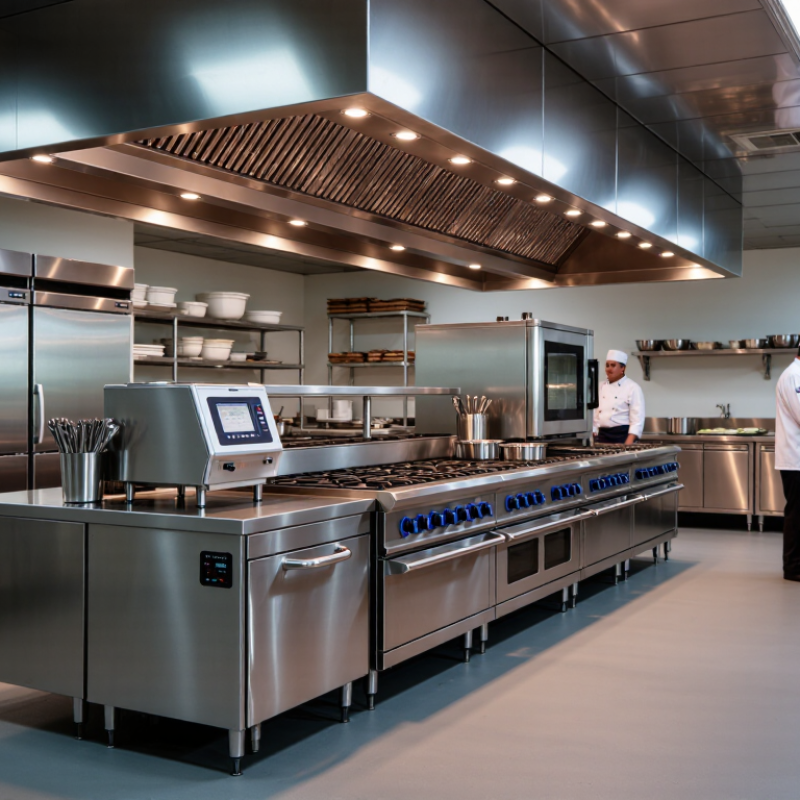
Commercial Food Equipment in China: Product Categories and Core Functions
Commercial food equipment in China spans several practical categories. Cooking lines include ranges, fryers, ovens, steamers, and griddles. Each serves different menus and peak-hour demands. Refrigeration equipment includes upright cabinets, chillers, and cold rooms for safe, steady storage. Food preparation machines, such as mixers, slicers, and vegetable cutters, reduce repetitive work. Dishwashing systems and ventilation hoods support cleaner, more orderly kitchens.
Core functions should guide equipment choices, not appearance alone. A combi oven can roast, steam, and bake, while a commercial mixer handles dough or sauces in larger batches. Refrigerators need suitable temperature control and enough space for daily stock. Check dimensions, power requirements, cleaning access, and rated capacity against the kitchen layout. A unit that looks efficient on paper may slow service if staff cannot load or clean it easily. That detail is easy to miss.
Tips: Measure doorways and work aisles before ordering. Ask for clear capacity and maintenance instructions. Compare test results with your menu and expected serving volume. Leave room for ventilation and routine cleaning; cramped installations often create avoidable problems.
Top Commercial Food Equipment Manufacturers in China? - Commercial Food Equipment in China: Product Categories and Core Functions
Product-category overview. The table describes common commercial food-service equipment and its functions; it is not a ranking of manufacturers or brands.
| Product Category | Typical Equipment | Core Functions | Common Applications | Key Selection Considerations |
|---|---|---|---|---|
| Cooking Equipment | Ranges, griddles, fryers, ovens, steamers, and woks | Applies heat to cook, brown, fry, bake, roast, or steam food. | Restaurant kitchens, hotels, canteens, and food-service operations | Cooking capacity, heat source, temperature control, ventilation needs, and applicable electrical or gas supply |
| Refrigeration and Freezing | Reach-in refrigerators, freezers, prep tables, and display cases | Keeps ingredients and prepared foods chilled or frozen to support safe storage and service. | Food storage, ingredient preparation, and chilled food display | Usable capacity, temperature monitoring, airflow, door access, cleaning, and ambient operating conditions |
| Food Preparation | Mixers, slicers, vegetable cutters, food processors, and dough sheeters | Cuts, mixes, kneads, blends, or portions ingredients to reduce manual preparation work. | Bakeries, kitchens, catering facilities, and food-production areas | Batch size, processing speed, removable parts, guarding, cleaning requirements, and food-contact materials |
| Dishwashing and Sanitation | Undercounter, hood-type, and conveyor dishwashers; sinks and drying racks | Washes and rinses reusable tableware and utensils; supports hygienic warewashing workflows. | Restaurants, institutional kitchens, and high-volume dining facilities | Racks or items processed per cycle, water and drainage connections, detergent compatibility, and local sanitation requirements |
| Food Display and Holding | Hot holding cabinets, bain-maries, heated display cases, and refrigerated counters | Holds food for service and presents hot or chilled items for customer selection. | Buffets, cafeterias, bakeries, takeaway counters, and self-service areas | Food type, holding temperature, display access, capacity, humidity control, and applicable food-safety rules |
| Beverage Equipment | Coffee machines, tea brewers, blenders, ice makers, and dispensers | Brews, blends, chills, or dispenses beverages and ice for service. | Cafés, bars, hotels, restaurants, and beverage stations | Expected servings, water quality and connections, cleaning cycles, ice output, and beverage menu |
| Bakery Equipment | Deck and convection ovens, proofers, dough mixers, and sheeters | Mixes and shapes dough, supports proofing, and bakes bread, pastries, and other baked goods. | Commercial bakeries, pastry kitchens, hotels, and in-store bakeries | Tray or batch capacity, temperature consistency, available space, power supply, and production workflow |
| Stainless-Steel Workstations and Storage | Work tables, sinks, shelving, cabinets, and wall-mounted racks | Provides washable work surfaces, storage, and designated areas for preparation and cleanup. | Commercial kitchens, wash areas, and food-preparation rooms | Dimensions, layout, load requirements, weld and finish quality, cleanability, and suitable food-contact materials |
Related Posts
-
Top 10 Commercial Food Service Equipment Types to Buy
-
How to Choose Commercial Restaurant Equipment?
-
Top Commercial Food Equipment Trends for 2026 What to Expect?
-
China Best Commercial Kitchen Equipment for Global Buyers?
-
What Is the Best Commercial Kitchen Equipment from China?
-
China Top Food Service Equipment Suppliers?