What Is the Best Commercial Kitchen Equipment from China?
Choosing the best commercial kitchen equipment from China requires more than comparing prices. It requires evidence. Grand View Research valued the global commercial kitchen equipment market at approximately USD 89.5 billion in 2023. Its report also forecasts continued growth through 2030. This expansion reflects demand for efficient cooking lines, safer refrigeration, and automated food preparation.
For buyers searching “Equipment Commercial Kitchen,” China offers broad manufacturing capacity. Stainless steel worktables, combi ovens, blast chillers, induction ranges, and dishwashers can often be sourced from one production network. However, a low quotation can hide weak insulation, unstable temperature control, or difficult maintenance. Practical evaluation should include factory audits, sample testing, spare-parts availability, and documented quality procedures. Look for material grades such as 304 stainless steel where hygiene and corrosion resistance matter. Check electrical ratings before installation. Small details matter.
Energy performance deserves equal attention. ENERGY STAR reports that certified commercial refrigeration products can reduce energy use compared with standard models, depending on equipment type and operating conditions. This matters in kitchens running eighteen hours daily. A refrigerator that seals poorly may waste power quietly. That cost appears every month. Compliance documents also require careful review, including applicable safety, electrical, sanitation, and import requirements in the destination market. CE marking alone does not prove overall product quality.
The best supplier is not always the cheapest. It is the one that provides consistent output, traceable testing, clear warranties, and realistic delivery commitments. Even this approach has limits. Factory claims still need independent verification, and published market figures may use different definitions. A careful shortlist is therefore more reliable than a rushed purchase.
Commercial Kitchen Equipment: Categories, Functions, and NSF/ANSI 4
Commercial kitchen equipment from China covers practical categories, including cooking ranges, convection ovens, fryers, griddles, steamers, and hot holding cabinets. Each unit serves a different workflow. A griddle supports fast breakfast service, while a combi-style oven handles roasting, steaming, and baking. Check power requirements, gas type, capacity, controls, and cleaning access before comparing prices.
NSF/ANSI 4 focuses on commercial cooking, rethermalization, and powered hot food holding equipment. It addresses hygienic construction, food-contact surfaces, cleanability, and safe design details. However, a supplier’s statement alone is not enough. Request current certification documents, test reports, material specifications, and product photographs. Inspect welds, door seals, drain points, and rounded corners. Small gaps can trap grease and food particles. That detail is easy to miss.
Tips: Match equipment to your actual menu and service volume. Measure doors, corridors, and installation space first. Ask for spare-part lists and maintenance instructions. Confirm whether the unit supports your local voltage and ventilation system. A lower purchase price may become expensive after installation. In practice, polished catalogs can hide unclear specifications, so technical review matters. I would also leave room for doubt: certification may apply to one model, not an entire product range. Verify the exact model before ordering.
China’s Supply Base: Export Data, Factory Audits, and NAFEM Benchmarks
Choosing commercial kitchen equipment from China requires more than comparing catalog prices. Export data gives a useful starting point. China Customs reported total goods exports of RMB 23.77 trillion in 2023, showing the scale of its manufacturing network. However, national export volume does not prove consistent equipment quality. HS-code data from UN Comtrade should be checked by product category, destination, and year. Numbers matter.
Factory audits reveal the practical details that spreadsheets miss. During an audit, inspect stainless-steel grades, weld finishing, insulation, electrical testing, and food-contact documentation. Request production records, calibration logs, and batch traceability. A clean showroom can still hide weak assembly controls. I would not treat one successful audit as permanent proof. Recheck critical suppliers before large orders.
NAFEM’s 2024 market reporting places the North American foodservice equipment and supplies market above 14 billion dollars annually. Its benchmarks emphasize replacement demand, labor efficiency, energy use, and equipment reliability. These factors should shape Chinese sourcing decisions. Ask for heating recovery times, daily energy consumption, service-part availability, and test results under commercial workloads. A lower purchase price means little if a failed thermostat stops a busy kitchen. Specifications can also be misunderstood across languages, so every tolerance, voltage requirement, and warranty response time should appear in the contract. The process is not flawless. That is exactly why export records, factory audits, and NAFEM benchmarks must be reviewed together.
Comparing Chinese Ovens, Refrigeration, and Food-Preparation Equipment
Choosing commercial kitchen equipment from China requires comparing performance, serviceability, and operating costs. Chinese ovens often offer flexible configurations, including convection, deck, and combi models. In practice, stainless-steel interiors, even heat distribution, and stable steam control matter more than a low purchase price. The commercial ovens market was valued at approximately USD 2.7 billion in 2023, according to Fortune Business Insights. Energy use deserves attention. A poorly insulated oven can quietly increase monthly costs.
Refrigeration needs a different test. Ask for temperature recovery data after frequent door opening, not only the advertised storage capacity. Grand View Research estimated the global commercial refrigeration market at about USD 39 billion in 2023, with continued growth through 2030. Chinese manufacturers commonly provide upright cabinets, under-counter units, blast chillers, and cold tables. Check compressor specifications, refrigerant compliance, gasket quality, and local technical support. A cheap unit becomes expensive when replacement parts travel slowly.
Food-preparation equipment includes mixers, slicers, peelers, cutters, and stainless worktables. Foodservice operators should inspect welds, blade guards, cleaning access, and noise levels before ordering. The Food and Agriculture Organization emphasizes hygiene by design, yet some catalogs explain cleaning procedures poorly. That is a warning sign. Request test videos, electrical certifications, spare-parts lists, and a written warranty. Factory audits or independent inspections add evidence, although they cannot predict every failure. I would also test one unit during a busy service period. Specifications look precise; kitchens are less predictable.
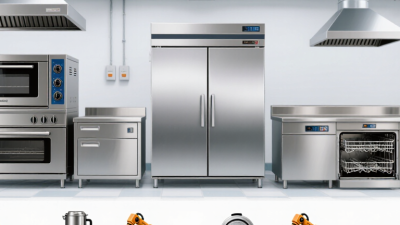
The chart compares representative operating-temperature ranges commonly specified for commercial ovens, refrigeration units, and food-preparation equipment manufactured in China. Exact performance varies by configuration, insulation, controls, and local certification requirements, so model-level specifications should be verified before purchasing.
Compliance Checklist: CE, UL/ETL, HACCP, and ISO 9001 Requirements
What Is the Best Commercial Kitchen Equipment from China?
The best equipment is not simply the cheapest or most attractive option. It should match your kitchen’s voltage, workflow, cleaning routine, and local safety rules. During supplier evaluation, request the exact model number, technical drawings, material specifications, and test reports. A polished certificate means little if it belongs to another model.
For European markets, CE documentation should include a Declaration of Conformity and relevant technical files. CE is a conformity requirement, not a general quality award. For the United States and Canada, electrical equipment may require testing through an accepted safety organization, such as UL or ETL certification. Check the listing details, electrical rating, enclosure, wiring, and intended use. Small differences matter. A 220-volt unit can become a costly installation problem.
HACCP and Equipment Safety
HACCP is a food-safety method, not a certificate printed on a machine. Equipment should support cleanable surfaces, controlled temperatures, drainage, and separation of raw and cooked food. Ask how the supplier manages calibration, sanitation instructions, and traceability. ISO 9001 shows that the manufacturer operates a quality management system, but it does not guarantee perfect equipment. I would still inspect welds, door seals, hinges, and spare-parts support. One overlooked gasket can interrupt service. Suppliers sometimes provide incomplete files, and buyers may accept them too quickly. A local compliance review before payment is safer than discovering gaps after delivery.