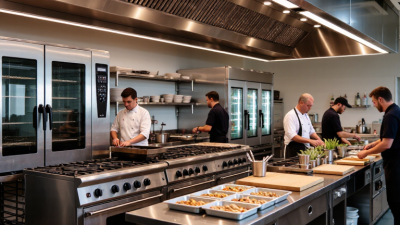
Top 10 Commercial Food Service Equipment Types to Buy
Choosing the right equipment can shape a food business’s speed, safety, and daily costs. In Commercial Food Service, a busy kitchen depends on reliable tools that withstand constant use. A six-burner range may support lunch service, while a reach-in refrigerator protects ingredients during crowded preparation periods. Small details matter, including door clearance, drainage, power access, and cleaning time.
This guide examines ten essential Commercial Food Service equipment types worth considering before purchase. The selection includes cooking equipment, refrigeration, food preparation machines, warewashing systems, and storage solutions. Each category serves a different operational purpose. A combi oven may improve menu flexibility, while a commercial dishwasher can reduce labor during peak hours. Energy ratings, warranty terms, service availability, and replacement-part access should influence every decision.
Experienced chefs and equipment consultants often recommend measuring the kitchen twice. A machine that fits on paper may block a walkway in practice. That mistake is expensive. No equipment list suits every operation, because a bakery, hotel kitchen, and small café face different demands. Even experienced buyers can underestimate ventilation, electrical capacity, or staff training. Local health, fire, electrical, and sanitation requirements must also be verified before installation. Product certifications can support safer purchasing, but they do not replace professional inspection. The following overview offers practical guidance, realistic buying considerations, and questions that help operators avoid unsuitable investments. Reliable equipment is valuable, but thoughtful planning matters more.
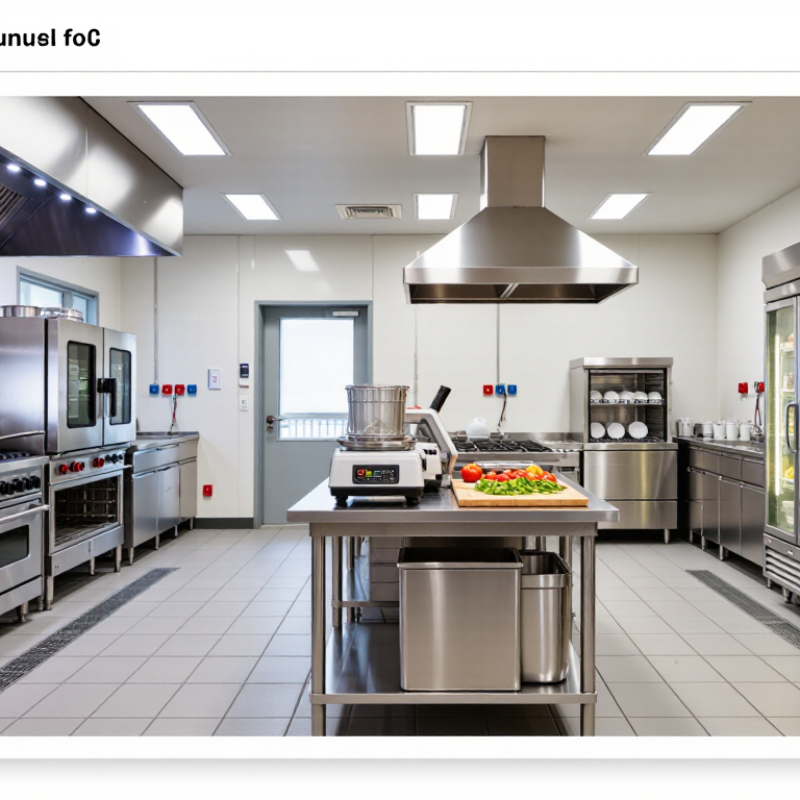
Defining the Top 10 Equipment Types by Capacity, Safety, Energy, and ROI
Top 10 Commercial Food Service Equipment Types to Buy
Capacity, safety, energy use, and ROI should guide every equipment decision. The main categories include refrigeration, ranges, ovens, fryers, grills, ventilation, dishwashers, ice machines, preparation equipment, and hot-holding units. A larger oven is not automatically better. Measure peak-hour demand, door clearance, electrical load, gas supply, and cleaning space before purchase.
The U.S. Environmental Protection Agency reports that restaurants use five to seven times more energy per square foot than many commercial buildings. ENERGY STAR data also shows certified commercial refrigerators and freezers use at least 20% less energy than standard models. That difference matters when compressors run all night.
Choose equipment with precise controls, insulated doors, automatic shutoff, and easy-to-clean surfaces. Safety must remain practical. Ventilation should meet NFPA 96 requirements, while cooking and refrigeration equipment should follow applicable sanitation standards.
ROI calculations are never perfect. The National Restaurant Association’s 2024 industry report projected restaurant sales above $1 trillion, but labor and food costs continue to pressure margins. Compare purchase price, installation, maintenance, downtime, energy, and expected service life. A fast dishwasher may reduce labor, yet its water demand can weaken returns. A smaller holding cabinet may save energy, but limited capacity could create service delays. Review real production records, not hopeful forecasts. That uncomfortable step often changes the buying decision.
Cooking Equipment: Ovens, Ranges, Fryers, and Griddles—ENERGY STAR Saves 10–70%
Top 10 Commercial Food Service Equipment Types to Buy
Cooking equipment often drives a commercial kitchen’s energy bill. The right specification matters. According to U.S. EPA and Department of Energy ENERGY STAR data, certified foodservice equipment can use 10–70% less energy than standard models, depending on the category.
Small differences become visible during a busy service. A certified fryer may use about 30% less energy, while a commercial oven can reduce consumption by roughly 20%. Certified griddles generally save around 10%. These figures come from ENERGY STAR performance criteria and test procedures. The savings depend on cooking volume, fuel type, maintenance, and operating habits. Numbers are not promises.
Ranges require closer review. Certification coverage may vary, so buyers should compare burner efficiency, idle energy, heat recovery, and ventilation demand. A powerful range can waste heat into the room. That heat increases cooling loads. It also makes staff uncomfortable.
Check the kitchen, not only the brochure. Measure peak meal periods, recovery time, thermostat accuracy, and cleaning routines. ENERGY STAR guidance recommends comparing annual energy use before purchase. DOE commercial building guidance also supports lifecycle-cost analysis, rather than relying on purchase price alone. A lower-priced unit may need more repairs or consume more fuel for years. That mistake is easy to make.
One practical detail matters: keep filters, seals, burners, and sensors clean. Even efficient equipment performs poorly when neglected. And yes, real kitchens are rarely perfect. Expect uneven loading, rushed batches, and doors left open. Designing for those habits may produce better savings than choosing the most impressive specification.
| Equipment Type | Typical Commercial Application | Common Fuel or Power | Typical Capacity or Size | Key Performance Metric | Indicative Energy-Saving Potential | Recommended Purchasing Criteria | Ventilation and Installation Considerations |
|---|---|---|---|---|---|---|---|
| Convection Oven | Baking, roasting, reheating, and high-volume sheet-pan cooking. | Natural gas, propane, or electricity. | Usually 5–10 full-size sheet pans; half-size models are also common. | Cooking uniformity, recovery time, idle energy use, and input rating. | About 10–20% versus comparable conventional models when efficiently designed and properly operated. | Look for insulated doors, low standby consumption, programmable controls, efficient preheat, and easy-to-clean interiors. | Typically requires a Type I hood when producing grease-laden vapors; verify local code and clearance requirements. |
| Combination Oven | Roasting, baking, steaming, poaching, and multi-stage cooking in one cabinet. | Electricity or gas with water and drain connections. | Commonly 6–20 sheet-pan or gastronorm-pan positions. | Steam-generation efficiency, water consumption, temperature recovery, and batch throughput. | Approximately 20–35% energy savings may be achievable compared with using separate conventional equipment for equivalent tasks. | Prioritize automatic cleaning, humidity control, recipe programming, water treatment compatibility, and service access. | Requires water, drainage, electrical or gas service, and ventilation suitable for steam and heat discharge. |
| Deck or Stone-Baking Oven | Pizza, artisan bread, flatbreads, and products requiring strong bottom heat. | Gas, electricity, or wood in specialized installations. | One or more decks, commonly accommodating 1–4 pizzas or multiple baking trays per deck. | Deck temperature stability, heat recovery, bake-time consistency, and chamber insulation. | About 10–20% potential savings through improved insulation, controls, and reduced idle operation. | Compare usable deck area, maximum operating temperature, door insulation, heat storage, and control accuracy. | High-temperature models require appropriate hood design, heat shielding, clearances, and fire-safety review. |
| Rapid-Cook or High-Speed Oven | Quick service, cafés, convenience food, sandwiches, snacks, and finishing prepared products. | Electricity; some models combine convection, microwave, and impingement heating. | Countertop chambers generally sized for one or several food portions at a time. | Throughput per hour, standby power, cooking speed, and menu flexibility. | Around 10–30% energy savings can result when shorter cooking cycles replace larger ovens for small batches. | Check ventilation classification, programmable recipes, cavity capacity, noise, cleaning requirements, and peak electrical load. | Some ventless models still require air filtration and manufacturer-approved clearances; confirm local approval before installation. |
| Commercial Range | Flexible à la carte cooking using pots, pans, sauté work, and multiple simultaneous tasks. | Gas, electricity, or a combination of both. | Commonly 2–12 open burners, with optional ovens, griddles, or hot tops. | Burner or element output, controllability, recovery time, and heat transfer to cookware. | Energy performance varies widely; efficient operation and reduced idle time commonly produce 10–20% savings versus poorly managed units. | Select the number of burners based on peak demand, not average demand; consider pilotless ignition, durable grates, and modular serviceability. | Usually requires a Type I hood because open cooking produces heat, grease, and combustion products. |
| Open-Burner Cooktop | Sauces, boiling, sautéing, stock preparation, and general stovetop production. | Natural gas, propane, or electricity. | Typically 2–6 burners or cooking zones. | Input per burner, turn-down ratio, heat transfer, and control response. | Approximately 10–20% potential savings from high-efficiency burners, induction technology, and better load matching. | Compare low-flame stability, pan compatibility, grate design, ignition system, cleanability, and replacement-part availability. | Hood airflow should be designed for the total appliance duty and the surrounding kitchen layout. |
| Induction Range or Cooktop | Precise sautéing, simmering, open-kitchen cooking, catering, and applications with limited ambient heat tolerance. | Electricity. | Usually 2–6 cooking zones; countertop and floor-standing formats are available. | Pan-sensing accuracy, power-sharing behavior, response time, and standby consumption. | Often 20–40% less cooking energy than gas open burners because heat is transferred directly to compatible cookware. | Verify cookware compatibility, electrical capacity, cooling requirements, controls, and protection against liquid ingress. | Produces less radiant heat than gas, but ventilation may still be required for cooking vapors and grease. |
| Commercial Fryer | French fries, poultry, seafood, appetizers, and other high-volume fried foods. | Natural gas, propane, or electricity. | Commonly 15–50 lb oil capacity per vat, depending on production demand. | Cooking efficiency, recovery time, oil life, idle energy rate, and production capacity. | Approximately 15–30% energy savings are commonly associated with high-efficiency fryer designs; actual results depend on load and idle time. | Look for insulated vats, efficient heat exchangers, automatic filtration, programmable controls, and fast recovery after loading. | Requires a Type I hood, adequate fire protection, oil-management space, and safe clearance for filtering and cleaning. |
| Commercial Griddle | Breakfast foods, burgers, sandwiches, pancakes, tortillas, and flat-top cooking. | Gas or electricity. | Common widths are approximately 24–72 inches, with smooth, grooved, or mixed plates. | Temperature uniformity, recovery time, plate thickness, idle energy rate, and usable cooking area. | About 10–20% potential savings through improved insulation, thermostatic controls, and zone heating. | Choose independent heat zones, accurate thermostats, a durable plate finish, grease trough capacity, and accessible controls. | Normally installed under a Type I hood because griddling generates grease-laden vapors. |
| Tilting Skillet or Braising Pan | Batch sautéing, braising, simmering, searing, sauces, vegetables, and institutional meal production. | Gas or electricity. | Typical capacities range from approximately 20–80 gallons. | Batch capacity, heat-up time, temperature control, water use, and pour or tilt accuracy. | Approximately 10–25% potential savings compared with multiple smaller vessels when batch size and production schedule are well matched. | Assess pan depth, automatic temperature controls, programmable cooking, ergonomic tilting, and cleaning access. | Requires substantial floor space, drainage planning, structural support, and ventilation for heat and cooking vapors. |
| Energy-saving figures are indicative ranges for efficient commercial equipment compared with conventional or poorly operated alternatives. Actual savings depend on fuel type, appliance size, menu, loading pattern, operating schedule, maintenance, and local utility rates. ENERGY STAR savings of roughly 10–70% are most applicable across the broader commercial food-service equipment category; not every cooking appliance type has an ENERGY STAR specification. | |||||||
Cold-Chain Equipment: Refrigerators and Freezers—FDA Holding Standard: 41°F
Top 10 Commercial Food Service Equipment Types to Buy
Cold-chain equipment deserves careful attention because temperature failures can create invisible food-safety risks. The FDA Food Code 2022 requires time/temperature control for safety foods to remain at 41°F or below during cold holding (FDA Food Code 2022, Section 3-501.16). A refrigerator may display 41°F while its rear shelf sits warmer. That happens.
Choose refrigerators and freezers with accurate digital controls, strong door gaskets, adjustable shelving, and enough airflow around stored containers. Leave space between pans and interior walls. Overloading blocks circulation and increases recovery time after every door opening. Use a calibrated probe thermometer, not only the built-in display. Record temperatures during opening, closing, and peak service periods.
Energy use also affects purchasing decisions. The U.S. Department of Energy notes that refrigeration can represent roughly 40% of a commercial kitchen’s electricity consumption. High-efficiency compressors, insulated doors, and automatic defrost controls can reduce operating costs, according to ENERGY STAR’s commercial refrigeration guidance. The savings are not automatic. Poor loading habits can erase them. I would also question oversized units; empty shelves still consume power. Select capacity from actual delivery patterns, menu volume, and cleaning routines. A short temperature log beside each unit may reveal more than an attractive specification sheet.
Top 10 Commercial Food Service Equipment Types to Buy — Cold-Chain Equipment: Refrigerators and Freezers
How to read this chart: These are typical commercial equipment target setpoints in °F. The FDA Food Code requires time/temperature control for safety (TCS) food to be held cold at 41°F (5°C) or below. Actual settings vary by equipment design, load, ambient conditions, and local requirements.
Reference: U.S. FDA Food Code 2022, Section 3-501.16. Freezer values represent common commercial targets for maintaining food frozen and are not FDA cold-holding limits.
Preparation Equipment: Mixers, Slicers, and Food Processors—NSF/ANSI 8
Preparation equipment deserves careful attention when building a commercial kitchen. Mixers, slicers, and food processors handle repeated contact with food, water, and cleaning chemicals. NSF/ANSI 8 focuses on commercial powered food preparation equipment. It evaluates materials, construction, cleanability, and hygienic design.
A mixer should have smooth, accessible surfaces around the bowl and attachments. Slicers need guarded blades, removable parts, and minimal spaces where residue can collect. Food processors should separate easily for washing and inspection. Look for clear certification marks from an accredited organization, not vague claims such as “professional grade.”
In my experience, a compliant machine can still be awkward if staff cannot remove its parts quickly. That detail matters during a busy service.
Tips: Check the certification listing before purchasing. Ask for cleaning instructions and replacement-part availability. Run a practical test with your regular ingredients. Watch for dough sticking, uneven slices, or processor seals that trap moisture. Measure counter depth and electrical requirements. Train staff to inspect hidden edges, fasteners, and gaskets. A small oversight can become a daily problem. Also, do not assume stainless steel alone proves sanitary design; weld quality and access matter.
Cleaning Equipment: Commercial Dishwashers and Sinks—NSF/ANSI 3 Sanitation Standards
Commercial dishwashers and sinks are central to safe food service operations. NSF/ANSI 3 evaluates commercial warewashing equipment for sanitation, construction, materials, and performance. The standard supports cleanable surfaces, controlled water flow, and reliable final rinsing. It does not replace staff training or daily inspection.
The FDA Food Code 2022 specifies sanitizing conditions for commercial dishwashers, including required final-rinse temperatures or chemical concentrations. Operators should verify settings with test strips and temperature logs. The CDC estimates that foodborne illnesses affect about 48 million people annually in the United States.
Small cleaning failures can become expensive quickly. A blocked spray arm, greasy sink drain, or overloaded rack may leave food residue behind. Compliance alone is not enough.
Tips: Choose sinks with deep basins, rounded corners, and accessible drains. Keep raw-food and clean-equipment areas physically separated. Check dishwasher gauges before each service period. Use test strips, not assumptions.
The U.S. Department of Energy reports that efficient commercial dishwashers can reduce water and energy consumption compared with standard models, but actual savings depend on loading and maintenance.
This is where purchasing decisions become less certain. A highly efficient unit may perform poorly when employees rush, skip scraping, or use incorrect detergent. Record failures, review the cause, and adjust procedures instead of blaming the equipment.
Related Posts
-
How to Choose Commercial Restaurant Equipment?
-
China Top Food Service Equipment Suppliers?
-
2026 How to Choose the Right Restaurant Equipment for Your Business?
-
Top Commercial Food Equipment Trends for 2026 What to Expect?
-
China Best Commercial Kitchen Equipment for Global Buyers?
-

How to Elevate Your Culinary Business with Essential Commercial Kitchen Accessories