
Where to Buy the Best Bakery Equipment in China?
Choosing where to buy the best Bakery Equipment in China takes more than comparing prices. The right supplier should match your production volume, product range, and available floor space. A compact spiral mixer may suit a neighborhood bakery; a continuous oven may fit a high-output factory. Small details matter. Ask to see the equipment running, not just polished catalog photos.
Industry figures show why careful sourcing matters. Fortune Business Insights estimated the global bakery processing equipment market at about US$12 billion in 2023 and forecast continued growth through 2032. Such market estimates indicate demand, but they do not prove that a particular supplier is reliable. Their methods and market definitions can differ. Buyers should verify specifications, food-contact materials, energy use, spare-parts availability, and service response times directly. Request a factory audit or a live production test where practical. Compare quotations using the same requirements, including installation, training, and warranty terms. A lower price can hide costly gaps. I have seen buyers focus on machine capacity and overlook the space needed for cleaning and maintenance. That is an easy mistake. This guide explains how to assess Chinese manufacturers, compare equipment categories, and check the details behind a supplier’s claims before placing an order.
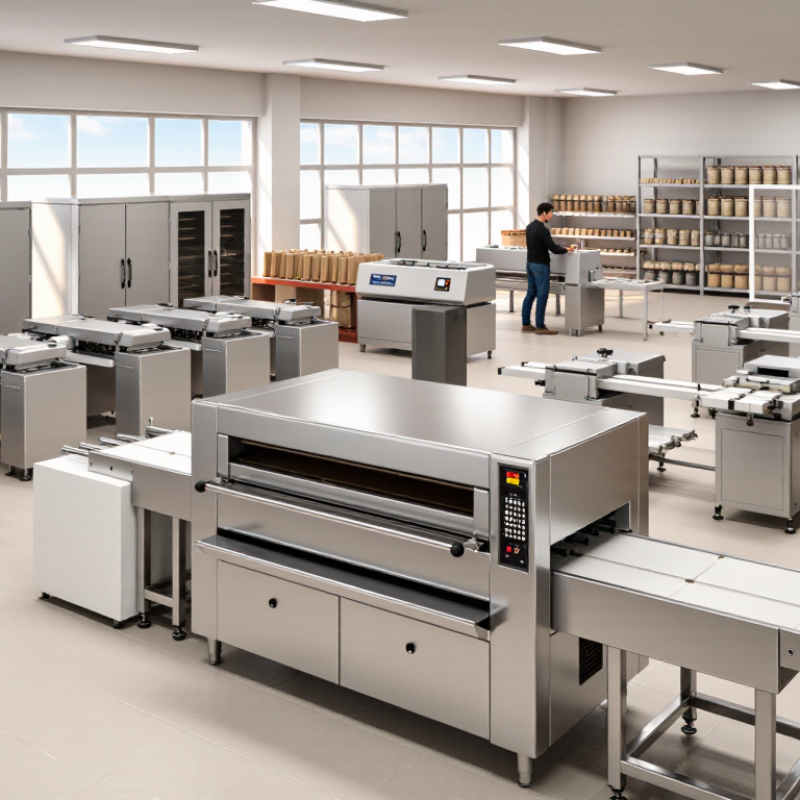
How to Define Your Bakery Equipment Requirements
Where to Buy the Best Bakery Equipment in China?
How to Define Your Bakery Equipment Requirements
Before comparing suppliers in China, write down what your bakery will produce each day. A shop making 300 sourdough loaves needs different capacity from one baking pastries and sandwich rolls. Record peak-hour output, batch size, and products that share an oven or mixer. Be specific. Include dough hydration, tray dimensions, and whether recipes require steam or gentle mixing.
Measure the actual production room, not only the floor plan. Note door widths, ceiling height, drainage, ventilation, electrical supply, and gas availability. Leave space for staff to load trays and clean behind equipment. A 20-tray oven may fit on paper but block a walkway in practice. Check equipment materials, temperature range, control accuracy, cleaning access, and expected maintenance. Ask suppliers for drawings, utility requirements, test videos, and spare-parts details. Confirm voltage and frequency with a qualified local technician.
Set a realistic budget that includes shipping, installation, training, and routine parts. Then rank needs as essential, useful, or optional. This prevents a shiny feature from deciding the purchase. Request a production test using your own dough or a close recipe, and record bake consistency across trays. Even careful planning misses something; staff workflow often changes after opening. Keep a little room in the layout and budget for that. A small compromise is sometimes unavoidable.
Where to Find Bakery Equipment Suppliers in China
Where to Buy the Best Bakery Equipment in China?
Where to Find Bakery Equipment Suppliers in China
China’s bakery-equipment suppliers operate in manufacturing regions including Guangdong, Jiangsu, and Shandong. Search industrial directories and food-processing trade fairs, then verify each factory directly. Grand View Research’s Bakery Processing Equipment Market report estimated global market revenue at USD 11.36 billion in 2022 and projected 6.3% annual growth through 2030. A busy market means more options, but not necessarily better suppliers.
Request a live trial using your recipe and target batch size. Check oven temperature recovery, mixer noise, weld quality, and access for cleaning. Ask for a parts list, maintenance schedule, warranty terms, and export-customer references. Compare total costs, including commissioning, shipping, and operator training—not only the machine price. A polished video can hide a weak test. When possible, visit the factory or hire an independent inspector to review materials and witness a production run.
Tips: Send suppliers one specification sheet covering voltage, capacity, product dimensions, and daily output. Keep responses in writing. Small details are easy to miss; double-check them.
Where to Buy Bakery Equipment in China?
When comparing Chinese bakery equipment suppliers, check whether their ovens can consistently cover the temperature ranges your recipes require. The ranges below are typical recipe guidelines, not equipment specifications; actual requirements vary by recipe and oven.
Ask suppliers for temperature-control specifications, operating tests, and sample-bake results before placing an order.
How to Compare Manufacturers and Product Options
Where to Buy the Best Bakery Equipment in China?
How to Compare Manufacturers and Product Options
Choosing a supplier is less about a polished catalog and more about evidence. Ask manufacturers for equipment drawings, material specifications, and operating videos that show a full production cycle.
Details matter. For an oven, compare tray capacity, temperature recovery, heat distribution, and daily output—not just its listed power. For mixers, check bowl size, speed settings, and whether the stated capacity refers to dough or flour. These small differences can change how a machine fits your recipes and workflow.
Compare at least three written quotations using the same requirements. Check what each price includes: installation guidance, spare parts, packaging, shipping terms, and warranty coverage. Ask how quickly common wear parts can be supplied, and request references from buyers with similar production needs.
A video call can help you inspect a workshop, but it cannot replace clear technical documents or a test run with your ingredients. If available, ask for a sample production report and confirm the figures against your own requirements. A glossy presentation may still leave gaps. I would not assume the largest machine is the best value; sometimes, that judgment needs a second look.
How to Verify Equipment Quality and Supplier Credentials
When buying bakery equipment in China, verify the factory behind the quotation, not just the polished showroom. Ask for the business licence and confirm its registered name and operating status through China’s National Enterprise Credit Information Publicity System. Request recent production records, equipment serial numbers, material certificates, and references from bakeries using similar machines. Then inspect the workshop, if possible. Look closely at welds, food-contact surfaces, wiring, and spare-parts storage.
Allied Market Research estimated the global bakery processing equipment market at $11.6 billion in 2021, forecasting $19.1 billion by 2031. That growth makes supplier checks more important, not less. ISO’s 2022 Survey recorded over 1.26 million valid ISO 9001 certificates worldwide. A certificate is a useful clue, but it does not prove that a specific oven heats evenly. Ask to see its scope and validity, then request a witnessed test using your recipe and production load. Record temperatures at several points; a small cold zone can ruin a tray. Check cleaning access, manuals, warranty terms, and local service response times. I would not rely on photos alone. They can miss the awkward details, and a factory visit may still reveal only part of the picture.
How to Arrange Purchasing, Shipping, and After-Sales Support
Where to Buy the Best Bakery Equipment in China?
A reliable purchase starts with a clear production plan, not a rushed price comparison. List your daily output, available floor space, and power supply before contacting suppliers. Ask for equipment dimensions, rated capacity, voltage, and material specifications in writing. Request a live video demonstration using dough or batter similar to yours. Watch the loading process, controls, and cleaning steps. Small details matter. A mixer that fits the budget may still be too large for a narrow kitchen doorway. Compare quotations carefully, including packaging, spare parts, payment milestones, and delivery terms. One detail may still be unclear, so ask again before paying.
Plan shipping with the same care as the purchase. Confirm whether the machine will arrive assembled or in separate crates, and ask for crate dimensions and gross weight. These figures help your freight provider estimate transport and unloading needs. Agree on who arranges export documents, insurance, and port handling. Keep signed specifications and order records together. They are useful if the delivered machine differs from the agreed model. After-sales support should be specific: clarify warranty coverage, remote troubleshooting hours, installation guidance, and the cost of replacement parts. Ask how quickly common components can be dispatched. Support promises can sound reassuring, but response times in writing are more useful. Even with careful planning, delays happen; leave some room in your opening schedule.
Where to Buy the Best Bakery Equipment in China? - How to Arrange Purchasing, Shipping, and After-Sales Support
Use this comparison as a purchasing checklist. Equipment specifications, lead times, shipping costs, and service arrangements vary by supplier and destination; confirm them in writing before placing an order.
| Equipment | Useful specification checks | Before ordering | Packing and shipping plan | After-sales support to request |
|---|---|---|---|---|
| Spiral dough mixer | Confirm flour capacity, bowl volume, mixing speeds, motor rating, and whether the stated capacity refers to flour or finished dough. | Request a test with your dough formula and batch size. Check voltage, frequency, phase, plug, safety guard, and emergency-stop requirements. | Protect the control panel and bowl from impact; secure moving parts and confirm crate dimensions and gross weight for freight planning. | Ask for an operation manual, wiring diagram, troubleshooting guide, and a recommended list of wear parts such as belts and seals. |
| Deck oven | Check chamber dimensions, number of decks, temperature range, independent top-and-bottom heat control, and available electric or gas configuration. | Verify local electrical or gas requirements, installation clearances, ventilation, and whether commissioning or site preparation is needed. | Confirm heat-resistant components are secured for transit and that fragile controls, stones, or other removable parts are separately protected. | Request temperature-control instructions, a parts diagram, warranty terms, and access to remote technical guidance. |
| Convection or rotary rack oven | Confirm tray or trolley dimensions, batch capacity, heating method, fan settings, steam injection options, and the required utility connections. | Check the route from the unloading point to the installation area, including door widths, lift capacity, and floor loading limits. | Ask for packed dimensions and lifting points. Confirm whether the oven ships assembled or in sections and who handles unloading and positioning. | Arrange startup guidance and request maintenance schedules for fans, seals, steam components, and temperature sensors. |
| Dough divider and rounder | Check the dough-weight range, target weight tolerance, production rate, and suitability for the dough types you use. | Request a demonstration using representative dough. Confirm cleaning access, food-contact materials, guards, and operator training needs. | Secure adjustment handles and removable tooling. Confirm whether accessories and spare tooling are included or packed separately. | Ask how to adjust portion weights and obtain replacement knives, belts, or other wear parts, with clear part numbers. |
| Proofer | Confirm tray capacity, temperature and humidity controls, water supply or filling method, drainage, and internal dimensions. | Check the required electrical connection and available floor space. Ask how humidity is measured and controlled. | Protect doors, hinges, and sensors. If shipped assembled, confirm that the crate can pass through the delivery route. | Request cleaning and descaling instructions, sensor calibration guidance, and a list of recommended replacement components. |
| Planetary mixer | Verify bowl capacity, speed range, included attachments, and suitability for the intended products. Bowl volume alone does not indicate usable batch capacity. | Check that the attachment hub, bowl, and safety guard meet your production and cleaning requirements. Confirm local power compatibility. | Pack attachments to prevent movement and surface damage. Confirm the shipment includes all listed bowls, tools, and fasteners. | Request instructions for speed selection, safe cleaning, and replacement of seals, gears, and other serviceable parts. |
| General purchasing and logistics checks | Compare complete technical specifications, drawings, utility requirements, included accessories, and applicable conformity documents for the destination market. | Use a written purchase order covering model configuration, quantity, inspection criteria, lead time, payment milestones, warranty, and remedies for discrepancies. | Agree the delivery term and named place in the contract. Confirm who arranges export clearance, insurance, freight, import clearance, duties, unloading, and final delivery. For solid-wood packaging, confirm applicable ISPM 15 treatment and marking requirements. | Agree response channels, support hours, remote troubleshooting, technician availability, spare-parts pricing, and who pays for labor and transport during warranty service. |
Practical order sequence: define production needs and site utilities; shortlist suppliers by documented specifications and export experience; verify the final configuration; approve a pre-shipment inspection; then coordinate freight, customs documents, installation, and support before dispatch.
Related Posts
-
Top Strategies for Maximizing Efficiency with Best Commercial Bakery Equipment
-
Top Commercial Bakery Equipment Every Baker Should Consider?
-
Exploring the Top Examples of Best Commercial Kitchen Supplies to Enhance Culinary Efficiency
-
What Is the Best Commercial Kitchen Equipment from China?
-
Exploring the Top 10 Certifications for Best Commercial Equipment in Global Trade
-
Enhancing Efficiency in Your Restaurant with Commercial Kitchen Equipment Benefits