
>

Why Is High Quality Cabinet Hardware Important?

Cabinet hardware may look like a finishing detail, but it is one of the parts homeowners touch every day. A drawer pull takes repeated pressure. A hinge must keep a door aligned through years of opening and closing. When a finish wears quickly or a soft-close mechanism fails, the problem is small but persistent. High Quality Cabinet Hardware can improve daily use, support dependable operation, and help a kitchen feel thoughtfully finished.

The 2024 U.S. Houzz Kitchen Trends Study reported a median kitchen renovation spend of $24,000 for projects completed in 2023. That figure does not prove that premium hardware always pays off. It does show why choices made at the detail level deserve attention: handles and hinges are used constantly, even when they account for only a small part of a renovation budget. For performance benchmarks, the Builders Hardware Manufacturers Association’s ANSI/BHMA A156.9 standard sets test methods and requirements for cabinet hardware. Buyers can use such standards alongside practical checks, including smooth movement, secure mounting, and a finish suited to the room.

A polished showroom sample cannot tell the whole story. Check the hardware’s materials, warranty, installation needs, and compatibility with cabinet doors and drawers. Ask how it performs after repeated use. Then consider the simple test: does it still feel solid in your hand? Quality is not just a price tag. It is a detail worth questioning.
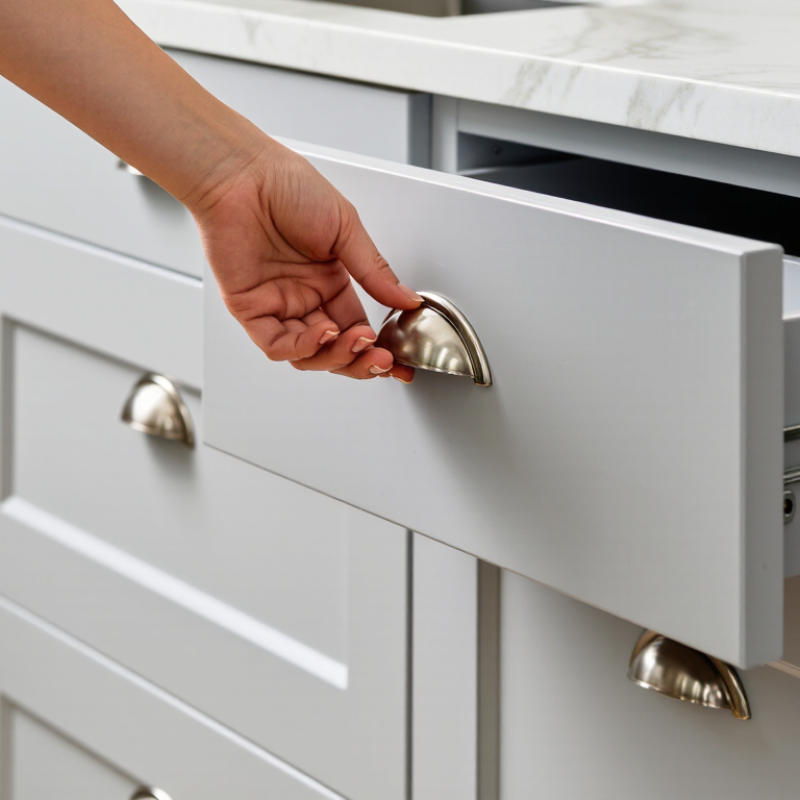
Why Is High Quality Cabinet Hardware Important?

What Defines High-Quality Cabinet Hardware?

What Defines High-Quality Cabinet Hardware?

High-quality cabinet hardware combines durable materials, reliable movement, and a finish suited to daily use. The material should match the job: stainless steel resists corrosion in humid rooms, while well-made zinc alloy can offer dependable strength at a lower weight. Weight alone can mislead. A heavy pull may still have a weak mounting point or rough edges.

Check how a knob or pull feels in your hand. Its edges should be smooth, and its shape should provide a secure grip without pinching fingers. Feel matters. Open and close the cabinet several times; hinges should move evenly, and drawer slides should not scrape or wobble. Look closely at screws and mounting points, since poor alignment can loosen hardware over time. The finish should appear consistent around corners and contact areas, not just on visible surfaces. That detail is easy to miss. A shiny coating may still wear quickly, and even good hardware can feel wrong if its size does not suit the cabinet door or the people using it.

How Hardware Quality Affects Durability and Performance

Cabinet hardware works quietly until a hinge loosens or a drawer starts sticking. Each day, hinges carry door weight, while slides guide drawers through repeated opening and closing. Well-made parts usually resist wear better, especially when their load ratings match the cabinet and its contents. Not every sturdy-looking fitting performs well, though. Metal thickness, joint construction, and smooth movement matter too.

Small details count. A drawer slide that flexes under a stack of plates can strain its fasteners over time. Soft-close hinges may reduce slamming, but only when they are correctly adjusted and suited to the door. Check that screws sit firmly in sound material, and follow the cabinet maker’s installation guidance. A careful fit matters.

Finish quality also affects performance. In a humid kitchen, a poorly protected surface may corrode or become rough, making movement less reliable. Inspect hinges and slides occasionally for loose screws, uneven gaps, or scraping sounds. These signs do not always mean the hardware has failed; alignment may simply need attention. I have seen people replace a fitting before checking its adjustment. That can be a needless expense, and it is easy to miss.

How Reliable Hardware Improves Safety and Everyday Use

Cabinet hardware affects more than appearance. Hinges keep doors aligned, while drawer slides support dishes, tools, and other daily loads. A loose hinge can let a door sag or swing unexpectedly. A drawer that slips off its track may spill sharp utensils onto the floor. Small details matter. Choose hardware rated for the cabinet’s weight, and make sure screws are secured into suitable material. Soft-close mechanisms reduce slamming, but they cannot correct poor installation. Check for loose fasteners and uneven gaps occasionally; a quick inspection can catch wear before a door starts to wobble.

Reliable hardware also makes routine tasks safer and less tiring. A well-shaped pull gives wet or smaller hands a steadier grip than a tiny, sharp-edged knob. Smooth slides help prevent drawers from jerking open, especially when they hold heavy cookware. Not always. Hardware that feels sturdy in a showroom may behave differently after years of steam, spills, and repeated use. Consider clearances, too: protruding handles can catch clothing in narrow walkways. Test a door and drawer with their usual contents before settling on a fitting. Even then, the best choice depends on installation quality and how the household uses the cabinets.

Why Is High Quality Cabinet Hardware Important? - How Reliable Hardware Improves Safety and Everyday Use

Hardware Area What to Check Practical Data or Measure Safety Benefit Everyday Use Benefit
Hinges Secure attachment, smooth movement, and a published durability rating where available. Check the manufacturer’s cycle-test rating and confirm the hinge is suitable for the door’s size and weight. There is no single cycle rating that applies to every cabinet. Helps prevent doors from sagging, shifting, or detaching when correctly selected and installed. Doors open and close more consistently and are easier to align.
Drawer slides Stable travel, secure locking or stop features, and a clearly stated load rating. Compare the drawer’s expected contents with the rated capacity. Confirm whether the rating applies to the slide pair and to the intended mounting arrangement. Reduces the risk of an overloaded or poorly supported drawer pulling out unexpectedly. Drawers move more smoothly and are less likely to bind under normal use.
Cabinet mounting fasteners Fasteners and installation method suited to the cabinet, wall construction, and expected load. Follow the cabinet maker’s installation instructions; wall cabinets should be secured to appropriate structural framing or blocking, not supported by drywall alone. Proper attachment helps reduce the risk of a cabinet coming loose from the wall. A firmly mounted cabinet is less likely to shift during opening and closing.
Handles and pulls Secure fastening, comfortable grip, and edges that are not sharp or damaged. Use fasteners that match the handle design and cabinet-front thickness; check that the handle remains tight during routine use. A secure, comfortable grip helps reduce slips while opening doors and drawers. Consistent placement and a suitable grip make frequent opening easier.
Finish and corrosion resistance Materials and finishes appropriate to the room’s moisture and cleaning conditions. For humid areas, check the product’s stated corrosion-resistance information and care instructions; performance varies by material, finish, and exposure. Helps keep hardware functional and free from deterioration that could create rough or weakened surfaces. Appropriate finishes are easier to maintain and can retain their appearance longer.
Soft-close mechanisms Damper operation, compatible hinges or slides, and adjustment options. Test that the door or drawer slows before closing. Soft-close reduces impact but does not make a moving door or drawer pinch-proof. Reduces slamming and impact; users should still keep fingers clear of closing gaps. Quieter closing and less abrupt movement during daily use.
Routine inspection Loose screws, unusual noise, uneven gaps, corrosion, or changes in movement. Inspect periodically and after heavy use; tighten or adjust hardware according to the product instructions. Early attention to looseness or damage can help prevent hardware failure. Small adjustments can restore smooth, reliable operation.

Note: Hardware capacity and durability depend on the specific product, cabinet construction, installation, and use. Always follow the manufacturer’s ratings and installation instructions.

How Cabinet Hardware Influences Design and Home Value

Cabinet hardware shapes how a kitchen feels before anyone notices the cabinet boxes. Aged brass pulls can warm white doors, while slim matte-black handles create a sharper contrast. Matching the finish across drawers and cupboards makes the room feel considered. It is a small detail, but buyers often read consistent finishes as evidence of careful upkeep. Hardware alone cannot guarantee a higher sale price, of course.

The National Association of REALTORS® and National Association of the Remodeling Industry’s 2022 Remodeling Impact Report estimated a 75% cost recovery for a kitchen upgrade. That figure covers the broader project, not hardware alone, so it should not be treated as a return-on-investment estimate for new pulls. Still, hardware is a relatively visible update: worn, loose knobs can make clean cabinets feel dated, while sturdy pieces improve everyday use. The fit matters too. A pull that catches a sleeve or feels flimsy undermines the impression.

Tips: Match the finish to nearby faucets or lighting, but avoid forcing an exact match if the tones clash. Measure existing hole spacing before buying replacements. Test one handle in place; a polished finish can look different under warm evening light. Keep the old hardware until installation is complete. Small misfits happen.

What to Consider When Choosing Cabinet Hardware

Choosing cabinet hardware means balancing comfort, durability, and appearance. Start by measuring existing hole spacing if you are replacing pulls. A mismatch can leave visible holes or require extra repair work. For new cabinets, check door thickness and available clearance before selecting knobs or handles. Try the hardware in your hand, if possible. Sharp edges and narrow grips can feel uncomfortable during everyday use.

Material and finish matter in busy kitchens and bathrooms. Solid metal hardware often withstands frequent handling better than lightweight options, while a protective finish can help resist moisture and fingerprints. Still, no finish stays spotless forever. Consider how much cleaning you are willing to do, and compare samples beside your cabinets in daylight. Color can look different under warm evening bulbs. Also check that screws suit the cabinet thickness; overly long screws may damage the interior.

Tips: Open and close a cabinet several times with a sample handle. Check that it does not catch clothing or nearby doors. Keep a few spare screws after installation. Small details are easy to overlook, and hardware that looks perfect online may feel wrong at home.

Why High-Quality Cabinet Hardware Matters

Cabinet hinge endurance benchmarks by ANSI/BHMA grade

More tested operating cycles can mean better resistance to wear from repeated opening and closing. When choosing hardware, also consider cabinet fit, material, finish, corrosion resistance, and how smoothly the hardware operates. Cycle-test results are benchmarks, not a guarantee of service life.

Reference: ANSI/BHMA A156.9, Cabinet Hardware performance standard. Verify the applicable grade and test requirements with the product documentation.

Newsletter

Keep up on our always evolving product features and technology. Enter your e-mail and subscribe to our newsletter.