Why Choose a Latching Push Button Switch?
Industrial controls are becoming more common, and their interfaces must remain clear under real working conditions. The International Federation of Robotics reported 4,281,585 industrial robots operating in factories worldwide in 2023, a 10% increase over the previous year (World Robotics 2024). This figure does not measure push-button use. It does show the scale of automated environments where operators need understandable, dependable controls. A Latching Push Button can keep a circuit in its selected state after the operator releases the actuator. A second press changes it back. Simple behavior. Useful in a control panel, machine enclosure, or lighting station.
That retained state can reduce the need to hold a button continuously, helping operators manage routine on-and-off functions. The visible actuator position or an indicator lamp can also make the selected state easier to check, depending on the switch design. Yet latching is not automatically the right choice. A control that remains on may cause confusion if its status is hidden, or if the machine requires a different shutdown method. Switch ratings, contact configuration, environment, and intended function all matter. The wrong choice is easy to make.
This guide explains where latching switches fit, what to compare, and which design details deserve attention. It also distinguishes a convenient control from a safety function; the two should not be assumed interchangeable. Real panels are often crowded, and clear labeling still matters. A small component, but not a trivial decision.
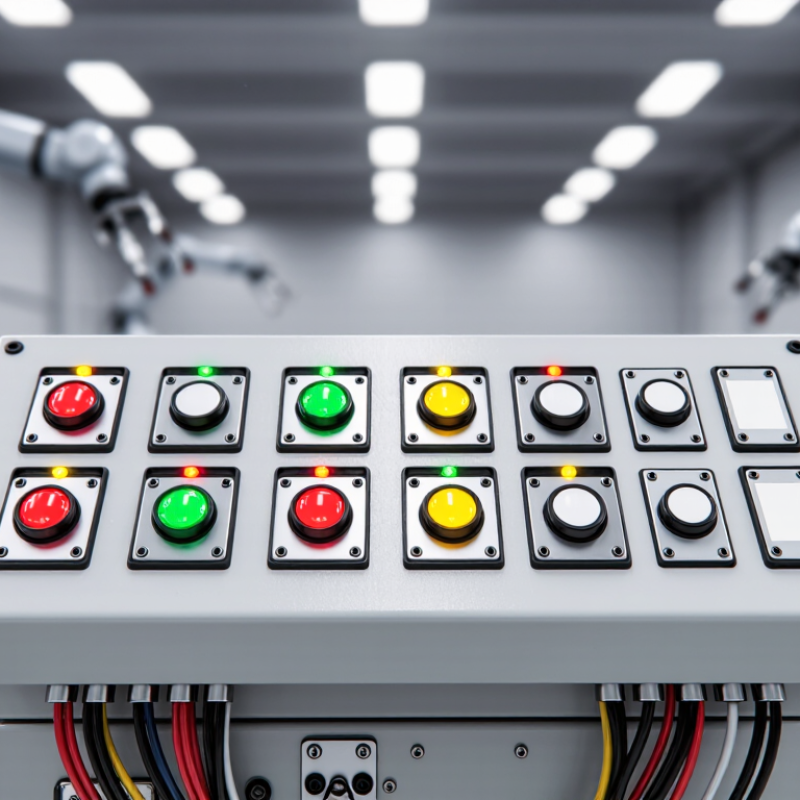
What Is a Latching Push Button Switch?
A Latching Push Button Switch keeps its selected state after you release the button. Press it once, and its contacts change position; press it again, and many designs return them. Unlike a momentary switch, it does not need continuous pressure to maintain the circuit. That is the key difference.
The exact action depends on the switch design. Some models alternate between on and off with each press. Others use separate buttons to latch and release. You can see the difference in a simple panel light: a single latching button can leave the light on while your hand moves away. A spring-loaded momentary button, by contrast, usually needs a relay or control circuit to hold the light on.
Small details matter. Check the contact configuration, rated voltage and current, and whether the switch is intended for direct load control or a low-voltage signal. A satisfying click is useful, but it does not confirm that the electrical rating is suitable. I have found the term “latching” can sound more universal than it is; mechanisms vary, so the datasheet deserves a careful read. The button alone may not do all the work.
How Does a Latching Push Button Switch Work?
A latching push button switch changes state with each press and keeps that state after you release it. Unlike a momentary button, it does not spring back electrically when your finger lifts. In a common alternate-action design, the first press engages a small internal mechanism and closes the selected contacts. The next press releases the mechanism and returns those contacts to their original state. Click. Stay on. Click again. Off.
The exact mechanism varies by switch, so check its datasheet rather than assuming every model works alike. Contact labels matter too: normally open contacts close when activated, while normally closed contacts open. In a control panel, that difference determines what a connected circuit does after each press. Match the switch’s voltage and current ratings to the load; a button’s compact size does not mean it can safely control every device directly. Some models include an illuminated cap, but its light may show power, command status, or something else entirely. Verify the wiring diagram. It is easy to mistake a lit indicator for proof that the switched equipment is operating, and that assumption deserves a second look.
Why Choose a Latching Push Button Switch?
A latching switch keeps its output state after you release the button. Pressing it again toggles the output back. A momentary switch is active only while the button is pressed.
Typical operating behavior shown for two button presses. Values represent output state (Off or On), not measured product data.
What Types of Latching Push Button Switches Are Available?
Latching push button switches come in several forms, each suited to a different control task. A mechanical push-on/push-off type changes state with each press and stays there without continuous finger pressure. It works well for bench equipment or a machine’s power control, where the operator needs a clear, retained setting. Some models use a key or twist action to reset, helping prevent accidental changes. A clear click helps.
The operating mechanism is only one choice. Non-illuminated versions suit bright panels, while illuminated types make an active circuit easier to spot in dim work areas. Contact options such as single-pole, double-throw configurations can control separate circuits, but the wiring diagram matters: a similar-looking switch may have different terminals. That distinction is easy to miss. Not always.
For urgent stop functions, mushroom-head switches often latch when pressed and require a twist or pull to release. They should be selected for the machine and risk assessment, not just their appearance. IEC 60947-5-1 covers control-circuit devices such as push buttons and specifies relevant electrical and mechanical requirements. Grand View Research’s 2023 market analysis estimated the broader global push-button-switch market at about USD 2.2 billion; that figure covers multiple switch types, not latching models alone. Check rated voltage, current, mounting depth, and reset method before choosing.
What Advantages Does Latching Operation Offer?
A latching push button switch stays in its selected position after you release it. Press once to turn a circuit on; press again to turn it off. That simple action can make controls easier to use when a function needs to remain active, such as a work light or a test bench setting. No need to keep a finger on the button.
The benefit is practical. Operators can see or feel the button’s position, and the switch does not require continuous pressure to maintain its state. This can reduce hand strain during repeated tasks. Still, the button’s position does not always prove that the connected equipment is operating. A lamp or other status indicator may be needed where that distinction matters.
There is a trade-off. A latching switch can remain on after power is interrupted, depending on the circuit, so the equipment may restart in an unexpected state when power returns. Check the switch’s electrical rating, contact configuration, and panel cutout before choosing one. For a control that should turn off as soon as it is released, a momentary switch is usually a better fit. The distinction seems small, but it affects how a control behaves every time someone uses it.
Where Are Latching Push Button Switches Used?
Why Choose a Latching Push Button Switch?
Where Are Latching Push Button Switches Used?
Latching push button switches appear wherever equipment needs a steady on-or-off state. Press once, and the contacts change position; they stay there until another press. That simple action suits desk lamps, small appliances, ventilation controls, and audio equipment. A user can see or feel the button’s position without holding it down.
In workshops and control panels, latching switches can operate indicator lights, pumps, or machine functions. The button may send a signal to a relay rather than carry the full load itself. Check the switch’s electrical rating, contact type, and mounting dimensions before choosing one. Dust, vibration, and frequent use also matter. A narrow button can be hard to locate when an operator wears gloves. Small detail, real consequence.
These switches are not a fit for every control. Equipment that must stop immediately may need a separate, purpose-built stop control; a latching button alone is not a safety system. It is easy to choose based on appearance and regret it later. Consider who will use the control, how often they will press it, and whether its state is clearly visible. A tidy panel can still be confusing.