What Are Flower Scented Candles?
Flower Scented Candles are candles scented to evoke blossoms such as rose, jasmine, lavender, or orange flower. Their fragrance may come from essential oils, manufactured fragrance compositions, or a blend; the label alone rarely tells the whole story. Wax, wick design, and room size can also affect how clearly a candle smells while burning. Place matters. A small candle in a large, airy room may seem faint, but the same candle can feel stronger beside a reading chair. The scent is an impression, not a perfect copy of a garden.
Choosing one depends on the atmosphere you want and how much fragrance suits your space. Rose often suggests a soft, familiar floral note, while jasmine can smell richer and more noticeable. Lavender is frequently associated with a gentle, herbal character, though blends vary between makers. Not always. A candle described as “floral” may smell sweet, green, powdery, or even slightly sharp. Reading the ingredient and care information can help set expectations, but scent descriptions remain subjective. Before lighting, check the maker’s directions, keep the candle on a stable, heat-resistant surface, and avoid leaving it unattended. These details are easy to overlook when a candle looks beautiful. Flower Scented Candles can add a quiet sensory detail to a room, yet the best choice is the one whose fragrance feels comfortable to you.
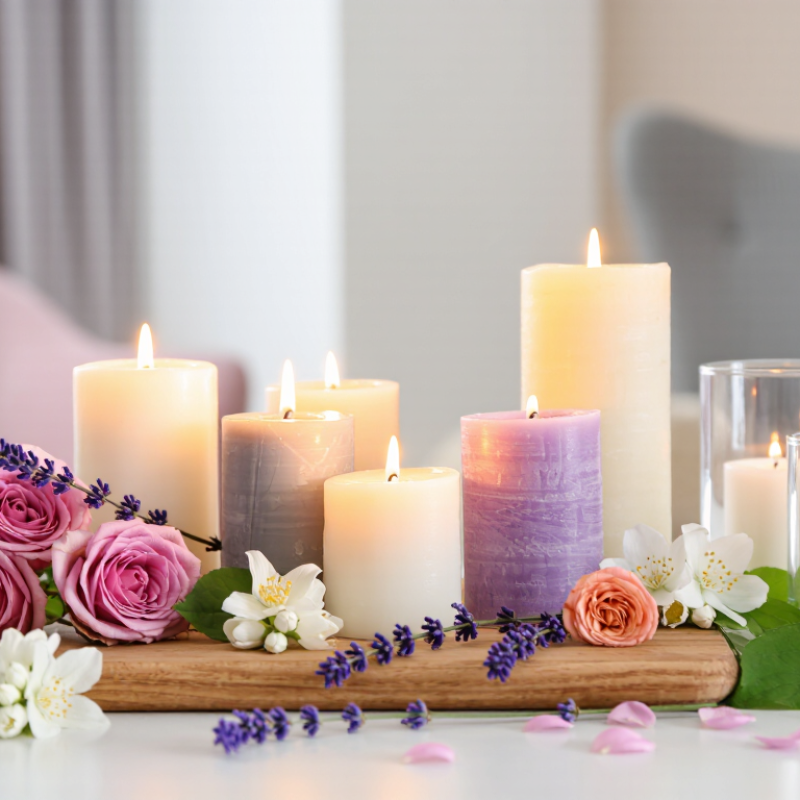
Definition and Key Characteristics of Flower-Scented Candles
What Are Flower Scented Candles?
Definition and Key Characteristics of Flower-Scented Candles
Flower-scented candles release fragrances designed to evoke blossoms such as rose, jasmine, lavender, or orange flower. Their scent may be built from botanical extracts, fragrance ingredients, or a blend; a floral label does not necessarily mean the candle contains flower petals. The National Candle Association reports that about 7 in 10 U.S. households use candles, reflecting their role in everyday home settings. Floral candles are often chosen for bedrooms, living rooms, or quiet routines, where a soft scent can feel more fitting than a sharp, strong one.
Key characteristics include fragrance profile, scent strength, and how the aroma changes as the candle burns. A rose blend may smell fresh and green at first, then warmer near the wick. Wax type, wick size, room airflow, and burn time can all affect what you notice. These details matter. A label alone cannot reliably predict scent strength, and personal preference varies more than descriptions suggest.
Tips: Trim the wick to about 6 mm before lighting, and test the candle in a ventilated room. Let the wax melt across the surface on the first burn to help reduce tunneling. If the floral scent feels overpowering, use a smaller room or burn it for less time.
Floral Fragrance Sources and Common Scent Profiles
Flower-scented candles recreate the character of blossoms through fragrance oils, botanical extracts, or a blend of both. Rose, jasmine, lavender, and ylang-ylang are common inspirations. Some formulas use essential oils, while others rely on carefully composed fragrance ingredients. The label may not reveal every source, so check product details if ingredient origin matters to you. That distinction matters.
Floral profiles can feel quite different. Rose is often soft, powdery, or lightly green. Jasmine tends to be rich, sweet, and sometimes almost fruity. Lavender usually smells herbal and airy, while orange blossom brings a brighter, honeyed note. Blended scents may pair petals with citrus, woods, or musk for added depth. One detail is easy to overlook: a candle can smell stronger when unlit than it does while burning. Room size, airflow, and wax temperature all affect how fragrance travels.
Tips: Trim the wick to about a quarter inch before lighting, and place the candle away from drafts. Let the wax melt across most of the surface during each session to help limit tunneling. Start with a small room if you are unsure about the scent’s strength. Floral notes can be lovely, but some blends may feel sweeter than expected.
What Are Flower-Scented Candles?
These candles use fragrance inspired by flowers. The chart compares the molecular masses of several aromatic compounds associated with floral scents.
Common scent profiles: Rose is often described as rosy and sweet; jasmine as rich and sweet; lavender as fresh and herbaceous; and carnation as spicy and clove-like. Flower fragrance varies by species and composition. Molecular mass does not indicate scent strength.
Wax, Wicks, and Other Candle Components
A flower-scented candle combines wax, a wick, fragrance, and usually a container. The wax holds the fragrance and feeds the flame as it melts. Paraffin, soy, beeswax, and blended waxes each behave differently: they can vary in firmness, melt pool, and scent release. “Natural” does not automatically mean better burning. The actual result depends on the full formula.
The wick matters more than its small size suggests. Its material and thickness affect flame height, soot, and how evenly the wax melts. The National Candle Association recommends trimming a wick to about ¼ inch before lighting. Fragrance may come from essential oils, formulated fragrance oils, or both; a floral label alone does not reveal the ingredients. A heavy scent can also make a candle less pleasant in a small room. Small details matter. The container must tolerate heat, while the fragrance and wax need to work together through repeated burns. Grand View Research estimated the global candle market at about $10.1 billion in 2023 in its 2024 market report. That figure describes the whole market, not flower-scented candles specifically, but it shows why component quality deserves attention. A good-looking candle can still burn unevenly. I’d treat the wick and wax pairing as a practical test, not a detail to assume is right.
How Floral Candles Are Made and Scented
Flower-scented candles are made by pairing candle wax with a fragrance blend that evokes flowers such as rose, jasmine, or lavender. The scent may come from essential oils, fragrance materials, or a mix of both; the label “floral” does not necessarily mean fresh petals are in the wax. A perfumer balances different notes so the candle smells rounded rather than like a single strong flower.
The process begins by melting wax and measuring the fragrance according to the wax maker’s guidance. The blend is stirred in at a suitable temperature, then poured into a prepared container with a centered wick. Small details matter. Too much fragrance can affect how a candle burns, so more is not automatically better. After cooling, the candle is usually left to rest before its scent is assessed. A fresh pour can smell faint, then develop as it cures.
In practice, floral blends can be surprisingly delicate. A little citrus may brighten a rose note, while soft woods can make lavender feel less sharp. I find that the first test often needs another adjustment. Not always. Petals placed near a wick may look pretty, but they can interfere with burning, so decorative details should be kept away from the flame.
Common Uses and Factors in Choosing a Floral Candle
What Are Flower Scented Candles?
Common Uses and Factors in Choosing a Floral Candle
Flower-scented candles use fragrances inspired by blooms such as rose, jasmine, lavender, or orange blossom. People light them to create a calm bedroom atmosphere, soften a living room’s scent, or add a gentle note to a dinner setting. It varies. A floral fragrance that feels delicate in a large room may seem overpowering beside a small desk.
Consider the room size and how noticeable you want the scent to be. Check the candle’s listed burn time, wax type, and wick care instructions; these can help you compare options, though actual performance depends on use. If possible, smell the candle unlit before buying. Fragrance changes when warmed, and a sweet rose note can turn powdery or sharp. Small details matter.
For shared spaces, a lighter scent may suit more people, especially if anyone is sensitive to fragrances. Keep the candle on a stable, heat-resistant surface, away from curtains, and follow its safety label. Trim the wick as directed and avoid leaving a burning candle unattended. I would not assume that “natural” means automatically gentler; ingredients and individual reactions differ. A slightly uneven first impression is useful information, not a reason to ignore how the scent feels after several minutes.