
Who Are the Top Pilates Chair Manufacturers in China?
Choosing among China’s top Pilates chair manufacturers requires more than comparing prices or polished product photos. A reliable pilates chair should feel stable under repeated, controlled movement. Check the frame, welds, upholstery, spring attachment points, and adjustment hardware. Ask for load-test documentation, material specifications, warranty terms, and clear production lead times.
Joseph Pilates, the creator of the Pilates method and the Wunda Chair, wrote, “A few well-designed movements, properly performed in a balanced sequence, are worth hours of sloppy calisthenics or forced contortion.” His words point to a practical standard: equipment should support precise movement, not merely look impressive. Still, they do not certify any factory.
This guide compares manufacturers through details buyers can verify: product range, customization options, quality-control procedures, export experience, and responsiveness to technical questions. Look closely at spring resistance, pedal alignment, and whether replacement parts are available. Small details matter. A sample can reveal rough edges or uneven stitching that a catalog hides. Yet one sample cannot prove consistent production. That limitation deserves attention.
The strongest supplier is not automatically the largest or cheapest. It is the one that explains its specifications, provides credible evidence, and communicates clearly when a requirement cannot be met. Use the comparisons that follow as a shortlist, then confirm each claim directly with the manufacturer.
Understanding Pilates Chairs and Their Key Features
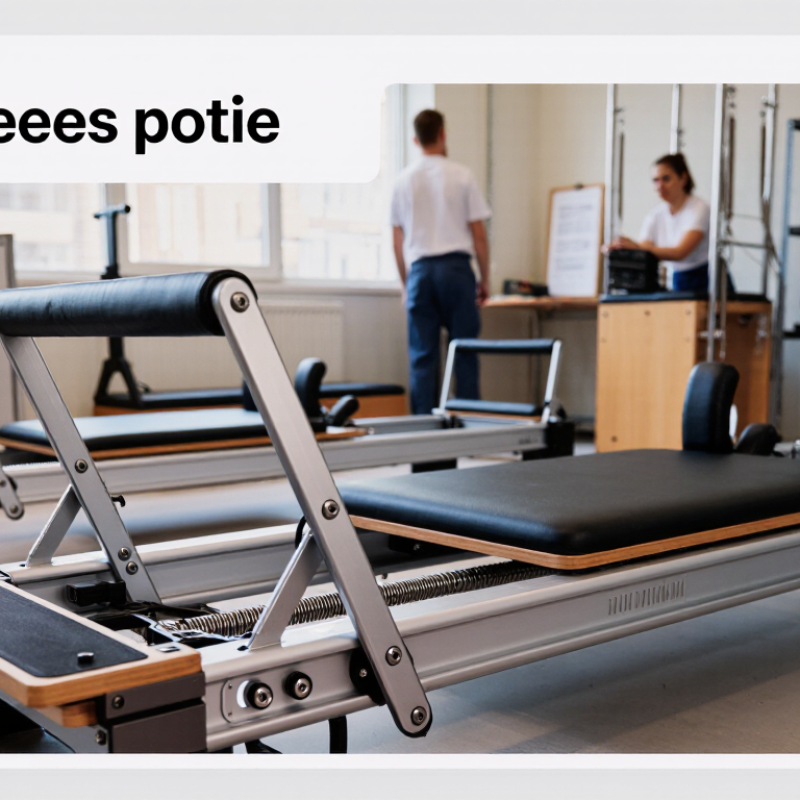
A Pilates chair uses a padded seat, a split or single pedal, and adjustable springs to create resistance in a small footprint. The spring tension changes how much effort an exercise requires. Some models also include handles, which support balance during standing movements. The pedal should travel smoothly, without catching or shifting sideways. Quiet movement matters, too; a loud spring can make controlled breathing harder to hear.
Look closely at the frame, spring attachments, pedal hinges, and stitching. These details reveal more than a polished product photo. The seat should feel firm but comfortable, while the frame should remain stable when pressure moves from one side to the other. Not glamorous, but important. Adjustable resistance can suit different strength levels, though clear setup instructions help users make sensible changes. I would inspect the spring connection twice; a catalog image rarely shows how it holds up through repeated use. For buyers comparing manufacturers in China, ask for material specifications, load-testing information, and inspection records. A compact chair still needs careful engineering. One small wobble can change the feel of an exercise.
How China’s Pilates Chair Manufacturing Industry Is Organized
China’s Pilates chair manufacturing industry is built around connected workshops, component suppliers, and final-assembly factories. Some facilities focus on metal frames, while others produce upholstery, springs, handles, or wooden platforms. A buyer may deal with one factory, even when several specialist suppliers contribute to the finished chair.
That structure can support flexible production. Frame makers cut and weld steel tubing, then apply coatings to resist scratches and corrosion. Upholstery teams fit foam and vinyl over shaped seats. Assembly workers install springs and moving parts, checking alignment and resistance by hand. Small details matter: a loose pin or uneven foot can affect stability during repeated use.
Quality practices vary. Some manufacturers document load tests, material checks, and inspection steps; others provide less detail unless asked. That division is efficient, but not always transparent. Buyers should request drawings, sample units, test records, and clear specifications for dimensions and finishes. A polished sample is useful, though it cannot prove every production batch is consistent. Independent inspections can help, especially when orders involve multiple suppliers or changing designs. The system is capable, but its weakest link may be a component nobody sees.
Criteria for Identifying Leading Pilates Chair Manufacturers
Leading Pilates chair manufacturers should be assessed by evidence, not catalog polish. The Global Wellness Institute’s 2023 Global Wellness Economy Monitor valued the physical activity economy at US$1.06 trillion in 2022 and projected US$1.35 trillion by 2027. This broad figure signals a large sector, not proven demand for Pilates chairs. Buyers should request factory production records, material specifications, and documented quality checks before comparing prices.
Inspect the chair’s frame, welds, springs, upholstery, and moving parts. Ask how load capacity is tested and whether test results cover the exact model offered. A stable chair should stay level on a firm floor, with smooth pedal travel and no sharp edges. Request clear assembly instructions, spare-part availability, and warranty terms in writing. Leading suppliers can explain how they control defects across repeated production runs, not just show one sample. Still, a factory audit or sample cannot guarantee every future shipment; independent inspection may be worthwhile for larger orders.
Tips: Ask for dated test reports, a production sample, and close-up photos of welds, springs, and pedal joints. Compare like with like.
Who Are the Top Pilates Chair Manufacturers in China? - Criteria for Identifying Leading Pilates Chair Manufacturers
Use this weighted scorecard to compare manufacturers. The weights are a suggested evaluation framework, not published industry rankings; verify claims against current documents and product samples.
| Evaluation criterion | Suggested weight | Evidence to request | How to assess it |
|---|---|---|---|
| Product safety and load testing | 20% | Test reports for the chair and its components; stated user-weight limits; inspection records; risk and warning documentation. | Check that reports identify the model tested, test methods, results, and issuing laboratory. Confirm that declared limits and warnings match the product and intended use. |
| Design, stability, and durability | 15% | Drawings or specifications; materials and finish details; stability and repeated-use test results; documented design revisions. | Inspect the frame, joints, moving parts, and contact surfaces. Ask how testing represents repeated use and whether the production model matches the tested design. |
| Quality management and production control | 15% | Quality-management certificate, if held; process inspection records; incoming-material checks; final inspection criteria; corrective-action records. | For an ISO 9001 certificate, verify its validity, scope, and issuing certification body. Treat certification as supporting evidence, not proof that every product is defect-free. |
| Materials and component traceability | 10% | Bills of materials; supplier records; material declarations; batch or lot identification for key components. | Check whether the manufacturer can link incoming materials and critical components to finished-product batches and respond to a quality issue with traceable records. |
| Customization and engineering capability | 10% | Product drawings, approved sample process, change-control procedure, and written confirmation of available options and tolerances. | Evaluate whether requested changes are documented and validated before mass production, rather than accepted without clear specifications or approval samples. |
| Delivery reliability and capacity | 10% | Documented production schedule, order lead-time terms, capacity information, and shipment records where available. | Compare quoted lead times with the buyer’s schedule and confirm how delays, order changes, and pre-shipment inspections are handled. |
| After-sales service and spare parts | 10% | Written warranty terms; service contact process; spare-parts list and availability; installation and maintenance instructions. | Review coverage, exclusions, response arrangements, and the practical process for obtaining replacement parts in the intended sales market. |
| Export and destination-market compliance | 5% | Product classification, applicable test documentation, labels, user instructions, and export documents relevant to the destination. | Confirm applicable requirements for the exact product and destination with the relevant authority or qualified compliance professional. Do not assume a particular marking or certificate applies to every Pilates chair. |
| Factory verification and transparency | 5% | Business registration details, factory address, production-process information, and a video or in-person audit where appropriate. | Verify that the contracting entity, manufacturing site, and declared production capabilities are consistent. Distinguish a factory from a trading or sourcing company. |
| Total suggested weighting | 100% | Score each criterion consistently, retain supporting evidence, and compare verified results rather than relying on unsubstantiated marketing claims. | |
Profiles of Notable Pilates Chair Manufacturers in China
Chinese Pilates chair manufacturers generally fall into three practical profiles. Some focus on metal fabrication, producing steel frames with welded joints, powder-coated finishes, and adjustable pedal systems. Their strengths may include stable structures and flexible production runs. Ask for close-up photos of welds and measurements of frame tubing.
Other workshops specialize in upholstery and compact fitness equipment. They may offer different foam densities, vinyl colors, and pedal-resistance options. Sit on a sample chair if possible. A seat can look supportive in a catalog yet feel too firm during a longer session. Small details matter.
A third group works mainly with export orders and custom specifications. These suppliers may help adjust dimensions, packaging, or instruction materials for overseas buyers. Request a sample, a written specification sheet, and records of relevant quality checks before placing a large order. Some factories communicate clearly, but not all provide equally detailed documentation. That gap deserves attention. I would also compare replacement-part availability, because springs and upholstery eventually wear. A polished showroom tells only part of the story. Factory capacity and product consistency still need independent checking.
How to Compare Suppliers and Assess Product Quality
When comparing Pilates chair manufacturers in China, look beyond price and catalog photos. The Global Wellness Institute’s Global Wellness Economy Monitor 2024 valued the wellness economy at $6.3 trillion in 2023, with a forecast of $9 trillion by 2028. That growth makes supplier screening more important, not less. Request drawings, material specifications, load-test records, and a clear warranty. For safety, ask how testing addresses applicable requirements in ISO 20957-1 for stationary training equipment. A certificate alone is not proof that every chair model was tested.
Inspect practical details. Are welds even, without sharp edges? Does the pedal move smoothly through its full range? Ask for spring strength and replacement procedures, plus the chair’s rated user weight. Request test videos showing repeated loading, and verify that the tested sample matches the production model. Check whether inspection records identify sample size and acceptance criteria. If answers stay vague, pause. A polished sample can hide inconsistent batch quality; this deserves a second look.
Tips: Ask for a pre-shipment inspection and keep approved samples for comparison. Test the chair yourself if possible. Small details matter: a loose pin, noisy spring, or uneven pedal can affect daily use. Don’t treat the lowest quote as the best value.