
What Are the Top Cup Paper Sheet Types in 2026?
Choosing the right Cup Paper Sheet in 2026 means balancing leak resistance, forming performance, print quality, and end-of-life options. The main choices include single- and double-sided polyethylene-coated board, water-based barrier paper, PLA-lined stock, and specialty cupstock with tailored coatings. Each has practical strengths. A cold-drink cup may need protection against condensation, while a hot-coffee cup must withstand heat and extended contact with liquid. The rim, seam, and base matter too. A sheet that looks suitable on paper can still wrinkle or leak during forming.
This guide compares common sheet types by their barrier properties, typical uses, and purchasing considerations. It also explains why grammage, coating weight, stiffness, and converting equipment should be assessed together—not as isolated specifications. Ask suppliers for current technical data and, where possible, samples for line trials. Check claims against the product’s intended use and the collection or recycling services available in your market. Those details can change the best choice. Small details matter.
There is no single winner for every cup. A lower-cost option may perform well in one machine but poorly in another; even a clear coating description does not replace a production test. Some comparisons also depend on supplier-specific constructions, so treat broad rankings with care. The following sections offer a practical starting point for evaluating the leading Cup Paper Sheet types in 2026, while leaving room for a less convenient truth: the best specification is the one that works reliably in your actual operation.
What Cup Paper Sheets Are and How They Are Made
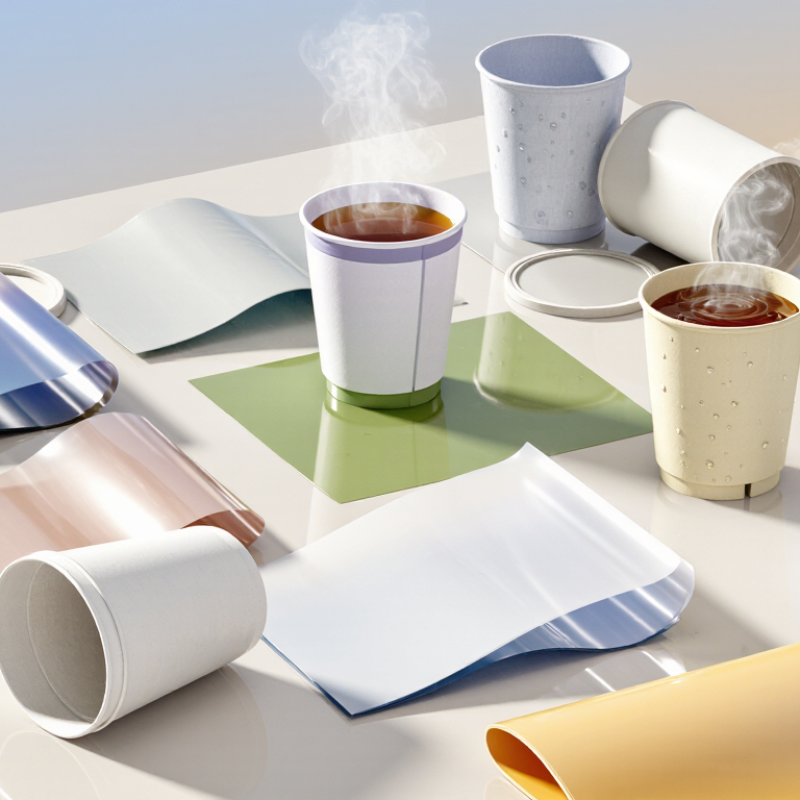
Cup paper sheets, often called cupstock, are stiff paperboard made to hold their shape after forming. They usually start as wood-fiber pulp, which is cleaned, refined, and spread into a wet web on a moving screen. Pressing and drying remove water; calendering smooths the surface. The result is supplied in rolls or cut sheets for cup conversion.
The scale is substantial: FAO’s 2022 forest-product statistics report about 401 million tonnes of global paper and paperboard production. That figure covers many grades, not cupstock alone.
Common sheet types differ by barrier and coating: one-sided polyethylene-coated stock, double-sided coated stock, and paper with water-based barrier coatings. Some cup designs use uncoated board with a separate barrier layer. Coating choice affects liquid resistance, heat performance, print quality, and how reliably seams seal.
No sheet is best in every cup. A small coating flaw can let liquid wick into the fiber edge. Tiny defects matter.
In manufacturing, cupstock is cut into fan-shaped blanks, printed, curled, and sealed into sidewalls. Bottom discs are attached, then rims are rolled for drinking comfort. Fiber blend, sheet thickness, and coating weight all influence stiffness and forming speed.
A line operator may notice a rough edge before a test detects leakage. That judgment matters, but it is not a substitute for measured quality checks.
One trade-off deserves more attention: a barrier that performs well in a cup may complicate the fiber-recovery process.
The Main Types of Cup Paper Sheets in 2026
What Are the Top Cup Paper Sheet Types in 2026?
The Main Types of Cup Paper Sheets in 2026
Cup paper sheets are commonly grouped by their barrier coating and intended use. Single-sided polyethylene-coated cupstock is a familiar choice for hot drinks. The coating faces the liquid, while the uncoated side remains printable. Double-sided coated sheets can suit cold drinks, where condensation may soften the outer wall. They often need careful forming and sealing. Stiffness matters, too. A sheet that feels sturdy in a stack may still buckle if its weight or moisture resistance is poorly matched to the cup design.
Water-based dispersion-coated paper is another option, designed to provide a liquid barrier without a conventional plastic film layer. Performance varies by coating and converter process, so check heat resistance, sealing behavior, and disposal claims rather than relying on the coating name alone. PLA-coated sheets use a plant-derived polymer, but suitable composting conditions may be necessary. Uncoated paperboard is generally for dry applications or uses with a separate liner. One detail is easy to miss: matching the sheet to the forming equipment matters as much as choosing a coating.
Tips: Request samples and test them on the actual cup line. Check grammage, curl, coating side, and seam strength. Small trials help; specifications on paper do not tell the whole story.
How Cup Paper Sheet Types Differ in Performance
What Are the Top Cup Paper Sheet Types in 2026?
How Cup Paper Sheet Types Differ in Performance
Cup paper sheets vary in barrier, stiffness, and heat performance. Single-sided polyethylene-coated paper is common for cold drinks and many hot beverages. Its inner coating helps resist leaks, while the paper body supports printing and forming. Double-sided coating adds an outer barrier, but can affect recycling options and requires suitable cup-sealing settings. No sheet is perfect.
Aqueous-coated and biopolymer-coated sheets offer alternative barrier systems. Their performance depends on coating weight, cup design, and sealing conditions. For example, a thin barrier may struggle when a drink sits for a long time. Paper stiffness matters too: a firm sheet can help a cup keep its shape, but may be harder to form on some equipment. A specification sheet helps, yet real converting trials often reveal details it misses.
Tips: Match the sheet to the drink’s temperature, fill time, and lid style. Check seam strength and leakage with actual production settings, not just sample sheets. Ask suppliers for food-contact documentation and clear performance data. Small trials are useful. Even then, results may vary between machines.
Choosing a Cup Paper Sheet for Different Applications
For hot drinks, single-side coated cupstock is a common choice: the inner barrier helps limit leaks, while the uncoated outer face accepts printing. Match board stiffness to cup size and filling temperature; a tall cup that feels firm when empty may soften under heat. For iced drinks, double-side barriers can reduce seepage from condensation, though they may complicate repulping. Aqueous-coated sheets are another option where barrier performance and end-of-life handling both matter. Check sealing and forming on the actual cup line, not just on a flat sample.
Application fit depends on more than coating. A U.S. EPA materials report recorded about 33.3 million tons of paper and paperboard containers and packaging recycled in 2018, out of 41.9 million tons generated. That is roughly 80%, but the category includes many kinds of packaging; it is not a cup-specific recycling rate. Treat it as broad context, not proof that a particular cup sheet is recyclable locally. Ask converters about coating weight, moisture resistance, food-contact documentation, and compatibility with available recovery systems.
Small details matter. A takeaway cup may face hot liquid, a tight lid, and a long delivery ride. A sample can still fail at the seam. I would compare leak tests, rim quality, and stiffness after filling, then reconsider the specification if performance changes between production batches.
Top Cup Paper Sheet Types in 2026: Typical Basis-Weight Ranges
How to choose: Single-side PE-coated sheets suit many hot and cold beverage cups. Double-side PE-coated sheets can provide added protection against moisture on both surfaces. PLA-coated sheets are used when a compostable lining is required, but compostability depends on certification and suitable facilities. Water-based barrier sheets may support recycling where local mills accept the coating.
Ranges are indicative examples in grams per square metre (g/m²), not fixed specifications. Actual requirements depend on cup design, liquid temperature, barrier performance, and supplier specifications.
Emerging Materials and Standards for Cup Paper Sheets in 2026
For 2026, cup paper sheets are moving beyond conventional polyethylene-lined board. Mills are testing water-based barrier coatings, thin bio-based layers, and molded-fiber-compatible surfaces. These can help cups resist hot drinks, grease, and leakage while reducing persistent plastic layers. Results still depend on coating weight, cup-seam design, and local recycling systems. A sheet that performs well in a laboratory may behave differently after use.
Material scale matters. FAO’s Global Forest Products Facts and Figures 2022 reported roughly 401 million tonnes of global paper and paperboard production that year. That figure covers many uses, not cup stock alone, but it underlines the importance of responsible fiber sourcing. Recycled fiber and agricultural residues are attracting interest; however, food-contact safety, odor, wet strength, and consistent supply remain practical hurdles. Not every alternative is ready for every beverage.
Standards help separate claims from performance. ISO 18604 addresses material recycling, while food-contact rules require suitable components for the intended food and temperature. In the EU, the Packaging and Packaging Waste Regulation generally applies from 12 August 2026, with recyclability requirements phased in over time. Still, “plastic-free” can be a slippery label. Buyers should request test results for barrier performance, migration, and end-of-life handling—not just a coating description.
| Cup Paper Sheet Type | Typical Material Structure | Key Properties and Uses | End-of-Life Considerations | Relevant Standards and Checks | 2026 Market Outlook |
|---|---|---|---|---|---|
| Polyethylene (PE)-coated cupstock | Paperboard with a thin PE coating on the food-contact side; some designs use PE on both sides. | Established option for hot and cold beverage cups. The coating helps resist liquid penetration and provides heat-sealing performance. | Coating can make fibre recovery more challenging. Recyclability depends on local collection, pulping, and mill capability; acceptance should be confirmed locally. | For food-contact paper in the United States, relevant references include 21 CFR 176.170 and 176.180, depending on food type and conditions of use. Check the complete cup structure and intended use. | A widely used baseline material. Design improvements commonly focus on reducing coating weight and improving compatibility with fibre-recycling systems. |
| Aqueous-dispersion-coated cupstock | Paperboard treated with a water-based barrier dispersion, often using polymer, wax, or other functional components. | Can provide moisture, grease, or heat-seal resistance while avoiding a conventional extruded PE layer. Performance varies by coating formulation and application. | “Water-based” does not automatically mean recyclable or compostable. Repulpability and recycling acceptance need to be verified for the specific product and local system. | Assess food-contact compliance for the destination market and conduct relevant barrier, seal-strength, and repulpability tests. No single standard covers every dispersion-coated construction. | An important fibre-friendly design direction, with continued development in barrier performance and compatibility with existing paper-recovery processes. |
| Polylactic acid (PLA)-lined cupstock | Paperboard with a PLA coating or lining, made from a bio-based polymer. | Provides a liquid barrier and can be used in hot- or cold-drink cup designs when the construction is engineered for the intended temperature and use. | Industrial compostability is not the same as home compostability. Composting claims require certification of the relevant finished article, and suitable facilities may not be available locally. | EN 13432 and ASTM D6868 are relevant references for certain compostable packaging constructions; certification, scope, and local acceptance must be checked. | Remains an option where collection and industrial composting pathways are established. Bio-based content alone does not establish compostability or recyclability. |
| Mineral-enhanced or mineral-barrier-coated cupstock | Paperboard with a coating that may contain mineral components, such as clay or calcium carbonate, combined with binders or other barrier ingredients. | Can be designed to improve surface properties or provide specific resistance to liquids and grease. Formulations and performance differ substantially between products. | Mineral content does not by itself determine end-of-life performance. The coating’s binders and total construction affect repulpability, recycling, and composting suitability. | Review food-contact compliance and test the finished construction for its stated barrier function and compatibility with the intended recovery route. | Part of ongoing coating innovation. Evaluate product-specific test results rather than assuming all mineral-containing coatings have the same benefits. |
| PHA-coated or PHA-blend cupstock | Paperboard with a polyhydroxyalkanoate (PHA) coating or a PHA-containing barrier blend. | Emerging bio-based polymer approach being developed for moisture-barrier packaging. Commercial availability, processing behavior, and temperature performance vary. | Biodegradation and compostability depend on the specific polymer, finished article, and disposal environment. Do not infer home or marine biodegradability from the material name. | Check market-specific food-contact requirements and seek finished-product evidence for any compostability or biodegradation claim, including applicable EN 13432 or ASTM D6868 certification where relevant. | An emerging option rather than a universal replacement for established linings; adoption depends on cost, converting performance, and verified end-of-life routes. |
| Fluorine-free grease- and barrier-treated cupstock | Paperboard using non-fluorinated sizing agents, coatings, or barrier layers. The exact chemistry varies by manufacturer and application. | May be engineered for resistance to water, grease, or other liquids. A fluorine-free claim alone does not specify the coating’s full composition or performance. | Recyclability and compostability depend on the complete coating system, not solely on whether fluorinated substances are used. | Request supporting documentation for chemical-composition claims, food-contact compliance, and performance testing. Applicable requirements differ by market and use. | Growing design focus as buyers seek alternatives to intentionally added PFAS. Verify claims and product-specific evidence rather than relying on broad labels. |