
>

Top 10 Aluminium Window and Door Manufacturers Worldwide

Choosing a window and door manufacturer is not just a matter of comparing catalogue photos. Frame depth, thermal breaks, hardware, glazing compatibility, and installation support can shape a building’s comfort for decades. The UNEP and Global Alliance for Buildings and Construction’s 2023 Global Status Report states that buildings and construction account for 37% of global energy- and process-related carbon dioxide emissions. That figure makes product performance and service life important considerations—not automatic proof that one material or brand is best.

As architect and former American Institute of Architects president Carl Elefante put it, “The greenest building is the one that is already built.” The thought is useful here: durable, repairable windows may matter as much as headline efficiency claims. Details matter. This guide to the Top 10 Aluminium Window and Door Manufacturers Worldwide examines companies through practical lenses, including product range, documented performance, geographic reach, and support after purchase. It also considers how Window Door Aluminium systems fit different projects, from a compact urban renovation to a sun-exposed commercial façade. Rankings can simplify a crowded market, but they cannot replace project-specific checks. A strong brand on paper may still be a poor fit for a coastal site, an unusual opening, or limited local servicing. That is worth admitting. Compare specifications carefully, verify claims against technical documents, and ask who will support the product after installation.
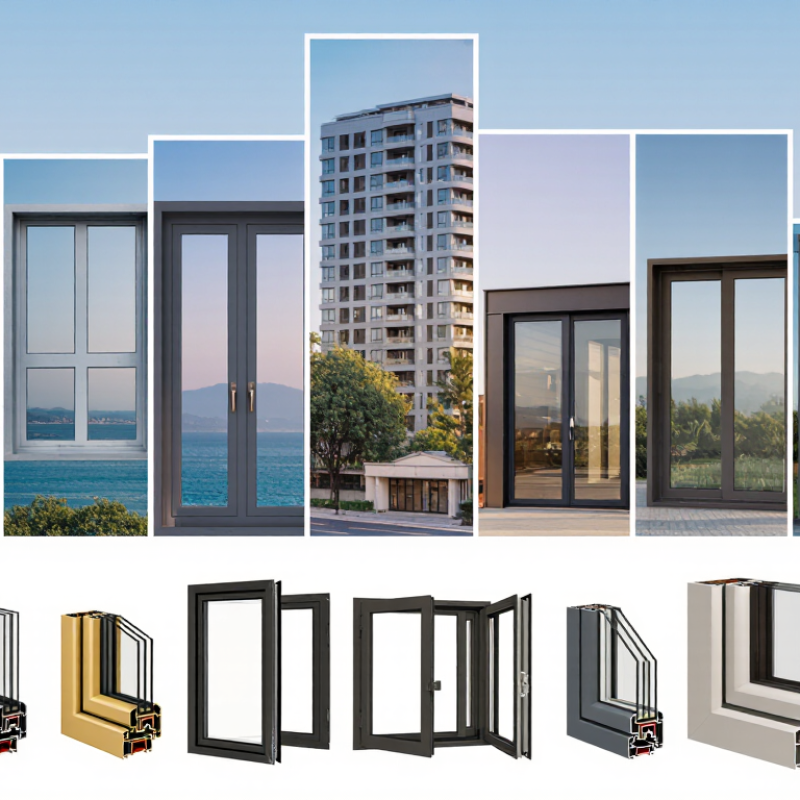
Top 10 Aluminium Window and Door Manufacturers Worldwide

How the Top 10 Manufacturers Are Selected: Scale, Reach, and Product Range

A useful manufacturer comparison needs more than a polished catalogue. Scale can be assessed through production capacity, workforce, facility footprint, and the ability to handle repeat orders. We also look for evidence in technical documents, product specifications, and published company information. Numbers matter. Capacity claims are easier to trust when they are supported by clear, comparable data.

Reach describes how well a manufacturer serves projects beyond its home market. Indicators include regional distribution, export experience, service availability, and support for different climate conditions. A window tested for wind-driven rain may not perform identically in a hot, dusty location. Project records and local technical assistance therefore matter alongside shipment volume. Public information is uneven, though, and export figures are not always disclosed.

Product range is judged by practical coverage, not by the longest catalogue. Relevant details include frame materials, opening styles, glazing options, thermal and acoustic performance, and configurations for residential or commercial use. A broad range can help buyers match products to varied designs, but it does not automatically mean better quality. Specifications should be compared carefully, since similar labels can hide differences in testing methods or hardware. Some evidence remains hard to verify from outside the company; that uncertainty should be noted rather than filled with guesses.

Global Leaders in Aluminum Windows and Doors: Profiles and Key Markets

Global leaders in aluminum windows and doors compete through engineering, fabrication scale, and regional fit. European manufacturers often emphasize slim sightlines, thermal breaks, and tested airtightness for renovation projects. North American suppliers commonly serve residential replacement and commercial construction. In China and other Asian markets, large production capacity supports varied price points and rapid project delivery. Gulf markets favor systems designed for intense sun, wind, and large glazed openings. These are broad patterns, not fixed rules.

Performance matters as much as appearance. UNEP and the Global Alliance for Buildings and Construction reported that buildings and construction accounted for 34% of global energy demand and 37% of energy- and process-related CO2 emissions in 2022. Better window systems can support building efficiency, but results depend on glazing, installation, climate, and maintenance. That matters. Comparing manufacturers by headline claims alone can be misleading; independent test data and project references offer stronger evidence.

Tips: Check the thermal-break design, glass specification, drainage details, and local service support. Ask for tested performance values, not just marketing descriptions. Rankings can shift by region and year, and I would treat any single global “top ten” list cautiously.

Comparing Residential, Commercial, and High-Performance Product Portfolios

Aluminium window and door manufacturers serve very different needs, even when their catalogues look similar. Residential ranges often prioritize slim frames, easy operation, and finishes that suit everyday interiors. A homeowner might compare a compact tilt-and-turn window with a wide sliding door, then check how each handles cleaning and ventilation. Small details matter.

Commercial projects place greater weight on repeatable sizing, installation speed, and hardware suited to frequent use. Offices, schools, and retail spaces may require larger glazed areas, coordinated door systems, and frame options that fit varied openings. Buyers should review tested performance data, not rely on frame appearance alone. A neat showroom sample proves little about an installed façade.

High-performance portfolios may include thermal breaks, multiple seals, acoustic options, and glazing combinations designed for demanding climates. These features can improve comfort, but results depend on the whole assembly, including glass, seals, and installation quality. Ask for documented test conditions and compare like with like. It is easy to overvalue a headline rating. Even careful comparisons have limits: project exposure, workmanship, and maintenance can change real-world outcomes. A portfolio is a useful starting point, not a guarantee.

Benchmarking U-Factor, SHGC, and EN 12207 Air-Permeability Classes

Comparing the top ten aluminium window and door manufacturers requires comparable test data, not just brochure claims. U-factor measures heat transfer through a product; lower values generally indicate better insulation. Check whether the figure covers the complete window or only its glazing, and confirm the units. SHGC describes how much solar heat passes indoors. A lower value can help limit overheating in sunny rooms, but may reduce useful winter warmth. Numbers need context.

For air leakage, EN 12207 classes provide a useful benchmark under defined test conditions. Higher classes indicate tighter performance, but compare products tested in similar sizes and configurations. Ask for laboratory reports, including the tested frame, seals, and opening type. Look beyond a single headline rating: installation details and worn weatherstripping can change real-world results. Small gaps matter. A ranking can still mislead if it mixes whole-window U-factors with glazing-only values, or compares different test setups. The careful buyer checks the evidence and notes what remains uncertain.

IAI Data: About 75% of All Aluminum Ever Produced Remains in Use

Top 10 Aluminium Window and Door Manufacturers Worldwide

IAI Data: About 75% of All Aluminum Ever Produced Remains in Use

Aluminum’s long working life helps explain why it appears in so many window and door systems. The International Aluminium Institute (IAI) estimates that about 75% of all aluminum ever produced remains in use. A frame may spend decades facing rain, sun, and daily handling. That longevity matters.

Yet the figure needs context. It describes aluminum across many uses, not just building frames, and it does not mean every discarded window becomes a new one. Reuse and recycling depend on collection, sorting, and separating aluminum from glass, seals, and hardware. The process is practical, but not effortless.

For manufacturers, durability is only part of the story. Well-designed frames can be easier to maintain, repair, and eventually recover as material. A chipped finish or worn seal is a small detail, but it can influence whether a window stays useful or gets replaced early. Still, recycled content and product lifespan vary. The impressive statistic should encourage careful questions, not replace them.

Top 10 Aluminium Window and Door Manufacturers Worldwide - IAI Data: About 75% of All Aluminum Ever Produced Remains in Use

Manufacturer-neutral industry facts and performance references; no company rankings or brand data are included.

No. Industry dimension Verified data or fact Relevance to window and door manufacturing Source
1 Aluminium still in use About 75% of all aluminium ever produced is estimated to remain in use. Highlights the material’s long service life and the importance of designing products for reuse and recovery. International Aluminium Institute (IAI)
2 Energy saved through recycling Recycling aluminium uses about 5% of the energy required to produce primary aluminium—an energy saving of approximately 95%. Recycled aluminium can reduce the energy demand associated with frame-material production. IAI, Aluminium Recycling
3 Recyclability Aluminium can be recycled repeatedly without losing its inherent material properties. Frames and production scrap can be suitable for recycling when collected and sorted appropriately. IAI, Aluminium Recycling
4 Thermal-break design A thermal break separates the interior and exterior portions of a metal frame to reduce heat transfer through it. Thermally improved frame designs help limit heat flow through conductive aluminium profiles. U.S. Department of Energy, Energy-Efficient Windows
5 U-factor U-factor measures the rate of heat transfer through a window or door assembly; a lower value indicates better insulation. Useful for comparing the heat-loss performance of complete products, including their frames and glazing. National Fenestration Rating Council (NFRC)
6 Solar heat gain coefficient SHGC describes the fraction of solar radiation admitted through a window or door; values are expressed on a scale from 0 to 1. Helps assess solar heat gain alongside frame and glazing choices. U.S. Department of Energy, Energy-Efficient Windows
7 Air leakage rating Air leakage is a rated product-performance characteristic; a lower leakage rate indicates less air passing through product joints under the stated test conditions. Frame joints, seals, hardware and installation details all affect the final assembly’s air leakage performance. NFRC
8 European product standard EN 14351-1 specifies product characteristics and performance requirements for windows and external pedestrian doorsets. Provides a product-standard framework for declaring relevant performance characteristics in its scope. CEN-CENELEC Standards
9 Thermal-transmittance calculation ISO 10077-1 provides a method for calculating the thermal transmittance of windows, doors and shutters. Supports consistent assessment of heat transfer through fenestration products. International Organization for Standardization (ISO)
10 Environmental product declarations ISO 14025 sets principles and procedures for Type III environmental declarations, which communicate quantified environmental information. Provides a standardized framework for reporting product life-cycle environmental information. ISO 14025

Newsletter

Keep up on our always evolving product features and technology. Enter your e-mail and subscribe to our newsletter.