
>

Top 10 Pallet Flow Racking Suppliers Worldwide?

Choosing the right Pallet Flow Racking supplier can shape warehouse speed, safety, and long-term operating costs. This matters when cartons move through chilled rooms, narrow aisles, or high-volume distribution centers. A well-designed system uses gravity rollers to move pallets toward the picking face. It supports first-in, first-out rotation and reduces forklift travel.

Industry consultant Marc Wulfraat has said, “Warehouse design should begin with the product flow, not the equipment.” That principle deserves attention here. Pallet Flow Racking is not automatically the best answer for every facility. Product weight, pallet quality, lane depth, temperature, and replenishment frequency all affect performance. Small differences can create expensive bottlenecks.

This guide examines the Top 10 Pallet Flow Racking Suppliers Worldwide. It considers engineering capability, manufacturing consistency, customization, safety features, service coverage, and customer experience. Some suppliers excel in high-density food storage. Others perform better in automotive, retail, or e-commerce operations. The strongest names usually provide more than frames and rollers. They offer load calculations, layout support, installation guidance, and after-sales assistance.

No ranking is perfect. That is worth admitting. Supplier quality can vary by region, project team, and installation partner. A famous brand may still disappoint on a poorly specified project. Conversely, a smaller specialist may deliver excellent results with careful engineering. Buyers should verify certifications, references, lead times, spare-parts access, and local technical support before signing an agreement.

The following selection offers a practical starting point. It is designed for decision-makers who want safer movement, clearer stock rotation, and measurable warehouse efficiency.
Top 10 Pallet Flow Racking Suppliers Worldwide?

What Is Pallet Flow Racking and How Does It Work?

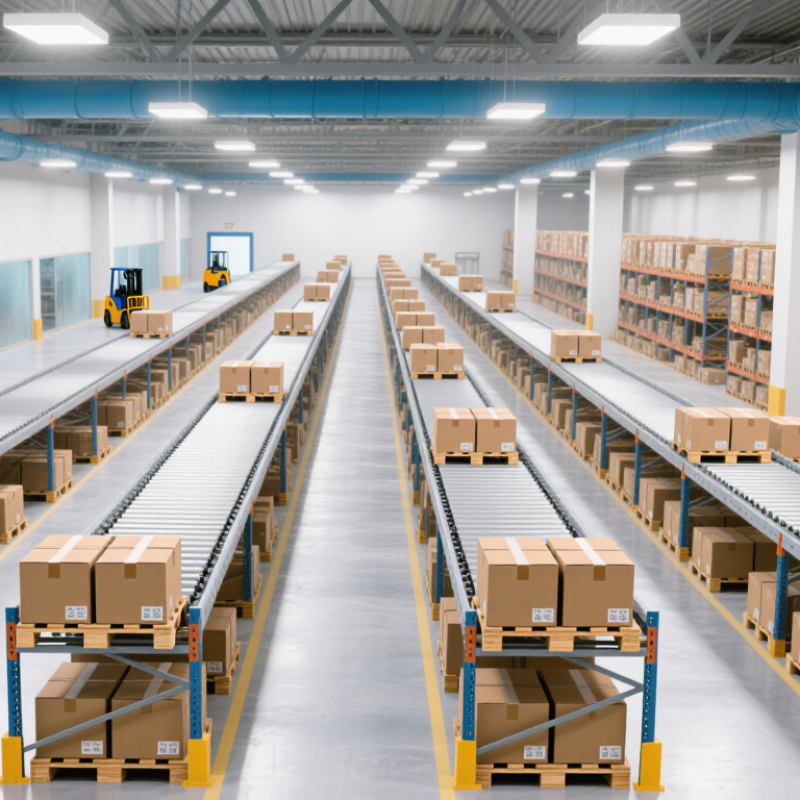
Pallet flow racking is a dynamic storage system designed for high-density pallet handling. It uses inclined lanes fitted with rollers or wheels. Gravity moves each pallet from the loading side toward the picking side. This arrangement usually supports first-in, first-out inventory rotation, which helps manage products with dates or limited shelf life.

Operators load pallets from the higher rear side. The pallet then travels slowly down the lane under controlled gravity. Speed controllers, braking rollers, and lane separators help prevent collisions. When a worker removes the front pallet, the next one advances into position. Clear labels and visible lane openings make daily checks easier. In my experience, correct pallet dimensions matter more than many buyers expect. A small variation can cause hesitation, impact, or uneven movement.

Pallet flow systems can reduce travel distance and create compact storage zones. They work well where receiving and picking happen on opposite sides. However, they are not suitable for every warehouse. Damaged pallets may catch on rollers, while poor loading habits can disrupt the entire lane. Regular inspections should check rollers, stops, frames, and pallet condition. It is easy to overlook cleaning. Dust and loose packaging can affect movement. Some facilities also need adjustable lanes for changing product sizes, although frequent adjustments may reduce operating consistency. Good planning includes load testing, operator training, and space for safe access around the rack.

Key Features Used to Compare Global Pallet Flow Racking Suppliers

Top 10 Pallet Flow Racking Suppliers Worldwide?

Comparing pallet flow racking suppliers requires more than checking price lists. The key feature is controlled product movement. Evaluate FIFO suitability, lane depth, roller diameter, brake rollers, load capacity, and pallet quality.

Capacity matters. A system carrying 1,000 kilograms per pallet needs tested ratings, not optimistic estimates. The 2024 MHI Annual Industry Report identifies robotics and automation as technologies expected to reach 83% adoption within five years. This trend increases the value of accurate rack dimensions, barcode visibility, and integration-ready designs.

Safety should receive equal attention. Compare pallet stops, entry guides, anti-collapse protection, impact guards, and inspection procedures.

Ask whether the supplier provides load testing, installation supervision, and maintenance training.

In practical warehouse audits, uneven floors and damaged pallets often create more trouble than the rack itself.

Details decide. Check usable lane length after safety clearances, not only the advertised depth.

Total cost also matters. Include engineering changes, shipping, installation, spare rollers, and future expansion. A lower quotation may become expensive when replacement parts arrive slowly.

Reports from the International Federation of Robotics show continuing growth in warehouse automation, but automation can expose weak rack alignment. That point is easy to miss.

Compare supplier lead times, technical documentation, local service coverage, and warranty conditions using the same scoring sheet. A perfect comparison rarely exists; real facilities contain imperfect pallets, changing inventory, and rushed operators.

Top Pallet Flow Racking Suppliers by Market Coverage and Expertise

Top 10 Pallet Flow Racking Suppliers Worldwide?

The strongest pallet flow racking suppliers compete through market coverage and technical depth. The leading ten usually support distribution centers across several regions, with local engineering teams and installation partners. Their experience covers food storage, beverage warehouses, automotive parts, and general retail logistics. A useful supplier should provide load calculations, pallet specifications, lane measurements, and clear maintenance guidance. Sales reach alone is not enough.

Reliable suppliers can adapt systems to different pallet weights, rack heights, temperature ranges, and warehouse layouts. They should explain roller spacing, brake control, lane capacity, and first-in, first-out operation without hiding practical limitations. Site surveys matter. A qualified engineer will inspect floor levels, forklift access, fire protection, and pallet condition before recommending a design. Factory testing and documented inspections also strengthen confidence.

A ranking is never perfectly clean. Some suppliers advertise worldwide coverage, yet their local response may be slow. Others have excellent engineering but limited installation support outside their home market. Buyers should compare reference projects, structural calculations, warranty terms, spare-parts access, and service response times. Ask for evidence. A warehouse manager’s feedback can reveal more than a polished brochure. Small details, such as damaged rollers or uneven loading, often decide whether a system performs well after several years.

How to Evaluate Supplier Quality, Safety, and Customization Options

Choosing among the top 10 pallet flow racking suppliers requires more than comparing prices. Examine their engineering records, factory controls, and installation experience. Request load calculations for every beam, roller, frame, and guide rail. A credible supplier should explain testing methods, material grades, tolerances, and corrosion protection clearly.

Safety evidence matters. In 2023, the U.S. Bureau of Labor Statistics recorded 2,607,900 nonfatal private-industry workplace injuries and illnesses. Storage design cannot prevent every incident, but it can reduce avoidable risks. Ask whether the supplier designs around ANSI MH16.1 requirements and OSHA storage guidance. Check impact protection, load signage, fire-clearance limits, and inspection procedures. Do not accept vague certificates. A neat showroom proves little.

Customization should reflect real operating conditions. Suppliers need accurate pallet dimensions, load weights, turnover rates, temperature ranges, and forklift clearances. MHI’s 2024 Annual Industry Report identifies robotics and automation as major investment priorities, so confirm whether the rack supports future conveyor or automated vehicle integration. Flexibility is valuable, but excessive customization may complicate maintenance. I have seen specifications look impressive and still miss aisle behavior.

Tips: Visit a completed installation, not only the factory. Ask for inspection photos after six months. Compare warranty exclusions carefully. Require drawings that show tolerances and replacement parts. A useful evaluation also tests the supplier’s questions. If they never ask about damaged pallets, changing loads, or operator habits, reconsider the shortlist.

Choosing the Right Pallet Flow Racking Supplier for Your Warehouse

Choosing the Right Pallet Flow Racking Supplier for Your Warehouse

The right pallet flow racking supplier should understand your daily warehouse movements, not just sell steel frames. In a busy facility, pallet weight, carton size, forklift traffic, and turnover speed directly affect rack performance. Start with an accurate site survey. Ask the supplier to inspect floor levels, aisle widths, ceiling height, and loading patterns. Small errors here can create costly problems later.

Request load calculations, layout drawings, component specifications, and installation procedures before signing an agreement. A reliable supplier should explain roller selection, brake control, guide rails, and pallet compatibility in clear language. Ask how the system performs during peak shifts, when operators may work quickly or inconsistently. Practical testing with your actual pallets is more valuable than attractive computer images. Safety training matters too.

Check maintenance support, spare-part availability, inspection schedules, and response times. Speak with comparable warehouse operators, but treat every reference carefully. Their products, staffing, and floor conditions may differ from yours. Price alone is a weak measure. An inexpensive system may bring higher repair costs or slower picking later. Even experienced teams can overlook seasonal volume changes or damaged pallets. Review those risks honestly. The best supplier welcomes difficult questions, documents assumptions, and adjusts the design when site evidence proves an early decision was wrong.

Top 10 Pallet Flow Racking Suppliers Worldwide? - Choosing the Right Pallet Flow Racking Supplier for Your Warehouse
Rank Anonymous Supplier Profile Primary Market Coverage Typical Pallet Load Typical Lane Depth Typical System Height Best-Fit Warehouse Application Key Technical Capability Common Design References Recommended Selection Check
1 Supplier Profile A Global multi-region projects 500–1,500 kg per pallet 4–20 pallets deep 2–12 m High-throughput food, beverage and FMCG distribution Gravity roller lanes with controlled pallet speed and FIFO configuration EN 15512; EN 15629; EN 15635; FEM guidance where applicable Verify brake-roller calculation, pallet compatibility and seismic design requirements
2 Supplier Profile B North America and international export markets 900–2,000 kg per pallet 3–16 pallets deep 2.5–11 m Cold storage, frozen goods and temperature-controlled logistics Corrosion-resistant finishes and components suitable for low-temperature environments RMI design principles; applicable ASTM and local building codes Check operating-temperature limits, coating specification and defrost-cycle effects
3 Supplier Profile C Western and Central Europe 500–1,200 kg per pallet 4–15 pallets deep 2–10 m Batch storage requiring strict first-in, first-out rotation Adjustable roller pitch, lane separators and load-stop options EN 15512; EN 15629; EN 15635 Confirm pallet quality, underside clearance and minimum slope for the load type
4 Supplier Profile D East Asia and Southeast Asia 500–1,500 kg per pallet 3–18 pallets deep 2–12 m Manufacturing plants and regional distribution centers Modular components supporting mixed lane lengths and phased expansion EN 15512 or equivalent national structural standards Assess local engineering approval, seismic category and spare-parts availability
5 Supplier Profile E Middle East and Africa projects 800–1,500 kg per pallet 4–14 pallets deep 3–12 m Large-volume ambient storage with limited picking frequency Heavy-duty frames, reinforced guide rails and high-temperature coating options EN 15512; FEM 10.2.02 where specified; local construction codes Review dust protection, floor flatness, corrosion exposure and installation support
6 Supplier Profile F Latin America and export markets 500–1,500 kg per pallet 3–15 pallets deep 2.5–10 m Retail replenishment and wholesale distribution operations Combination of pallet flow lanes and selective pallet locations EN 15629; EN 15635; applicable local structural standards Compare total installed cost, local service coverage and replacement roller lead time
7 Supplier Profile G Australia, New Zealand and Pacific markets 500–1,200 kg per pallet 3–14 pallets deep 2–9 m Consumer goods, spare parts and palletized order consolidation Flexible lane widths for standard and non-standard pallet footprints AS 4084 or equivalent regional requirements; EN references where accepted Validate pallet dimensions, rack anchoring and protection against impact damage
8 Supplier Profile H Global automation-integration projects 500–1,500 kg per pallet 3–12 pallets deep 2–10 m Warehouses using conveyors, scanners and warehouse-management systems Interface-ready flow lanes with sensors, stops and conveyor transfer zones EN 619; EN 15629; EN 15635; applicable machinery-safety requirements Confirm transfer tolerances, control-system interfaces and emergency access provisions
9 Supplier Profile I Regional distributors serving multiple countries 400–1,200 kg per pallet 3–12 pallets deep 2–9 m Small and medium warehouses needing scalable storage density Standardized components with relatively short manufacturing and installation cycles Applicable national standards; EN 15512 commonly used for design verification Check engineering documentation, warranty scope and availability of local installers
10 Supplier Profile J Specialized project and retrofit markets 500–1,000 kg per pallet 3–10 pallets deep 2–8 m Existing warehouses requiring density improvements without full reconstruction Retrofit assessment, custom lane adaptation and selective-rack integration EN 15635; local building regulations; site-specific structural calculations Require a site survey covering slab capacity, aisle clearance and existing-rack condition
Specification note: The figures shown are practical industry ranges for pallet flow racking configurations rather than company-specific claims. Final capacity, lane depth, rack height, roller selection and compliance requirements must be confirmed through a project-specific structural design using the actual pallet, load, building and operating conditions.

Newsletter

Keep up on our always evolving product features and technology. Enter your e-mail and subscribe to our newsletter.