
>

7 Tips for Choosing Slim Frame Aluminum Sliding Doors

Slim frame aluminum sliding doors bring daylight into a room while keeping sightlines clean and unobtrusive. Their narrow profiles can suit patios, balconies, and open-plan living areas, but appearance is only one part of a successful choice. A door that looks elegant in a showroom may feel different beside a windy terrace or a busy kitchen. Small details matter.

This guide introduces seven practical points to consider before choosing a system. Look closely at frame strength, glass specification, panel size, track design, weather seals, operation, and installation requirements. These features can affect comfort, security, maintenance, and long-term performance. A smooth-running sample is useful, but it does not tell the whole story. Ask how the rollers are adjusted, whether the track can be cleaned easily, and how the threshold manages rainwater. Ask suppliers for clear product data, including thermal and acoustic ratings where relevant, and confirm that stated figures apply to the exact configuration you plan to buy. Measurements should account for finished floor levels, drainage, and installation access—not just the visible opening.

Slim frames can reduce visual obstruction, yet the thinnest profile is not automatically the best choice. Large glass panels need suitable engineering, and climate and building conditions can change what works well. Looks are not enough. Compare warranties, available replacement parts, and cleaning access before committing. It is easy to focus on the glass display and overlook the handle or track. A careful decision often comes from checking a sample, asking specific questions, and reviewing the details with a qualified installer.
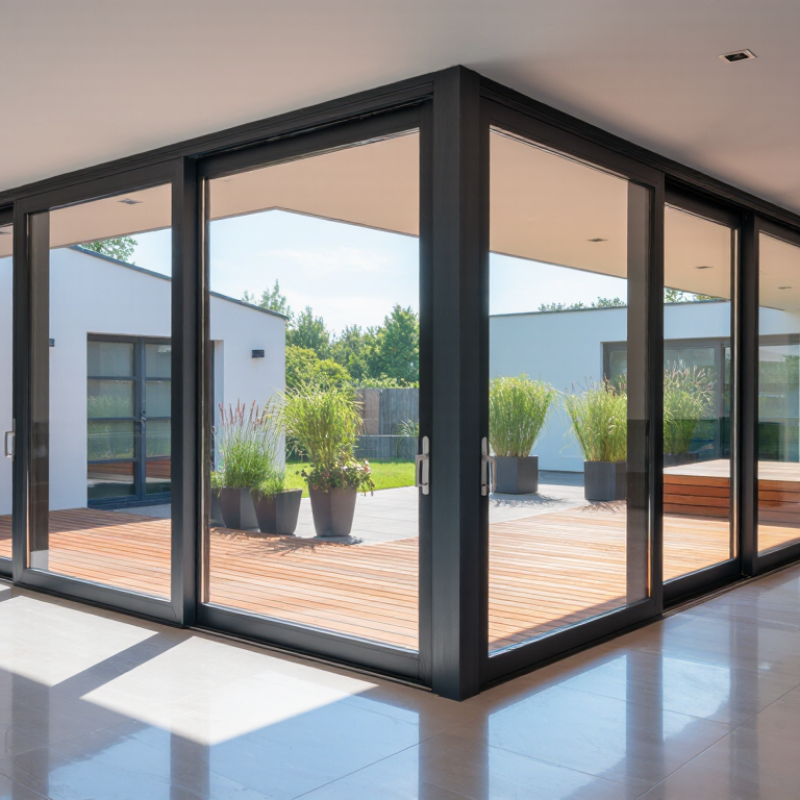
7 Tips for Choosing Slim Frame Aluminum Sliding Doors

Assess Your Space, Opening Size, and Design Requirements

Before choosing slim frame aluminum sliding doors, study how the room is actually used. Measure the opening at several points, since older walls are not always square. Note the finished floor height, nearby columns, and ceiling details. A tape measure helps. So does a simple sketch.

Check the full panel movement, not just the clear opening. Sliding panels need room to stack, and fixed panels can limit access to the outdoors. Mark the proposed track and panel positions with painter’s tape. Then walk through the space with furniture in place. A sofa or kitchen island can make a beautiful wide opening feel awkward. Measure twice. It sounds fussy, but it can prevent a costly mismatch.

Your design requirements should guide the frame, glass, and configuration. Slim sightlines bring in more daylight, but the overall door still needs suitable structural support. Ask a qualified installer how the opening will be supported and how the sill will manage water. Consider privacy, glare, ventilation, and the direction of prevailing weather. Larger panes may offer a cleaner view, yet they can also change comfort and maintenance needs. I would not choose by appearance alone; it is easy to overlook how often the track needs cleaning. Compare drawings and product specifications against your measured opening before making a final selection.

Compare Frame Profiles, Materials, and Sightlines

A slim frame can make a room feel brighter, but the visible face width is only part of the sightline. Compare the full profile: head, sill, jamb, meeting stile, and interlock. A narrow center joint may matter more than a thin perimeter frame. Check the section drawing, too. It shows how much glass remains after tracks, seals, and hardware are included. Small details matter.

Thermal performance deserves equal attention. The U.S. Department of Energy’s Energy Saver guidance estimates that windows account for 25–30% of residential heating and cooling energy use. That figure is not a prediction for every home, but it explains why appearance alone is a weak selection test. Ask for certified U-factor and solar heat gain coefficient values for the exact glass-and-frame configuration. Compare aluminum profiles with thermal breaks against non-thermally broken options, especially where winters are cold or condensation is a concern.

Aluminum offers slender, rigid frames, but profile depth and glazing capacity vary. Check whether the frame accepts the glass thickness and acoustic performance your space needs. Request finish samples, then view them beside the actual floor and wall colors; screens can mislead. I have seen sightlines judged from a brochure, which is an easy mistake. A full-size corner sample reveals more. Look closely.

7 Tips for Choosing Slim Frame Aluminum Sliding Doors - Compare Frame Profiles, Materials, and Sightlines

Tip What to Compare Useful Specification or Check Why It Matters
1. Compare visible frame profiles Ask for the visible width of the head, sill, jambs, and interlocking meeting stiles—not just a marketing description such as “slim.” Request dimensioned elevations showing each sightline in millimetres. Compare the same locations and number of panels across quotes. Frame widths differ by position and configuration. A narrow outer frame does not necessarily mean a narrow meeting stile.
2. Check frame depth and panel size Compare the frame’s installation depth, panel dimensions, and the maximum panel weight permitted by the system. Confirm that the proposed panel size and glass build-up fall within the manufacturer’s published limits for that configuration. Large glass panels are heavy. Suitable frame depth, reinforcement, and hardware help support the panels and keep them operating correctly.
3. Look for a thermal break Check whether the aluminum frame separates its exterior and interior metal sections with a low-conductivity thermal barrier. Request the whole-door U-factor or U-value for the specified size, glazing, and configuration. Compare results using the same rating method and units. Aluminum conducts heat readily. A thermal break can reduce heat transfer through the frame, but performance depends on the complete door assembly.
4. Match the glazing to the climate Compare glass type, pane count, low-emissivity coating, gas fill, spacer, and glass thickness. Ask for the glazing make-up and rated whole-door thermal performance. For noise concerns, request an acoustic rating for the complete door where available. Glazing affects heat loss, solar gain, condensation risk, and sound reduction. Frame sightlines alone do not indicate overall performance.
5. Inspect the sill and water-management details Compare the sill height, drainage paths, weather seals, and whether the track is designed for the site’s exposure. Review the installation drawings and test data for air leakage, water penetration, and structural performance under the relevant local standard. Low-profile sills can improve access but still need suitable drainage and weather protection. Site exposure and installation affect results.
6. Evaluate rollers, locks, and operation Check roller capacity, adjustment access, locking points, replacement-part availability, and the method for removing panels for service. Confirm that the hardware is rated for the specified panel weight and that the installed door will be tested or adjusted after installation. Quality hardware supports smooth movement and secure closing. Heavy panels may require more robust rollers and careful adjustment.
7. Verify the installed opening and warranty scope Compare the finished clear opening, fixed-panel arrangement, thresholds, installation tolerances, and coverage for frames, glass, and hardware. Request a project-specific drawing showing panel positions and clear passage width. Read the warranty for maintenance requirements and exclusions. Panel configuration and installation can change the usable opening. Clear documentation helps align the quoted product with the finished result.

Note: Sightlines, performance ratings, panel limits, and available configurations vary by system and market. Compare project-specific technical drawings and independently verified test data rather than relying on the word “slim” alone.

Choose Glazing for Light, Insulation, and Noise Control

Slim-frame aluminum sliding doors put more glass in view, so glazing choices strongly affect comfort. Start with the room’s direction and exposure. A west-facing door may bring in intense afternoon sun, while a shaded room may benefit from more daylight and solar warmth. Low-emissivity coatings can reduce heat transfer; solar-control coatings can limit unwanted heat and glare. Ask for the glass specification, not just a general promise of “high performance.”

For insulation, compare the whole door’s U-value, since the frame, spacers, and seals matter too. Double glazing with an insulating gas fill can help, but poor installation may still leave cold edges or drafts. Small details matter. For street noise, laminated glass or panes of different thicknesses may improve sound reduction; performance depends on the complete assembly and the sound’s frequency. Check the rated acoustic result when noise is a concern. Triple glazing can add weight, so confirm that the sliding hardware is designed for it. I might be tempted to choose the thickest glass, but that is not always the best fit. Balance light, insulation, noise control, and the door system’s capacity.

Check Sliding Hardware, Security, and Weather Performance

Slim frames leave more glass visible, but the sliding hardware does the daily work. Ask about roller material, door-panel weight limits, and whether rollers can be adjusted after installation. A sample should glide without scraping or needing a hard shove. Test it twice. Check that the track can be cleaned easily; grit trapped near the rollers can make smooth doors feel stubborn over time.

Security depends on more than the lock handle. Look for a sturdy locking mechanism that engages the frame, plus anti-lift features that help prevent a panel from being lifted out of its track. Confirm which panels lock and whether the meeting point between two doors closes tightly. A narrow frame can still be secure, but glass type, frame reinforcement, and installation all matter. No single feature guarantees protection.

Weather performance is equally practical. Inspect the seals where panels meet and around the outer frame; uneven gaps can invite drafts or rain. Ask for tested air, water, and wind performance suited to your project’s exposure, not just a general claim. Drainage paths should remain clear, and thermal breaks can help limit heat transfer through aluminum. Even good specifications cannot fix poor installation. I would check the finished door on a windy or rainy day, though that is not always convenient.

Review Installation Needs, Warranties, and Supplier Support

Before choosing a slim-frame aluminum sliding door, check the opening, not just the catalog dimensions. Measure its width and height in several places; older walls may be out of square. Ask whether the installer will inspect the sill, drainage path, and floor level before ordering. A low track looks neat, but it needs suitable drainage to help direct water outside. Small site differences matter.

Tips: Confirm who handles measuring, delivery, installation, and cleanup. Ask how the door will be secured and sealed, and whether interior trim is included. Get it in writing. I still find it easy to assume these details are standard; they may not be.

Read the warranty before paying a deposit. Check its duration and coverage for the frame, rollers, glass, and hardware. Note any maintenance conditions or exclusions, such as damage from improper installation. Ask how service requests work, who supplies replacement parts, and what response time to expect. A helpful supplier should answer plainly and provide installation guidance. If answers stay vague, pause and compare the written terms. A smooth panel in a showroom tells you little about support after installation.

Newsletter

Keep up on our always evolving product features and technology. Enter your e-mail and subscribe to our newsletter.