
What Is the Best Outdoor Storage Cabinet?
Choosing the best Outdoor Storage Cabinet is not just a question of size or appearance. It is about matching the cabinet to your climate, stored items, and available space. A narrow patio may suit a tall cabinet with adjustable shelves, while a broad garden can accommodate a low unit for cushions and tools. Measure the footprint before shopping. Leave room for doors to open and for air to circulate around the cabinet.
Industrial designer Dieter Rams’s principle, “Good design is as little design as possible,” offers a useful lens for comparing options. For outdoor storage, that means looking beyond decorative details. Check the material, roof design, door alignment, and stated load limits. Resin can be easy to clean; treated wood may blend naturally into a garden, but often needs more upkeep. Metal can feel sturdy, though coatings and construction vary. Small details matter.
A convincing product description is not proof of long-term performance. Look for clear assembly instructions, warranty terms, and care guidance, then compare them with independent customer feedback. Think about what you will actually store: damp gardening gloves, heavy pots, or folded patio cushions each create different needs. I still catch myself treating “weather-resistant” as a complete answer. It is not. Sun exposure, standing water, and poor ventilation can all affect how a cabinet holds up. The sections ahead explain which features deserve close attention, how common materials compare, and how to choose a practical cabinet without paying for features your space does not need.
What an Outdoor Storage Cabinet Is and What It Can Store
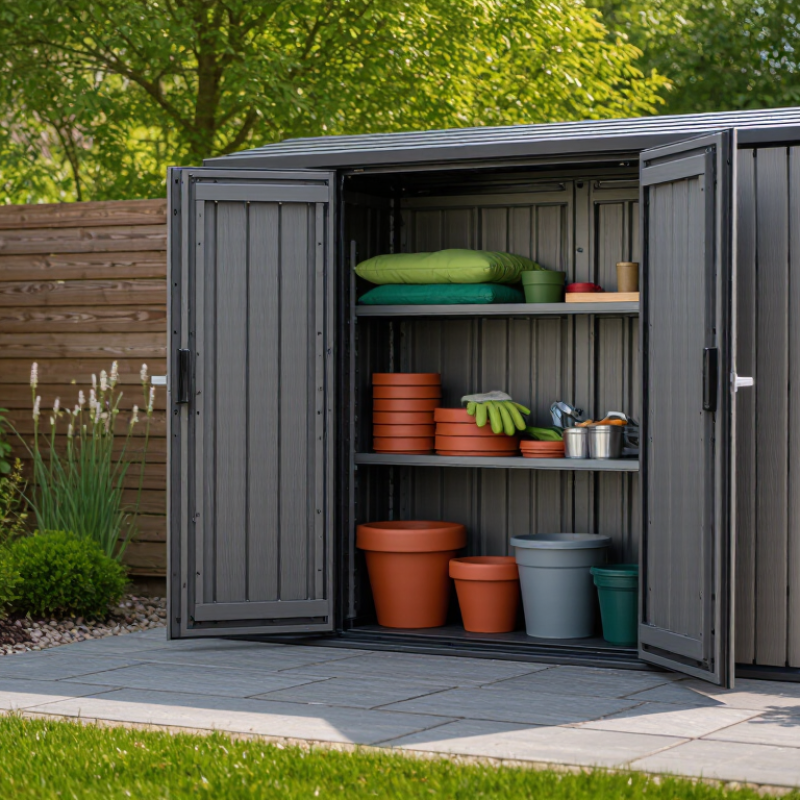
An outdoor storage cabinet is a weather-resistant enclosure designed to keep everyday items close to where they are used. It may sit on a patio, beside a garden shed, or near a pool. Common materials include resin, coated metal, and treated wood. Each handles rain and sun differently, so check the care requirements rather than assuming “weather-resistant” means waterproof. A raised base can help keep stored items away from puddles. Ventilation also matters. Without airflow, damp tools or cushions may develop musty odors.
These cabinets can hold garden gloves, hand tools, watering equipment, plant pots, outdoor cushions, and children’s play items. Shelves suit smaller supplies, while a tall compartment may fit a broom or folded chair. Measure bulky items before choosing a cabinet; listed capacity can be misleading when the interior has a narrow opening. Keep heavy objects low, and avoid storing anything that could leak or attract pests. Even a sealed cabinet can collect moisture during humid weather. I sometimes forget that. A quick check after rain, plus occasional airing, helps reveal problems before they damage what is inside.
Common Cabinet Types and Materials
Outdoor storage cabinets usually fall into three practical shapes. Tall, narrow cabinets suit long-handled tools and make use of tight spaces. Low, wide cabinets are easier to reach and can hold cushions or garden supplies. Utility cabinets with adjustable shelves offer flexibility, though bulky items may not fit neatly. Check the door swing and shelf depth before buying; a cabinet that fits the wall may still block a walkway.
Resin cabinets are lightweight, resist moisture, and need little routine care. However, thin panels can flex, especially when loaded or exposed to strong wind. Galvanized steel feels sturdier and handles heavy tools well, but chipped coatings can invite rust. Wood has a warm, natural look, yet it needs periodic sealing and good airflow to limit swelling. No material is maintenance-free. That claim feels too tidy.
Tips: Place the cabinet on a level, well-drained surface. Leave a little space behind it for airflow, and keep heavy items on lower shelves. Check hinges and latches after the first few weeks; small alignment problems can become annoying fast. If your area gets intense sun, look for UV-resistant panels, but remember that shade still helps.
What Is the Best Outdoor Storage Cabinet? – Common Cabinet Types and Materials
| Cabinet Type | Common Materials | Weather Performance | Main Advantages | Considerations | Best Suited For |
|---|---|---|---|---|---|
| Resin or plastic cabinet | Polypropylene, polyethylene, or other molded plastics | Does not rust or rot. UV-stabilized models generally resist sun damage better; seams and doors may still allow water in during heavy rain. | Lightweight, easy to clean, and usually low-maintenance. | Can be less rigid than metal or wood. Check panel thickness, UV protection, and whether the cabinet can be anchored. | Patios, balconies, and general storage where easy upkeep is a priority. |
| Steel cabinet | Galvanized steel, often with a painted or powder-coated finish | Coatings help protect against corrosion, but exposed or scratched steel can rust, especially in damp or coastal conditions. | Rigid construction and good security when fitted with a suitable lock. | Inspect the finish and edges; keep the cabinet ventilated and repair coating damage promptly. | Tools and heavier items in sheltered or moderately exposed locations. |
| Aluminum cabinet | Aluminum sheet or extruded aluminum, sometimes with a protective finish | Aluminum naturally resists rust, though finishes and hardware can still be affected by weather and salt exposure. | Relatively lightweight and corrosion-resistant. | May dent more easily than heavier steel, and quality varies with panel thickness and frame design. | Balconies, pool areas, and locations where low weight or corrosion resistance matters. |
| Wood cabinet | Pressure-treated lumber, cedar, or other exterior-suitable wood | Performance depends on the wood, construction, and finish. Wood can absorb moisture and may swell, crack, or decay if not maintained. | Natural appearance; can be painted or stained to suit the setting. | Use exterior-rated materials, keep the base off standing water, and renew protective finishes as needed. | Gardens and patios where appearance and a natural look are important. |
| Resin-wicker style cabinet | Woven synthetic resin over a metal or plastic frame | The synthetic weave is generally moisture-resistant, but the frame, joints, and cushion storage still need protection from prolonged exposure. | Decorative appearance that can coordinate with outdoor seating. | Check frame materials and drainage; not all models are designed for uncovered, year-round exposure. | Covered patios and outdoor entertaining areas. |
How to Compare Weather Resistance, Capacity, and Security
An outdoor storage cabinet should match your climate and the items you plan to store.
Look beyond claims such as “weather-resistant.” Check whether the panels resist UV exposure, whether the roof sheds rain, and whether seams and doors limit water entry. A raised base helps keep stored items away from puddles. Drainage matters, too. Even a sturdy cabinet can let moisture in if its door warps or its base sits unevenly. No cabinet is completely weatherproof in every setting.
Compare capacity using interior dimensions, not just the advertised volume. Measure your longest tools and leave room for the door to open fully. Check shelf weight limits if you’ll store heavy containers. Security depends on more than a lock: sturdy hinges, a reinforced latch, and the option to anchor the cabinet can make access harder. Still, a small lock may deter casual access, not determined tampering. That distinction is easy to overlook.
Tips: Before buying, measure the spot and check its exposure to wind and direct sun. If possible, inspect the door seal and feel the panel thickness in person. I’d also leave a little spare capacity; neatly packed shelves rarely stay that way. A cabinet that fits today may feel cramped next season.
How to Choose a Cabinet for Your Space and Storage Needs
Choosing an outdoor storage cabinet starts with the space it must occupy. Measure the floor area, including room for doors to swing open. Check the route from your gate, too; a cabinet that fits the patio may not pass through a narrow side path. Keep a little clearance from walls so air can circulate. Measure twice.
Think about what you will store, not just the cabinet’s advertised capacity. Long-handled tools need vertical space, while cushions need broad, dry shelves. Check each shelf’s weight limit before storing heavy pots or bags of soil. If you plan to keep small items inside, adjustable shelves or bins can prevent them from disappearing at the back.
Weather matters. Look for a sturdy frame, a secure latch, and materials suited to your local sun and rain. A raised base can help keep stored items away from puddles, but it will not fix poor drainage. Ventilation may reduce trapped dampness; still, delicate fabrics should be stored dry. It is easy to choose a cabinet that is slightly too large. Recheck your measurements, then consider whether you can open it comfortably while carrying a watering can or garden gloves.
What Is the Best Outdoor Storage Cabinet?
Choose a cabinet that fits your available space and the items you plan to store. These illustrative size examples show gross volume calculated from the listed exterior dimensions; usable interior capacity will be lower because of cabinet walls and construction.
How Placement and Maintenance Affect Long-Term Performance
A dependable outdoor storage cabinet depends as much on placement as construction. Set it on a firm, level surface so doors align and water does not collect beneath it. Avoid low spots where rain pools, and leave a small gap behind the cabinet for airflow. That space helps damp walls dry after wet weather. If the site gets strong afternoon sun, check whether the cabinet’s finish and contents can tolerate prolonged heat and UV exposure.
Maintenance can catch small problems before they become costly. Every few weeks, clear leaves from the roof and check the base, hinges, and door seals. Wash dirt away with mild soap and let surfaces dry. Follow the care guidance for the cabinet’s material; exposed metal edges may need attention if their coating is scratched. Keep heavy items low, and avoid forcing a crowded door shut. I once assumed a slightly uneven patio would be fine. It wasn’t; the door began rubbing within a season.
Tips: After heavy rain, look inside for damp patches. Tighten loose fittings, keep stored items off the floor when possible, and trim plants that press against the cabinet. Skip harsh cleaners unless the manufacturer specifically recommends them.