
>

10 Tips for Choosing the Best Fitness Tracker Watches

Fitness Tracker Watches have become practical companions for people seeking clearer insight into movement, sleep, and recovery. Yet choosing one is rarely as simple as comparing prices. A bright screen may impress in a shop, while weak battery life becomes frustrating after several days. A comfortable band can matter more than a long feature list. Small details often decide whether a watch stays on your wrist.

This guide presents 10 Tips for Choosing the Best Fitness Tracker Watches, using practical questions and evidence-based considerations. We will examine sensor performance, heart-rate accuracy, GPS reliability, battery endurance, app quality, comfort, accessibility, and data privacy. Independent testing can reveal useful patterns, but no review replaces your own routine. A runner, office worker, and casual walker may need very different tools. Think carefully.

Real-world experience also exposes flaws. Wrist sensors can struggle during intense movement, cold weather, or loose fitting. Sleep estimates are helpful signals, not medical diagnoses. Marketing claims deserve a closer look, especially when testing conditions remain unclear. We will separate measurable benefits from attractive promises and explain where uncertainty still exists. Some recommendations may feel obvious. Others may challenge popular assumptions. The goal is not to find a perfect watch, because perfection is unlikely. It is to find a dependable device that fits your habits, budget, and expectations.
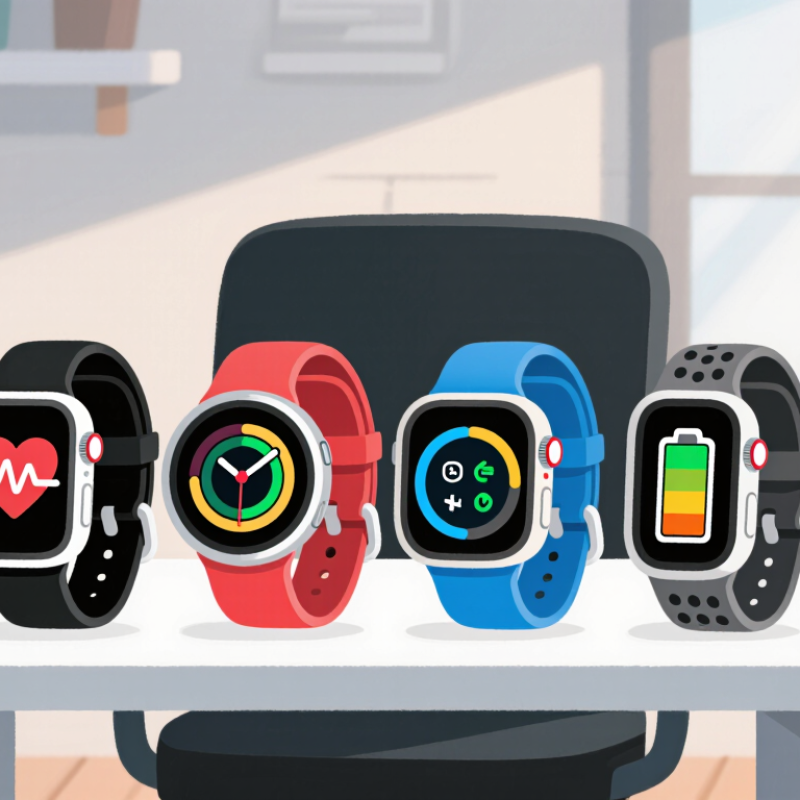
10 Tips for Choosing the Best Fitness Tracker Watches

Define Your Fitness Goals and Essential Tracking Needs

Define Your Fitness Goals and Essential Tracking Needs

Tip: Start with one measurable goal. You might want to walk 8,000 steps daily, improve sleep consistency, or train for a five-kilometer run. A tracker cannot decide your priority. You must define it first. The ACSM’s 2024 Worldwide Survey of Fitness Trends ranked wearable technology as the leading trend. Popularity, however, does not guarantee usefulness. A feature matters only when it supports your routine.

Tip: Match measurements to real decisions. For endurance training, heart rate, distance, pace, and recovery trends may be valuable. For general health, daily movement and inactive time could matter more. The World Health Organization reported that 31% of adults worldwide were insufficiently active in 2022. That figure makes simple activity prompts relevant, but not universally sufficient. Some readings are estimates, not clinical diagnoses.

Tip: Check the tracker during an ordinary day. Notice whether its screen is readable under strong sunlight and whether reminders interrupt meetings. Battery life, comfort, data export, and adjustable goals deserve attention. I have seen people collect detailed sleep charts, then ignore their bedtime. That is a useful warning. More data can create confusion. Choose essential tracking needs before advanced metrics, and review the device’s accuracy information, testing methods, and privacy policy.

Compare Health, Activity, and Wellness Monitoring Features

10 Tips for Choosing the Best Fitness Tracker Watches

1

Tip 1: Compare activity monitoring before appearance.

The World Health Organization reported that 31% of adults worldwide were insufficiently active in 2022. Choose a watch that records steps, moderate activity, vigorous minutes, distance, and sedentary time. The American College of Sports Medicine ranked wearable technology as the top fitness trend in its 2024 Worldwide Survey. That popularity should not replace careful feature checking.

2

Tip 2: Separate wellness insights from medical functions.

Look for continuous heart-rate tracking, heart-rate variability, sleep stages, breathing rate, and stress indicators. Ask how measurements were tested, not only how many sensors appear on the case. A 2024 review in npj Digital Medicine found that consumer devices can estimate several health measures reasonably well, but accuracy varies by activity, skin contact, and movement. I would not treat a sleep score as a diagnosis. It can still reveal useful patterns, such as repeated late-night awakenings.

3

Tip 3: Test the daily experience.

Battery life, screen readability, comfort, data export, and privacy controls affect long-term use. Check whether the watch explains missing data clearly. A perfect dashboard is useless when the device stays in a drawer. Compare recovery scores with your actual energy, training load, and sleep diary. Sometimes the algorithm is wrong. Your body may be telling a different story.

Evaluate Accuracy, Comfort, Battery Life, and Durability

10 Tips for Choosing the Best Fitness Tracker Watches

Evaluate accuracy before trusting attractive dashboards. A Stanford Medicine study, published in the Journal of Personalized Medicine, tested six wrist-worn devices. Heart-rate readings were generally within 5% of clinical measurements, but calorie estimates showed errors up to 27%. Treat energy data as a trend, not a verdict. Check readings during walking, intervals, and quiet rest. Loose straps can distort results. So can tattoos, sweat, and cold skin. I have found that comparing the watch with manual pulse counts exposes useful inconsistencies.

Comfort determines whether data collection survives ordinary life. Choose a soft, adjustable band that does not pinch during sleep. A lighter case may feel better under a shirt cuff. Review independent testing, not only product-page claims. The International Organization for Standardization recommends clear procedures for wearables research, yet real-world movement remains difficult to reproduce. That gap matters.

Battery life should match your routine. A device needing daily charging may lose overnight sleep records. Look for tested endurance with continuous heart-rate monitoring and notifications enabled. Durability also deserves evidence. An IP rating under IEC 60529 indicates resistance to dust or water under defined laboratory conditions, not unlimited protection. Saltwater, soap, and repeated impacts still create problems. My own weak point is assuming “water-resistant” means maintenance-free. It does not. Check charging-port design, screen protection, replacement-band availability, and warranty terms before choosing convenience over resilience.

Check Smart Functions, App Compatibility, and Data Privacy

Choosing among fitness tracker watches requires more than counting sensors. IDC’s Worldwide Quarterly Wearable Device Tracker recorded over 500 million wearable shipments globally in 2023. That scale creates more choice, but also more confusing specifications. Check whether the watch measures sleep, heart rate, exercise intensity, and recovery consistently. “More sensors” does not always mean better guidance. Test the display outdoors. A dim screen can ruin a useful workout.

App compatibility matters every day. Confirm support for your phone’s operating system before buying. Check whether the app exports data in common formats, such as CSV or health-platform files. Review notification controls, battery requirements, and subscription limits. A useful watch should fit your routine, not force constant charging. I still make this mistake: I focus on features and ignore the app’s layout. Small friction becomes irritating after several weeks.

Privacy deserves equal attention. Pew Research Center reported in 2023 that 81% of Americans feel they have little or no control over data collected by companies. Read the privacy policy, especially sections covering location, biometric information, and data sharing. Look for encryption, account deletion, permission controls, and clear retention periods. Ask whether essential functions work without continuous cloud access. Independent security testing is valuable, but public documentation matters too. Be cautious when privacy promises sound absolute. Fitness data can reveal routines, workplaces, and sleep patterns. That information needs careful handling.

Balance Price, Subscription Costs, and Long-Term Value

10 Tips for Choosing the Best Fitness Tracker Watches

Balance Price, Subscription Costs, and Long-Term Value

A fitness tracker is not cheap just because its screen is small. IDC reported 537.6 million wearable devices shipped worldwide in 2024, a 9.9% annual increase. That growth creates more choices, but also more confusing pricing. Compare the purchase price with three years of charging cables, replacement bands, repairs, and software fees. A $7 monthly subscription adds $252 over three years. Read the fine print.

Check what remains usable without a subscription. Some watches still record steps, heart rate, sleep duration, and workouts offline. Others place detailed trends, recovery scores, or export tools behind a paywall. I once judged a tracker by its launch discount and ignored renewal costs. That was a poor calculation. A spreadsheet with monthly fees can expose the real value within minutes.

Look for independent evidence, not only polished advertisements. The American College of Sports Medicine’s annual fitness trends report consistently highlights wearable technology as a major fitness tool, but popularity does not prove accuracy. Grand View Research estimated the global fitness tracker market at about $44 billion in 2023, showing strong demand and intense competition. Compare testing methods, sensor performance, battery claims, and privacy policies. A two-week battery may become five days after notifications and GPS use. That detail matters. Choose the device that supports your actual routine, not an imagined one.

10 Tips for Choosing the Best Fitness Tracker Watches - Balance Price, Subscription Costs, and Long-Term Value
No. Selection Tip What to Check Typical Upfront Price Subscription Consideration Long-Term Value Indicator Practical Recommendation
1 Define Your Main Goal Decide whether the priority is daily activity, running, cycling, sleep tracking, heart-rate monitoring, or general wellness. About $30–$100 for basic activity tracking; $100–$250 for more advanced features. Basic tracking is often available without a recurring fee, while coaching and analysis may require payment. High value comes from features that match your routine rather than from having the largest feature list. Write down the two or three measurements you will actually use before comparing devices.
2 Compare the Total Cost of Ownership Calculate the purchase price, optional subscription, replacement bands, charging accessories, and likely replacement period. Common consumer range: approximately $50–$300. Premium services commonly cost around $5–$15 per month, depending on the plan and region. A lower purchase price can become more expensive if essential insights are locked behind a monthly plan. Use a three-year calculation: upfront price plus 36 months of required or likely subscription fees.
3 Check What Works Without a Subscription Verify whether steps, workouts, heart-rate history, sleep records, exports, and basic reports remain available without payment. No additional upfront cost, but included features vary considerably. Some services offer a free tier; others reserve detailed trends, coaching, or reports for subscribers. Devices with useful core functions available free of charge usually provide stronger long-term flexibility. Read the current feature comparison and cancellation terms before buying.
4 Prioritize Battery Life Compare advertised battery duration with real usage involving continuous heart-rate tracking, notifications, GPS, and screen brightness. Battery-focused models are available across the full market range. Battery performance is generally unrelated to subscription pricing. Longer battery life reduces charging interruptions and can improve sleep and overnight tracking consistency. For frequent sleep tracking, consider a device that can operate for at least five days between charges.
5 Evaluate Sensor Usefulness Look for optical heart-rate sensing, accelerometers, gyroscopes, GPS, blood-oxygen estimates, and temperature sensing only when relevant. More sensors often appear in products priced above approximately $100. Sensors may work without a fee, while interpretation and advanced reports may be subscription-based. Useful, consistently recorded data is more valuable than rarely used sensors or unsupported health claims. Check whether the device is intended for wellness purposes and whether medical decisions require professional equipment.
6 Assess Measurement Accuracy in Context Review independent testing for step counts, heart rate during exercise, GPS distance, and sleep estimates. Higher price does not automatically guarantee better accuracy. Subscriptions generally improve analysis, not the physical sensor readings themselves. Reliable trends over time are often more useful than perfect agreement with clinical instruments. Choose a model tested for the activities you perform most often, such as running or cycling.
7 Check Comfort and Fit Consider case size, weight, band material, clasp security, skin sensitivity, and comfort during sleep. Replacement bands commonly cost about $10–$50, depending on material and design. Comfort is not affected by a subscription, but poor fit can reduce the value of all paid features. A comfortable device is more likely to be worn consistently, producing more complete data. Compare dimensions and band sizes, especially if the device will be worn overnight.
8 Review Water Resistance and Durability Check the published water-resistance rating, temperature limits, screen protection, and warranty coverage. Durable models range from roughly $60 to more than $300. A subscription does not replace physical protection or warranty coverage. Better durability can reduce replacement frequency and lower the effective annual cost. For swimming, confirm that the manufacturer specifically supports pool use rather than relying only on a general rating.
9 Confirm App Compatibility and Data Access Check smartphone operating-system support, app quality, data synchronization, export options, and privacy controls. Cross-platform models may cost more, but price varies by feature set. Confirm whether historical data, exports, and account access remain available after cancellation. Open data access and ongoing app support can extend useful life when phones or services change. Choose a device that works with your current phone and permits practical access to your own records.
10 Investigate Software Support and Replacement Options Look for update history, stated support policies, replacement parts, repairability, and recycling options. A moderately priced device with longer support may outperform a cheaper device abandoned after a short period. Do not count a subscription as long-term value if core functions stop when service support ends. Software updates, available bands, battery service, and dependable synchronization are major value factors. Prefer products with transparent support information and readily available replacement accessories.

Price and subscription figures are general market ranges in U.S. dollars and can vary by region, model, retailer, plan, and promotional period. Health-related measurements are for wellness tracking and should not replace professional medical advice.

Newsletter

Keep up on our always evolving product features and technology. Enter your e-mail and subscribe to our newsletter.