
>

How to Choose Plastic Cosmetic Bottles in 2026?

Choosing Plastic Cosmetic Bottles in 2026 requires more than comparing colors, shapes, and unit prices. Packaging now influences product stability, consumer trust, shipping efficiency, and environmental claims. Grand View Research reports continued growth in the global cosmetic packaging market, driven by skincare, personal care, and premium formats. Euromonitor International also identifies sustainability, refill concepts, and convenient dispensing as important beauty packaging trends. These reports provide useful direction, but their market boundaries differ. Their figures should guide decisions, not replace technical testing.

A suitable bottle must match the formula. A watery toner may need a controlled pump, while a thick serum may require a wider opening. Light-sensitive ingredients need suitable opacity or UV protection. Essential oils, acids, and high-alcohol formulas can interact with certain polymers, seals, or decoration layers. In practical evaluation, brands should test leakage, torque, drop resistance, pump output, odor transfer, and formula compatibility. ISO 22716-based manufacturing controls can support reliable cosmetic production. Small details matter. A loose cap can damage a premium launch.

Material selection also deserves careful judgment. HDPE, PET, PP, and PCR blends each offer different strengths, appearance, barrier performance, and recycling considerations. The Ellen MacArthur Foundation emphasizes designing packaging for a circular economy, while sustainability claims should remain measurable and specific. Recycled content may reduce virgin plastic use, yet it can affect color consistency and supply stability. No bottle is perfect. A lighter package may lower transport emissions but feel less luxurious. A refill system may reduce waste but create cleaning challenges. The best Plastic Cosmetic Bottles balance safety, performance, user experience, verified environmental data, and realistic production capacity. Brands should question attractive claims, document supplier evidence, and leave room for improvement.
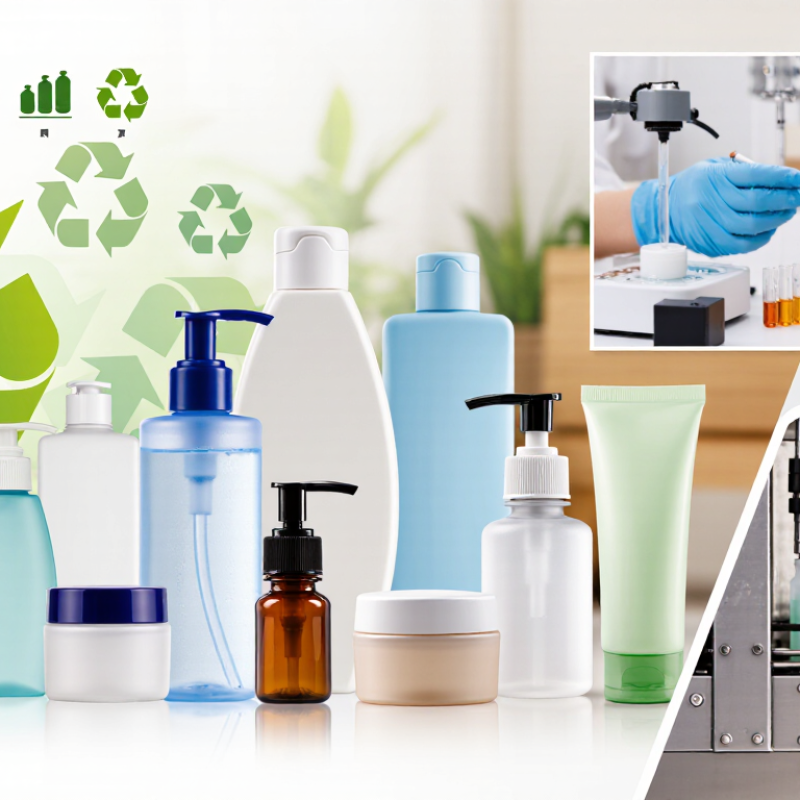
How to Choose Plastic Cosmetic Bottles in 2026?

Define Your Product, Market, and Packaging Requirements

Choosing a plastic cosmetic bottle in 2026 starts with the product, not the appearance. Define its viscosity, pH, fragrance oils, active ingredients, and filling temperature. A watery toner may need a narrow-neck bottle, while a rich serum often requires controlled dispensing. PET offers clarity and stiffness; HDPE provides stronger chemical resistance. Compatibility testing remains essential because some formulas swell, discolor, or weaken plastic over time.

Market expectations matter just as much. Grand View Research valued the global cosmetic packaging market at about USD 32.4 billion in 2023, with projected growth through 2030. This growth increases competition on shelves and online product pages. A lightweight bottle may reduce shipping costs, but it can also feel cheap in a premium market. Younger consumers may prefer recyclable materials, while professional skincare buyers may prioritize dosage accuracy and hygiene. Packaging choices must match both segments.

Sustainability needs measurable requirements. Smithers’ The Future of Sustainable Packaging to 2028 projects strong expansion in sustainable packaging demand, including recycled-content solutions. Ask suppliers for PCR percentages, resin identification, leakage results, and migration-test documentation. Check whether the pump, cap, label, and bottle can be separated easily.

Do not trust a “green” claim without evidence. A perfect package rarely exists. Some recycled plastic may affect color consistency. That trade-off deserves testing, not marketing language. Run drop tests, torque tests, compatibility studies, and accelerated aging before approving the final bottle.

Compare Plastic Types for Safety, Strength, and Product Compatibility

How to Choose Plastic Cosmetic Bottles in 2026?

Compare Plastic Types for Safety, Strength, and Product Compatibility

Choosing a cosmetic bottle starts with the formula, not the shelf appearance. In packaging evaluations, I check ingredients, filling temperature, storage time, and dispensing needs. PET offers a clear, rigid surface that suits serums, shampoos, and many water-based products. However, strong fragrances, essential oils, or high alcohol levels may cause stress cracking in some designs. Test the actual formula.

HDPE provides excellent chemical resistance and good impact strength. Its opaque appearance can protect light-sensitive formulas, although customers cannot see the remaining product. PP tolerates higher temperatures and repeated handling, making it useful for hot-fill processes and thicker creams. It can feel less rigid than PET. That difference matters during transport.

LDPE works well for soft squeeze bottles and controlled dispensing. Its flexibility improves user experience, but it generally offers weaker oxygen and vapor protection. Oxygen-sensitive products may need another structure or added barrier testing. Recycled plastic can reduce material demand, yet color, odor, and consistency may vary between batches. This point is easy to underestimate. I would request supplier specifications, migration data, and compatibility samples before approval. Store filled bottles under real conditions, including heat, light, and repeated opening. Inspect leakage, discoloration, odor transfer, paneling, and changes in viscosity. No plastic is universally safest. The best choice depends on verified contact performance, closure fit, and the formula’s actual behavior over time.

How to Choose Plastic Cosmetic Bottles in 2026?

Typical tensile-strength ranges of common bottle plastics, shown in MPa

How to read this chart: PET generally provides the highest stiffness and strength for clear bottles. HDPE and PP offer a strong balance of durability and chemical resistance, while LDPE is softer and more flexible. Actual performance depends on grade, bottle design, wall thickness, processing, and the formula’s ingredients. Always perform compatibility, stress-cracking, leakage, and migration testing before commercial production.

Select the Right Bottle Shape, Size, Closure, and Dispensing System

How to Choose Plastic Cosmetic Bottles in 2026?

When I evaluate a plastic cosmetic bottle, I begin with the formula, not the appearance. Thick creams usually need wider openings and shorter bodies for easier collection. Light lotions can work well in taller, narrower bottles. Travel products should fit comfortably in one hand and remain stable on a small shelf. Shape affects grip, filling efficiency, storage, and shipping space. Round bottles feel familiar, while flat or oval designs can improve handling. That sounds obvious. It is often overlooked.

Size should match real usage, not only market expectations. A daily facial serum may suit a small bottle, while body lotion needs greater capacity. Oversized packaging can leave customers carrying unused product. The closure must also resist leakage and tolerate repeated opening. Screw caps are simple and dependable. Flip-top closures support faster use but may collect residue around the hinge. Pumps offer controlled dosing, although thick formulas can eventually clog them. Test the closure with wet hands.

The dispensing system deserves practical trials. I check output volume, priming time, remaining product, and performance after storage. Airless systems may reduce exposure, but they can cost more and require careful compatibility testing. I once approved a pump that worked perfectly during a short trial. It struggled after several weeks with a thicker formula. That mistake changed my process. Test longer. Check temperature changes, drop resistance, and user grip before final approval. A bottle can look excellent on screen and still feel awkward in a bathroom.

How to Choose Plastic Cosmetic Bottles in 2026? — Select the Right Bottle Shape, Size, Closure, and Dispensing System

Selection Dimension Common Option Typical Capacity Best-Suited Cosmetic Products Key Functional Advantages Important Selection Considerations
Bottle Shape Round / Cylindrical 30–500 mL Shampoo, body wash, cleanser, lotion, liquid foundation Easy to manufacture, label, fill, and clean; provides a familiar appearance and good rotational symmetry. May require a label, sleeve, or surface treatment to improve grip, especially for bathroom products.
Bottle Shape Oval / Ergonomic 100–500 mL Hand wash, conditioner, body lotion, shower gel More comfortable to hold than many straight-sided bottles; broad front panels offer useful decoration space. Confirm the front-and-back orientation during filling and labeling; asymmetrical designs may require controlled placement.
Bottle Shape Square / Rectangular 50–500 mL Skin-care serums, lotions, hair-care products, gift sets Efficient use of shelf and shipping space; flat panels support clear graphics and stable presentation. Sharp corners can reduce drop resistance and may be less comfortable to use; rounded corners are generally more practical.
Bottle Shape Flat / Travel Format 10–100 mL Travel-size shampoo, sanitizer, serum, makeup remover Compact profile fits handbags, travel kits, and narrow retail displays. Check squeeze performance, cap security, and resistance to leakage when stored horizontally.
Bottle Shape Airless-Style Body 15–150 mL Serum, cream, moisturizer, eye-care products Helps limit repeated air exchange and can support controlled product evacuation. Compatibility testing is essential because highly viscous formulas may not prime or dispense consistently through every pump system.
Size Sample / Trial Size 5–30 mL Samples, hotel amenities, promotional kits, travel products Low product volume and convenient portability; suitable for trial and discovery programs. Small necks and closures can be difficult for automated filling; confirm readability of mandatory label information.
Size Retail Personal-Care Size 30–150 mL Serum, toner, facial cleanser, liquid foundation, hand cream Balances portability, shelf presence, and sufficient product quantity for regular use. Match the bottle height and diameter to the intended shelf layout, carton dimensions, and shipping configuration.
Size Family / Professional Size 200–1,000 mL Shampoo, conditioner, body wash, salon and spa products Reduces packaging used per unit of product and can lower replenishment frequency. Larger bottles need adequate wall strength, base stability, handle design, and closure torque control.
Closure Screw Cap Common across most sizes Shampoo, lotion, cleanser, bath products, refill formats Simple, cost-effective, and available in many neck finishes; can be paired with a liner or plug for sealing. Specify thread profile, tamper evidence, seal design, and application torque to reduce leakage risk.
Closure Disc-Top / Flip-Top Cap Typically 50–500 mL Shampoo, conditioner, shower gel, body wash One-handed opening and controlled dispensing; practical for use in wet environments. Evaluate hinge durability, orifice size, cap cleanliness, and whether the formula flows when the bottle is inverted.
Closure Snap-On Cap Typically 20–250 mL Light lotions, gels, cleansers, and low-to-medium viscosity products Fast application during assembly and convenient consumer use. Validate retention force and sealing performance after repeated opening and closing.
Closure Child-Resistant Closure Product-dependent Products requiring additional access control under applicable regulations Designed to make opening more difficult for children while remaining usable by intended adults. Requirements vary by market and product category; use the applicable regulatory test method before commercialization.
Dispensing System Lotion Pump 30–500 mL Body lotion, hand lotion, liquid soap, moisturizer Supports measured, hygienic dispensing and reduces the need to touch the product inside the bottle. Check output per stroke, lock position, dip-tube length, priming time, and compatibility with formula viscosity.
Dispensing System Fine-Mist Sprayer 30–200 mL Facial mist, body mist, toner, fragrance-related products Creates a fine spray pattern that can provide broad and lightweight coverage. Test spray angle, particle distribution, clogging resistance, actuator feel, and formula compatibility.
Dispensing System Treatment Pump / Dropper 10–50 mL Facial serum, active skin-care formulas, oils, concentrated treatments Allows relatively precise delivery for small application areas and concentrated formulas. Assess dose repeatability, seal integrity, air exposure, and whether the formula wets or blocks the dispensing parts.
Dispensing System Squeeze Tube-Style Bottle 30–250 mL Cleanser, gel, cream, scrub, hair treatment Provides direct user control over the dispensed amount and works well with medium-to-high viscosity products. Confirm wall recovery, stress-crack resistance, cap attachment, and product evacuation near the end of use.
Material HDPE Commonly used from small to large formats Shampoo, body wash, cleanser, lotion, personal-care refills Good chemical resistance, toughness, and impact resistance; available in opaque and translucent forms. Its relatively low transparency may not suit products that need a clear or glass-like appearance; verify stress-crack resistance.
Material PP Commonly used for bottles, caps, pumps, and components Skin care, hair care, closures, airless components Good fatigue resistance and useful temperature performance for many cosmetic packaging applications. Hinge, thread, and sealing performance depend strongly on design and molding conditions; test the complete package.
Material PET Typically 30–1,000 mL Clear cleanser, toner, liquid soap, shampoo, body-care products High clarity, good stiffness, and a glass-like appearance with lower breakage risk than glass. Evaluate compatibility with essential oils, alcohol-containing formulas, stress conditions, and the selected closure.
Sustainability Mono-Material Design Any practical bottle size Products intended to simplify material identification and recycling pathways Using fewer different materials can make sorting and recycling considerations more straightforward. Labels, pumps, springs, adhesives, colorants, and attached components may still affect recyclability; check local guidance.
Validation Package-Formula Compatibility Required for every final formula All cosmetic products, especially formulas containing oils, alcohol, acids, or solvents Helps identify swelling, cracking, discoloration, odor transfer, leakage, or dispensing changes before launch. Use filled-package testing under realistic temperature, time, transport, and repeated-use conditions.
Note: Capacity ranges and product recommendations are typical industry planning references rather than universal specifications. Final selection should be confirmed through formula compatibility, leakage, drop, torque, transport, dispensing, labeling, and applicable regulatory testing.

Evaluate Sustainability, Customization, Compliance, and Production Quality

How to Choose Plastic Cosmetic Bottles in 2026?

Sustainability should begin with the resin, not the label. Ask whether the bottle uses post-consumer recycled plastic, and request supporting documentation. Recycled content can vary between batches. That matters. Also examine weight, recyclability, and the number of parts in the package. A lightweight bottle may reduce transport emissions, but very thin walls can crack during filling or shipping. I would test both environmental benefits and practical durability.

Customization must serve the formula and the user. Confirm color consistency, decoration adhesion, pump compatibility, and closure torque before approving samples. A beautiful finish can still fail after contact with oils or alcohol-based ingredients. Request pilot samples from the intended production line, not only handmade prototypes. Small details matter, such as a clean shoulder, stable base, and smooth dispensing action.

Compliance requires more than a supplier’s promise. Review material specifications, safety data, batch records, and applicable packaging requirements for each sales market. Migration testing may be necessary when the formula touches the package directly. Production quality should include incoming-material checks, dimensional inspections, leak tests, drop tests, and documented corrective actions. Ask how defects are counted and reported. Numbers can expose weaknesses. A supplier may pass one inspection yet lack process control. That is easy to overlook. Recheck critical measurements during mass production, because approved samples do not guarantee consistent bottles.

Calculate Costs, Test Samples, and Confirm the Final Supplier

How to Choose Plastic Cosmetic Bottles in 2026?

Choosing plastic cosmetic bottles starts with a complete cost calculation, not a low unit price. Include the bottle, cap, pump, decoration, mold fees, testing, freight, storage, and rejected units. Request a written quotation with order quantities and payment terms. A cheaper bottle can become expensive after leakage or decoration problems. I once underestimated carton volume. Freight changed the final result.

Ask for production samples before approving a large order. Fill them with your actual formula, then observe leakage, odor, color changes, and pump performance. Store samples at room temperature and under heat for several weeks. Squeeze them repeatedly. Drop filled bottles from a controlled height. Check labels after rubbing and handling. These tests reveal practical weaknesses that pictures cannot show. Still, a short test may miss long-term issues.

Supplier confirmation should include material type, bottle weight, dimensions, color standard, closure compatibility, inspection method, and delivery schedule. Ask who controls incoming materials and finished goods. Review sample records, factory communication, and corrective-action speed. Keep every approved detail in one signed specification. Do not rely on verbal promises. Confirm packaging protection and replacement terms as well. A supplier may appear reliable during sampling but struggle during peak production. Leave room for that possibility, and keep a backup option while finalizing your order.

Newsletter

Keep up on our always evolving product features and technology. Enter your e-mail and subscribe to our newsletter.