How to Choose Laminated Wood Veneer Panels for Your Project?
Choosing Laminated Wood Veneer Panels is not simply a matter of selecting an attractive grain. The panel must fit the project’s structure, climate, handling conditions, and visual expectations. A walnut surface may look perfect under showroom lighting, yet reveal uneven matching beside a large window. Small details matter.
Architect Michael Green has said, “Wood is the most sophisticated building material we have.” His observation helps frame the decision. Veneer panels combine natural character with engineered stability, but they still require careful evaluation. Review the core material, veneer thickness, adhesive system, panel dimensions, and finish compatibility. For humid interiors, ask about moisture resistance and dimensional movement. For commercial spaces, confirm emissions documentation and applicable certification, such as FSC or low-emission compliance.
Start with the intended use. Wall cladding, cabinetry, ceilings, and furniture demand different performance levels. Check whether the panel can be cut, edged, drilled, or refinished without exposing weak layers. Examine sample panels from several angles. Natural veneer varies.
That is easy to forget.
A reliable supplier should provide technical sheets, batch information, installation guidance, and realistic lead times. Compare more than price. A cheaper panel may require extra finishing, create more waste, or show inconsistent color across a room. Site reviews often reveal another issue: installers receive panels without enough acclimatization time. This can cause avoidable movement after installation. I may be overly cautious, but a beautiful panel is still a poor choice when its documentation is unclear. The right Laminated Wood Veneer Panels balance appearance, performance, responsible sourcing, and practical installation needs.
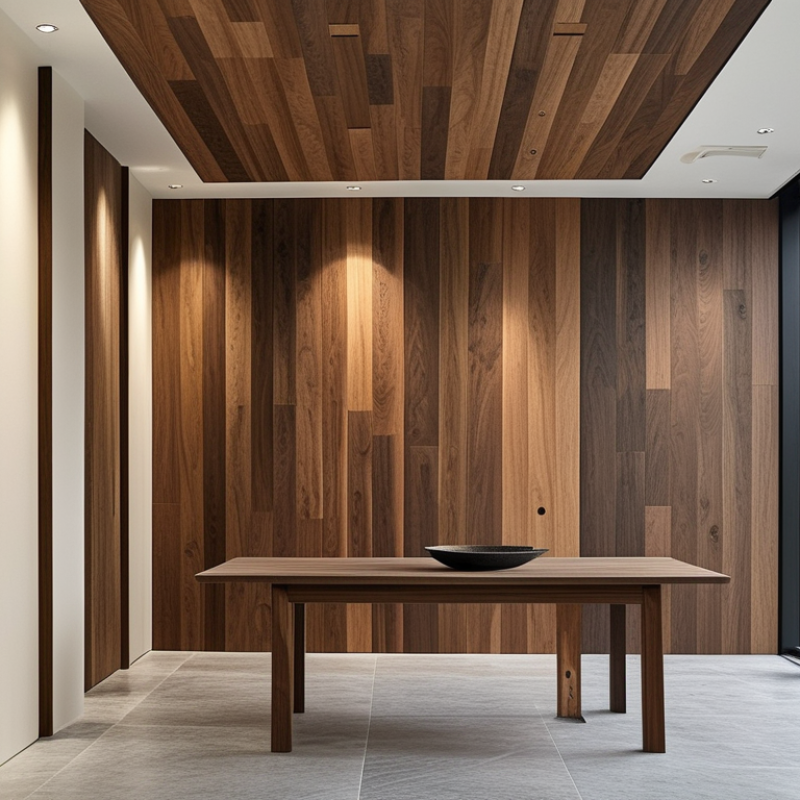
Define the Project’s Functional and Aesthetic Requirements
Choosing laminated wood veneer panels starts with the project’s real demands, not a sample’s attractive grain. Identify traffic, impact, moisture, cleaning frequency, and fire requirements. A reception desk needs tougher surface protection than a bedroom wall. In wet or fluctuating spaces, panel stability matters greatly. The USDA Forest Products Laboratory’s Wood Handbook reports that wood’s tangential shrinkage can reach 6–12%, depending on species and conditions. That movement can create open joints or visible seams when the substrate is poorly selected.
Aesthetic decisions should support the space’s function. Open grain can add warmth, but it may collect dust on high-touch counters. Light veneer makes small rooms feel brighter. Darker tones can conceal minor marks, yet they may show fingerprints. Ask for full-size samples under the project’s actual lighting. Small samples mislead. Review grain direction, color variation, edge treatment, gloss level, and joint layout together. Perfect matching is not always the best choice; excessive uniformity can make a large wall feel artificial.
Tips: Create a simple requirement sheet before ordering. Rate each surface from low to high for impact, moisture, cleaning, and visual importance. Confirm the core, face thickness, finish, and emissions documentation with the supplier. The USDA handbook also explains that wood reaches different moisture levels indoors, often around 6–8% in heated buildings. Allow panels to acclimate before installation. This step is easy to skip, and that is where trouble often begins. Recheck the specification after viewing the samples; an attractive panel may still be unsuitable.
Compare Veneer Species, Grain Patterns, and Surface Appearance
Choosing laminated wood veneer panels starts with the veneer species, not the catalog photograph. Oak offers visible pores and a familiar character. Walnut gives deeper brown tones and a calmer grain. Maple looks cleaner, but subtle color changes can appear under clear finish. These differences affect mood, cost, and how repairs may show.
Grain pattern deserves equal attention. Plain-sliced veneer creates cathedral shapes, while quarter-sliced veneer produces straighter lines and stronger figure. Rift-cut sheets look restrained and consistent. For cabinet doors, matching adjacent panels can make the surface feel intentional. Book-matched leaves mirror each other, although the center seam may become a focal point. I once approved a sample under cool workshop lights. In daylight, its contrast felt too sharp. That mistake changed my process.
Assess surface appearance with finished samples, not raw veneer alone. A matte coating keeps pores tactile and reduces reflections. Satin finishes reveal more figure but can emphasize sanding marks. Inspect edges, joints, and broad areas from several angles. Check color beside flooring, paint, and natural light. Veneer may shift slightly between batches, so record the approved sample and confirm panel direction before production. A small flaw can become obvious on a large wall. I still underestimate this sometimes.
Evaluate Panel Construction, Core Materials, and Durability
How to Choose Laminated Wood Veneer Panels for Your Project?
Laminated wood veneer panels should match the project’s structure, moisture level, and daily use. Examine the panel edge, not only the attractive surface. A well-built panel usually has balanced veneer layers and consistent adhesive bonding. Cross-banded layers can reduce warping when temperature and humidity change. Uneven edges may signal poor pressing or internal stress.
Core material strongly affects performance. Plywood cores offer good screw-holding strength and dimensional stability. Medium-density fiber cores provide a smooth surface but may swell after water exposure. Particleboard cores can suit dry interiors, though their edges need careful sealing. I once selected a smooth panel without checking its core. It looked excellent, but the exposed edge absorbed moisture quickly. That mistake changed my inspection process.
Tips: Request core and thickness data before purchasing. Check the panel’s moisture rating. Examine corners for swelling or separation. Tap several areas and listen for hollow sounds. Confirm that the panel suits shelves, doors, wall cladding, or furniture. Leave appropriate expansion space during installation. Sealing cut edges is easy to overlook. It can make a major difference. Durability also depends on surface coating, fastener choice, support spacing, and cleaning habits. A panel rated for interior use may fail in a damp room, even when its veneer remains attractive. Test a small sample first when conditions are uncertain.
Select Suitable Dimensions, Finishes, and Installation Features
Choosing laminated wood veneer panels starts with dimensions, not appearance. Measure the wall twice, then plan the panel layout around doors, outlets, and visible joints. Standard sheet sizes can reduce waste, but oversized panels may be difficult to carry through narrow corridors. For cabinet fronts, verify thickness and core stability before ordering. The USDA Forest Service Wood Handbook reports that interior wood commonly equilibrates near 6–8% moisture content. Let panels acclimatize on site before cutting. That step is often skipped.
Finish selection should match light, traffic, and cleaning habits. A matte finish hides fingerprints and minor surface variation better than a high-gloss coating. In sunlit rooms, request light-resistance information from the supplier. Veneer tone can shift noticeably between samples and full sheets. Expect some variation. That is part of real wood, not necessarily a defect. For low-emission interiors, check test documentation against applicable formaldehyde requirements. The U.S. Environmental Protection Agency’s TSCA Title VI limit for hardwood plywood is 0.05 ppm.
Installation features deserve equal attention. Select tongue-and-groove edges for faster alignment, or use square edges when a deliberate shadow gap is preferred. Leave movement clearance at floors, ceilings, and corners. Fasteners should suit the substrate, while adhesive alone may fail on dusty or uneven surfaces. The Wood Handbook notes that moisture movement changes across grain direction, so rigid installation can create stress. I have found that a dry layout exposes mistakes early. Measure carefully, but still expect to adjust one panel.