How to Choose a Hotel Room Furniture Set in 2026?
Choosing a Hotel Room Furniture Set in 2026 means balancing guest comfort, daily operations, and long-term value. A bed frame may look elegant in a showroom, yet wobble after repeated use. A large desk may impress in photos, then leave too little space for a suitcase. Details matter. Measure the room, map door swings, and check how guests and housekeeping staff move around each piece. Ask suppliers about tested durability, cleaning requirements, repair options, warranties, and material sourcing. These practical checks offer stronger evidence than a polished product image.
Hospitality designer Ilse Crawford has said, “Design is a tool to enhance our humanity. It can make people feel good.” That idea offers a useful lens: furniture should support rest, privacy, and simple routines, not merely follow a trend. Consider firm, comfortable seating, reachable charging points, stable bedside tables, and finishes that can handle frequent cleaning. Compare the full lifecycle cost, not just the purchase price. Request samples and inspect them under warm room lighting; a finish that looks calm online may feel cold beside the actual flooring. Still, no checklist catches every awkward corner. This guide explores how to assess room size, guest needs, durability, style, sustainability claims, and supplier reliability before choosing a set. Some trade-offs remain. A beautiful piece can be impractical, and the most durable option may not suit every brand. The goal is a considered decision, backed by evidence and a little honest restraint.
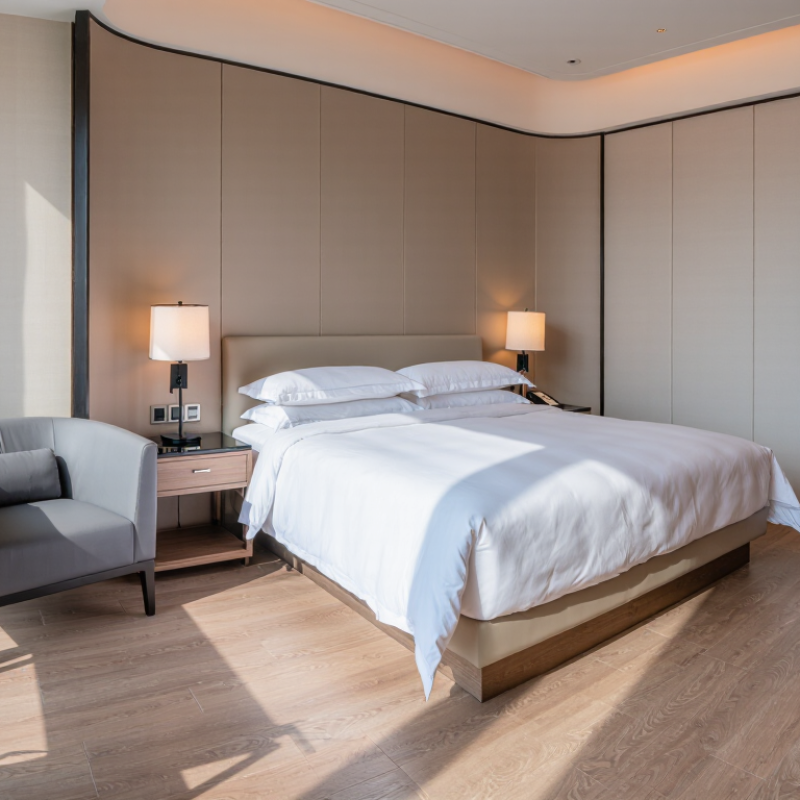
Define Guest Needs and Room Types Before Selecting a Furniture Set
Choosing a hotel room furniture set in 2026 starts with understanding who will use each room. A family room may need two beds, durable bedside tables, and clear space for a suitcase. A business room has different priorities: a comfortable chair, a usable desk, and reachable power outlets. Small details matter.
Room type also changes the right furniture layout. In a compact city room, a narrow desk and wall-mounted storage can keep the walkway open. For a suite, guests may expect a sofa, a dining surface, and separate places to work and rest. Measure doors, lift access, and the space beside beds before ordering. A beautiful wardrobe is no help if it blocks the bathroom door.
Guest habits deserve attention, too. Ask staff what guests request most often, and review maintenance records for recurring problems. Families may benefit from rounded table corners; longer-stay guests often need drawers and luggage space. Test chair comfort and drawer movement with real users, not just a product sheet. I have seen plans look sensible on paper but feel cramped once a suitcase is open. That judgment can be imperfect, so mock up one room before committing to a full set.
Measure Layouts Against ADA Routes: 36-Inch Clear Width and 60-Inch Turns
When choosing a hotel room furniture set in 2026, measure the usable floor space before selecting bed frames, desks, or lounge chairs. A 36-inch clear route is an important planning benchmark for accessible paths. Measure between the widest points, including drawer pulls and chair arms. A tape measure can reveal a problem that a floor plan hides.
Keep the route continuous from the room entrance to key areas, such as the bed and bathroom access. Check the space beside an open closet door, too. A guest may need a 60-inch turning space, often planned as a clear circle, or an approved T-shaped turn. These dimensions describe usable space, not the furniture footprint. Verify applicable accessibility requirements for the specific room and layout.
Test the arrangement with full-size floor markings before ordering. Mark the bed, nightstand, and desk, then walk the route with doors and drawers open. A desk that fits on paper may narrow the path once its chair is pulled out. I have seen neat layouts become awkward at that point. Recheck after adding lamps, waste bins, and luggage racks; small items can quietly take away clear floor space.
How to Choose a Hotel Room Furniture Set in 2026?
Measure layouts against ADA routes: 36-inch clear width and 60-inch turns.
Use these ADA dimensions as planning checks when arranging beds, desks, and storage. Keep the accessible route clear, and leave room for a circular turning space where required. Dimensions shown are from the 2010 ADA Standards for Accessible Design; confirm applicable requirements for each room layout.
Specify Seating Durability With ANSI/BIFMA X5.4-2020 Test Criteria
How to Choose a Hotel Room Furniture Set in 2026?
Specify Seating Durability With ANSI/BIFMA X5.4-2020 Test Criteria
A guest-room chair may serve as a desk seat, luggage perch, and place to pull on shoes. Specify seating durability against ANSI/BIFMA X5.4-2020, a performance standard for public and lounge seating. It includes defined tests addressing seat and back durability, arm strength, leg strength, and stability. Ask for a complete test report tied to the exact chair model and configuration. Check the loads, cycle counts, and pass/fail results—not just a “commercial grade” label.
The American Hotel & Lodging Association’s 2024 State of the American Hotel Industry report counted about 64,000 U.S. hotels and 5.6 million guest rooms. That scale makes repeatable furniture specifications useful across large purchasing programs. Still, a laboratory test cannot reproduce every guest, floor surface, or cleaning routine. Small details matter: loose arm joints, sharp frame edges, or glides that snag carpet can become daily maintenance problems.
Compare tested results with the room’s expected use, then inspect samples for firm joints and stable feet. Ask whether upholstery, fasteners, and frame materials match the tested configuration; a changed component may affect performance. Don’t assume a passing chair will stay pristine. That expectation may be unrealistic. Keep replacement parts and inspection intervals in the plan.
Verify Upholstery Fire-Test Documentation Against NFPA 260
When choosing a hotel room furniture set in 2026, request the full NFPA 260 test documentation for every upholstered item. NFPA 260 describes methods for testing and classifying cigarette ignition resistance in upholstered furniture components. It does not certify a whole room or guarantee resistance to every fire scenario. NFPA’s Home Fires Involving Upholstered Furniture report estimated an annual average of 7,500 reported U.S. home fires in which upholstered furniture was the first item ignited, from 2015 to 2019. The report also recorded 370 civilian deaths and 750 injuries annually. These are residential figures, not hotel-specific forecasts, but they show why documentation deserves careful review.
Match each report to the actual chair, headboard, or bench construction. Check that the tested assembly lists the same fabric, foam, batting, barrier, backing, and relevant seams as the proposed product. A swatch is not the assembly. Ask for the test result or classification, specimen details, test date, and testing laboratory. Then compare those details against the purchase specification and request written approval for any material substitution. Paperwork can look complete while describing a different build; that mismatch is easy to overlook during a rushed procurement. If the report does not identify the tested components clearly, ask the supplier to clarify before approving the set.
Compare Total Ownership Costs, Warranty Terms, and Replacement Availability
A hotel room furniture set should be judged by more than its invoice price. Estimate costs across five to seven years, including freight, assembly, protective finishes, routine repairs, and room downtime during installation. A low-cost dresser may need drawer adjustments after heavy daily use. The gap adds up. Compare realistic maintenance needs, not just showroom prices, and ask housekeeping staff which surfaces show scratches or stains fastest.
Read warranty terms before placing an order. Check whether coverage applies to commercial use, and note exclusions for fabric wear, moisture, loose hardware, and labor. A warranty may cover a replacement part but not the technician or shipping. Small print matters. Keep the written terms and clarify how claims are documented, who approves them, and how long repairs usually take. These details can change the real value of a seemingly generous warranty.
Replacement availability deserves equal attention. Ask whether matching chairs, drawer fronts, and finishes will remain available, and for how long. Request typical lead times for common parts. A single mismatched nightstand can make a refreshed room look unfinished. If stock is limited, consider ordering a modest reserve of high-wear items, while accounting for storage space and changing room plans. Forecasts are imperfect; occupancy, cleaning routines, and guest behavior can shift. Still, comparing ownership costs, coverage, and replacement access gives purchasing teams a more dependable basis for choosing.