China Top 10 Rope Clips Manufacturers for Global Buyers
Choosing a rope clip supplier is not just a price comparison. Buyers need parts that fit their rope, intended load, and working environment. A clip that looks sturdy in a product photo may still be unsuitable for a specific setup. Details matter.
This guide introduces ten China-based manufacturers for global buyers to investigate. It considers product range, material options, customization, quality-control practices, communication, and export support. These factors can help narrow a supplier list, but they do not replace independent checks. Ask for current specifications, dimensional drawings, material information, and test documentation where relevant. Confirm that samples match the quoted product before placing a larger order. Small differences in opening width or surface finish can affect installation and use.
Rope Clips serve varied applications, so one design rarely fits every requirement. Buyers should explain the rope type, dimensions, operating conditions, and expected use clearly. Then compare each supplier against the same criteria. Request written answers. Keep records. A responsive sales team is useful, though responsiveness alone does not prove manufacturing capability. Factory photos and certificates also need context and verification. This process takes time. It can still miss something. That is worth admitting. The manufacturers covered here offer a starting point for research, not a guaranteed ranking or endorsement. Careful evaluation helps global buyers make a more informed decision and identify questions to resolve before purchase.
Wire Rope Clips Explained: Types, Materials, and Common Applications
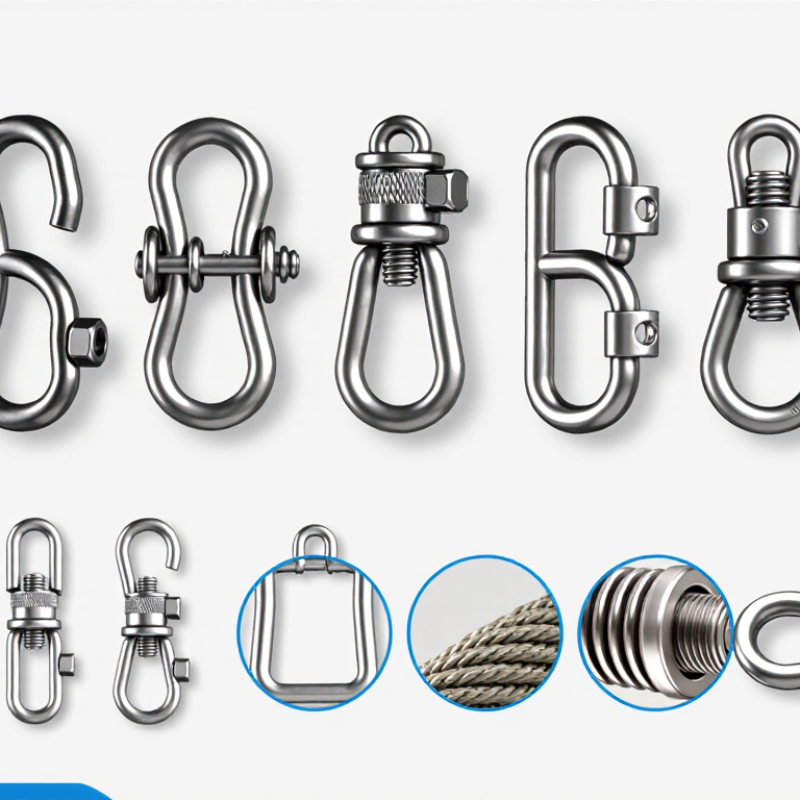
Wire rope clips secure a rope’s loose end around its standing part, forming an adjustable loop. Common designs include U-bolt clips, double-saddle clips, and malleable or forged versions. U-bolt clips are widely used for general rigging, while double-saddle designs grip both rope sections more evenly. The right choice depends on rope diameter, load direction, and working conditions. A clip that fits poorly may damage the strands or slip under tension.
Materials matter. Galvanized steel resists outdoor corrosion, while stainless steel suits damp or marine environments better. Forged clips generally offer greater strength than cast alternatives, but appearance alone cannot confirm suitability. These fittings are used on guy lines, temporary barriers, and cable assemblies. They are not interchangeable with purpose-designed end terminations in every lifting application. Check the rope and clip specifications together; this detail is easy to overlook.
Tips: Match the clip size to the rope diameter, and install it according to the manufacturer’s instructions. Keep the saddle on the live rope section, then tighten nuts evenly with a calibrated tool where specified. Recheck the connection after initial loading. Small shifts can happen. Inspect for corrosion, loose nuts, and crushed or broken wires before reuse; a neat-looking clip is not proof of a safe connection.
EN 13411-5:2003: European Requirements for U-Bolt Wire Rope Clips
For global buyers comparing rope-clip manufacturers, EN 13411-5:2003 is a practical benchmark for U-bolt wire rope clips. The European standard sets requirements for clip materials, dimensions, performance testing, marking, and installation instructions. Its tables provide size-specific details, so a clip that looks substantial may still be unsuitable for a particular rope diameter. Check the manufacturer’s test documentation against the standard, not just a catalogue photograph. Small details matter.
The standard also makes correct assembly essential. The U-bolt belongs on the dead end of the rope, while the saddle bears on the live end. Installers should use the specified clip count and spacing, then tighten fasteners to the manufacturer’s stated torque. Recheck after initial loading, because wire rope can settle and connections can loosen. EN 13411-5:2003 is a technical specification, not proof that every installation is safe; rope construction, load, and service conditions still matter. Buyers should request traceable inspection records and clear instructions.
Tips: Measure rope diameter with calipers, inspect the saddle for full contact, and record torque during installation. Never mix clip sizes. One overlooked step can weaken the termination.
How to Compare China’s Top 10 Rope Clip Manufacturers by Key Criteria
When comparing China’s top 10 rope clip manufacturers, ask for measurable evidence, not polished catalogues. Request material certificates, dimensional inspection records, and batch traceability. Check jaw width, thread engagement, finish, and fit against the rope diameter you actually use. A clip that looks robust on a screen may arrive with rough threads. That matters during installation.
Test data should match the product’s intended use. Ask whether load ratings refer to a single clip or a tested assembly, and request the test setup and failure results. The International Organization for Standardization’s ISO 2307:2019 describes physical and mechanical testing of fibre ropes; it is not a rope-clip certification, so do not treat it as one. For supply-chain context, the World Steel Association reported global crude steel production of about 1.88 billion tonnes in 2024. That figure says little about any supplier’s clip quality, but it makes material traceability and grade documentation worth checking.
Compare lead times, minimum order quantities, packaging, and response speed using the same specification sheet. Ask for a sample and inspect it yourself. Not perfect, but useful.
A clear quotation should identify the material, dimensions, finish, inspection scope, and any stated load limits. If answers change between sales and technical staff, pause before placing a large order.
Quality Checks: ISO 9001:2015, Load Testing, and Traceability
For global buyers comparing rope clip manufacturers, a quality claim needs evidence behind it. ISO 9001:2015 certification can indicate that a supplier follows documented quality processes, but buyers should verify the certificate’s scope, issuing body, and current validity. It does not prove that every clip is suitable for every rope or working load. Ask for material specifications, dimensional tolerances, and inspection records. Small details matter: a rough edge, uneven finish, or inconsistent opening can affect fit and handling.
Load testing should match the intended application and use a clearly defined method. Request test reports that identify the clip type, sample quantity, test conditions, and acceptance criteria. A single impressive result is not enough. Testing samples from different production batches gives a more useful picture, though it can add time and cost. That trade-off is worth discussing.
Traceability connects each shipment to its production details. Batch codes, material records, and inspection dates make a defect easier to investigate. Check that these records remain legible on packaging and can be retrieved quickly. In practice, paperwork may be incomplete or slow to arrive. That is a warning sign, not proof of poor product quality, but buyers should resolve gaps before placing repeat orders. Clear records build confidence.
Global Buyer Checklist: Rope Diameter, Coating, Standards, and Shipping
Global Buyer Checklist: Rope Diameter, Coating, Standards, and Shipping
A rope clip should match the rope it grips, not just look close in a catalog. Check the rope’s measured diameter, construction, and material; a soft braided line may compress differently from a stiff wire rope. Ask the manufacturer for the clip’s intended size range and installation guidance. A poor fit can slip under load. Small differences matter.
Coating affects both protection and handling. Zinc-coated finishes can help resist corrosion, while other coatings may suit specific outdoor or marine conditions. Confirm the finish, base material, and any relevant test documentation rather than relying on a vague “rust-resistant” claim. Standards also need careful checking: ask which specification applies to the product and request traceable inspection records. Paperwork is useful, but it cannot replace checking the actual parts.
Before ordering, agree on sample approval, quantity, packaging, and shipping terms. Ask how clips will be protected from moisture and abrasion during transit, especially for long sea routes. Confirm carton dimensions and delivery estimates in writing. I have seen buyers focus on unit price and overlook packing details; that can be an expensive lesson. Keep a small buffer for inspection and delays.