
China Top 10 Bird Control Spikes Manufacturers
Bird activity can turn a narrow ledge into a regular roost, leaving droppings, nesting material, and cleaning costs behind. Bird Control Spikes offer a physical deterrent when selected and installed for the site. The FAA’s annual wildlife-strike reports document more than 19,000 reported wildlife strikes in recent years. These figures concern aviation incidents, not building damage or spike sales, but they show why bird management deserves careful attention. Numbers need context.
A useful supplier comparison goes beyond price. Buyers should check spike material, base width, pin spacing, weather resistance, installation method, and product documentation. Stainless steel and UV-resistant polycarbonate are common options, but performance depends on exposure and mounting surface. A poorly fitted strip can leave gaps. That detail is easy to miss.
This guide to China Top 10 Bird Control Spikes Manufacturers compares product ranges and practical factors, rather than treating any list as a universal ranking. Roger Tory Peterson, a prominent ornithologist, is widely quoted as saying, “Birds are indicators of the environment. If they are in trouble, we know we’ll soon be in trouble.” That perspective matters: deterrents should address access points without harming birds. Publicly comparable market data for this product category is limited, so readers should verify specifications, samples, and project references directly with manufacturers. No shortlist replaces a site inspection.
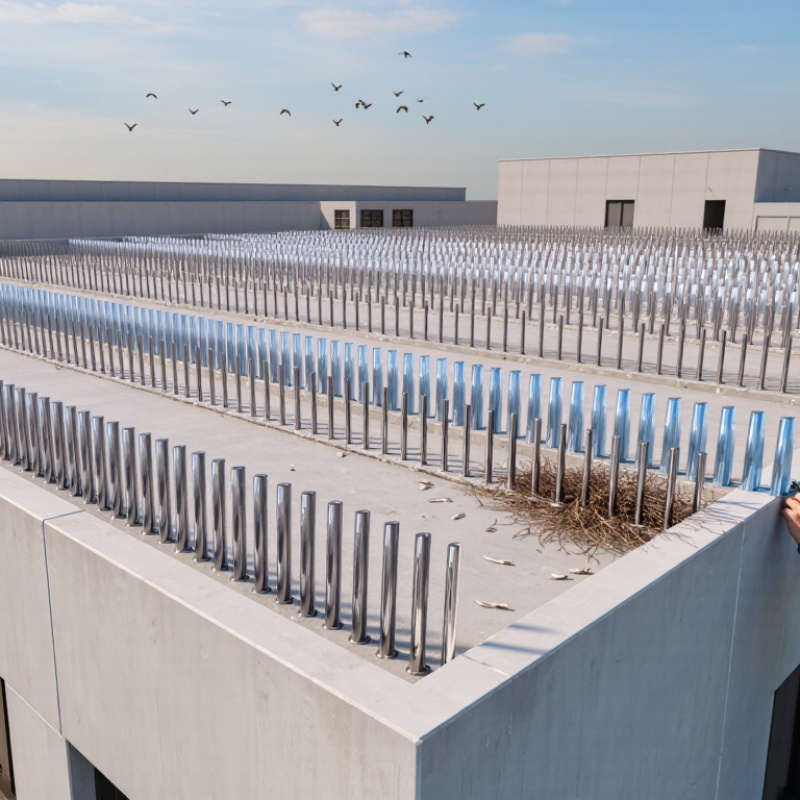
Bird Control Spikes: Design, Purpose, and Common Applications
Bird control spikes are narrow deterrent strips fitted to ledges, roof edges, signs, and other places where birds repeatedly perch. Their upright rods reduce the flat landing space without forming a sealed barrier. Well-designed systems use smooth, blunt tips and corrosion-resistant materials, such as stainless steel, for outdoor exposure. Spacing matters: gaps that are too wide may leave comfortable landing spots, while dense layouts can collect more leaves and dust.
On a warehouse beam, a strip may discourage roosting above loading doors. On a window ledge, a shorter section can help keep droppings away from the sill. These products are not universal. Pigeons, smaller birds, and local building shapes create different challenges, so measurements and site conditions should guide placement. Check nearby drains and maintenance access before fixing anything in place. Keep it practical.
Installation quality often determines whether spikes work as intended. A loose base can shift in wind, and adhesive may fail on damp, dusty, or uneven surfaces. Clean the mounting area and inspect the strip after storms and seasonal debris buildup. Spikes can reduce favored perching, but they will not remove food, nesting material, or other attractions nearby. One detail worth reconsidering: a tidy row can look effective while leaving an overlooked corner open. Regular observation helps reveal that gap.
China Top 10 Bird Control Spikes Manufacturers - Bird Control Spikes: Design, Purpose, and Common Applications
| Common Application | Typical Target Birds | Common Spike Design | Typical Mounting Surface | Primary Purpose | Installation Considerations |
|---|---|---|---|---|---|
| Building ledges and parapets | Pigeons, starlings, and similar perching birds | Flexible base strip with closely spaced, blunt-tipped metal or polymer spikes | Concrete, stone, brick, or metal coping | Discourage birds from landing and roosting on narrow horizontal surfaces | Choose a strip wide enough to cover the usable landing area; clean and dry the surface before fixing. |
| Roof ridges and eaves | Pigeons and other medium-sized birds | Low-profile spike strips or purpose-made ridge-compatible sections | Roof tiles, metal roofing, fascia, or ridge components | Reduce perching at roof edges and related droppings or nesting activity | Use a fixing method compatible with the roof material and avoid obstructing drainage or ventilation. |
| Window sills and external frames | Pigeons, sparrows, and starlings | Narrow-base strips sized to the sill or frame | Stone, concrete, coated metal, or masonry | Make common landing points less suitable for perching | Measure the full landing surface and check that windows, shutters, and maintenance access remain usable. |
| Signage and building lettering | Pigeons and small-to-medium urban birds | Short, low-profile strips arranged along exposed ledges and upper edges | Sign housings, support ledges, or non-illuminated lettering surfaces | Discourage roosting while preserving visibility of the sign | Do not cover lights, electrical openings, or drainage paths; use suitable fixings for the sign material. |
| Gutters and downpipe tops | Pigeons and other birds that perch above drainage systems | Compact spike sections positioned on adjacent perching edges | Gutter brackets, fascia, or nearby ledges | Reduce perching near gutters and limit debris caused by roosting | Keep the gutter channel and outlets clear; spikes should not be installed where they impede water flow. |
| Canopies and awnings | Pigeons, gulls, and other medium-sized birds | Metal or UV-resistant polymer strips on suitable horizontal edges | Canopy frames, ledges, or rigid trim | Discourage birds from resting on exposed canopy surfaces | Confirm the mounting surface can support the fixing method and account for wind exposure and regular cleaning. |
| Balcony rails and narrow parapets | Pigeons and other urban perching birds | Narrow strips or sections that follow the rail profile | Metal rails, masonry parapets, or rigid rail caps | Reduce perching on selected rail sections | Install without creating sharp exposed edges or blocking safe access; observe local building and safety requirements. |
| Air-conditioning units and equipment ledges | Pigeons and starlings | Short, modular strips placed on non-ventilated perching surfaces | Equipment housings or nearby structural ledges | Discourage roosting around external equipment | Keep air intakes, outlets, service panels, moving parts, and manufacturer-required clearances unobstructed. |
| Warehouse beams and loading-bay ledges | Pigeons and starlings | Durable strips fitted to accessible horizontal landing edges | Steel beams, concrete ledges, or structural brackets | Reduce perching and droppings above work or storage areas | Consider safe access for installation and inspection; use appropriate fixings for the substrate and environment. |
| Marine-facing ledges and waterfront structures | Gulls and pigeons | Corrosion-resistant metal spikes or UV-resistant polymer designs, selected for site conditions | Metalwork, concrete, or masonry | Discourage perching on exposed waterfront surfaces | Salt spray can accelerate corrosion; select compatible materials and inspect fixings periodically. |
Design note: Bird-control spikes are deterrents intended to make a surface unsuitable for landing; they are not a substitute for repairing access points or removing attractants. Strip widths, spike spacing, materials, and fixing methods vary by product and site, so confirm dimensions and installation guidance before purchase.