
>

What Is the Best Slat Bed Frame to Buy?

Choosing the best Slat Bed Frame is less about appearance than the support beneath your mattress. The right frame should feel steady, fit your mattress, and suit the way you sleep. A quick check matters: press the slats, inspect their spacing, and listen for movement. Small details count.

There is no verified expert quotation in the material provided, so I won’t invent one or assign false words to a named specialist. Instead, this guide focuses on practical checks buyers can make. Compare the slat material, center support, weight guidance, assembly requirements, and warranty. Solid wood can feel reassuring, but construction and spacing matter too. A sturdy-looking frame may still creak.

Not every buyer needs the same design. A heavier mattress, a narrow bedroom, or frequent moves can change the best choice. Even assembly is worth considering; one awkward joint can turn a simple setup into a frustrating afternoon. This guide will weigh those trade-offs and explain what to check before buying. It may not settle every preference. But it should make the decision clearer.
What Is the Best Slat Bed Frame to Buy?

Identify Slat-Frame Parts: Slats, Side Rails, and Center Supports

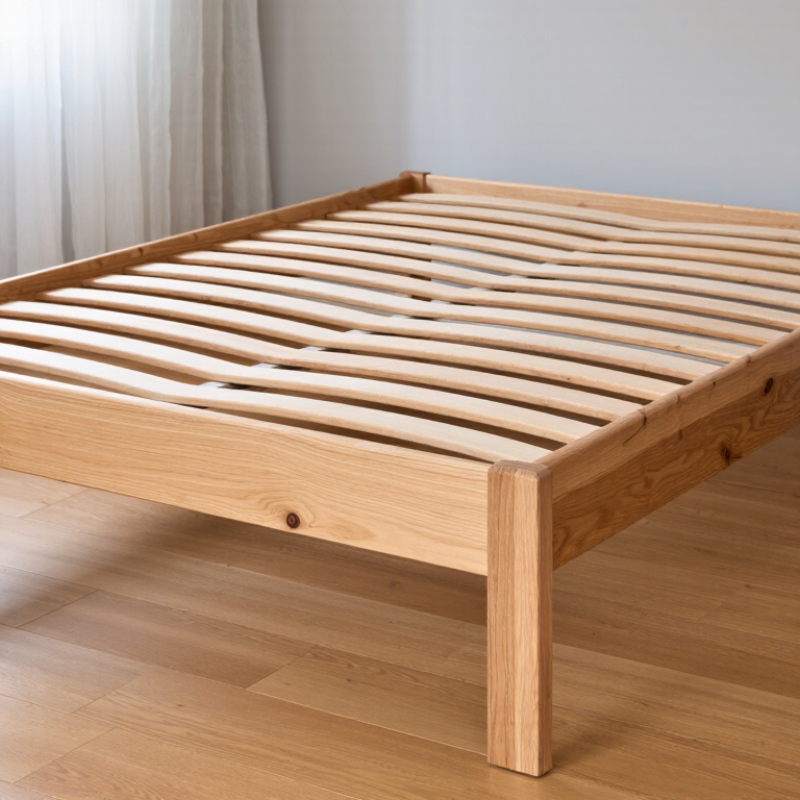
A slat bed frame has three working parts: the slats, the side rails, and the center support. Slats run across the frame and carry the mattress. They may be solid wood, engineered wood, or metal, but their spacing matters more than appearance. Check your mattress maker’s guidance; gaps that are too wide can leave some mattresses poorly supported. Measure between slats, not from their centers.

Side rails connect the head and foot of the frame. They keep the slats in position and help resist sideways movement. Look for secure joints and rails that sit level on the floor. A frame can feel sturdy in a showroom yet wobble after repeated use, so inspect the fasteners and listen for shifting when you gently press a corner. Small details count.

The center support runs lengthwise beneath the slats, often with one or more legs touching the floor. Wider beds commonly need this support to limit sagging, though the exact design varies. Check that its feet reach the floor once the frame is assembled; even a small gap can make support ineffective. I used to focus mostly on slat thickness, but spacing and center contact matter too. Not always obvious. If a frame lacks a clear center support, verify its weight rating and mattress requirements before buying.

What Is the Best Slat Bed Frame to Buy?

Identify the key parts—slats, side rails, and center supports—and choose a frame designed for your mattress size.

How to read the chart: These are standard U.S. mattress dimensions in inches. Select a frame labeled for your mattress size, and check the frame maker’s specifications for exact fit.

  • Slats run across the frame to support the mattress.
  • Side rails connect the frame’s ends and hold the slats in place.
  • Center supports help support the middle of the frame; confirm the frame’s support design and weight rating before buying.

Mattress dimensions shown: Twin 38 × 75 in, Full 54 × 75 in, Queen 60 × 80 in, and King 76 × 80 in.

Match Frame Size to the Standard Queen Mattress: 60 × 80 Inches

A standard queen mattress measures 60 × 80 inches. Choose a slat bed frame designed for that mattress size, not by its outer dimensions. The headboard and side rails may extend beyond the sleeping area. Check the product specifications for the supported mattress size and measure your mattress at home. Small differences can matter. A frame that is too tight may pinch the fabric or make the mattress difficult to position.

Look closely at the slats, too. Their spacing and support requirements should suit your mattress maker’s guidance. A sturdy center rail and legs can help support the middle of a queen bed, especially when two people share it. Check that the slats sit level and do not shift when pressed. I once assumed matching “queen” labels meant every frame fit the same way; that was too simple. Frame construction and mattress shape can affect the fit. Leave enough room to lift the mattress for cleaning, but avoid a gap wide enough for it to slide around. Measure twice. A few minutes with a tape measure can prevent a frustrating delivery-day mismatch.

Compare Slat Spacing with the 2.75-Inch Maximum in Many Warranties

The best slat bed frame is one that supports your mattress without exceeding its warranty requirements. Many mattress warranties set a maximum gap of 2.75 inches between slats, but the exact limit varies. Check the wording for both the mattress and frame before buying. A similar-looking frame may have wider openings than you expect.

Measure the clear space between slats, not the slat width. A tape measure and a quick check across several gaps can catch uneven spacing. Keep the frame’s product details, too; they may specify required center support or a particular slat layout. Small gaps matter. If the slats are too far apart, a mattress may sag between them, and a warranty claim could be affected. The rule is not universal, so verify it rather than treating 2.75 inches as a guarantee.

Look for sturdy slats that stay level under pressure, plus center legs on wider frames when the design calls for them. Sit near the middle and listen for movement, then inspect the supports beneath the frame. A frame can look solid and still flex. I would not rely on appearance alone; I have to remind myself that neat spacing in a product photo proves very little. Measure the actual frame after assembly, especially if slats shift during setup.

Check Weight Ratings, Center Legs, and Mattress-Maker Requirements

A slat frame’s weight rating should cover sleepers, mattress, and bedding—not just one person. Add their weights and compare the total with the frame’s stated limit.

For example, two sleepers weighing 180 and 150 pounds, plus a 100-pound mattress and bedding, create a 430-pound load.

Ask whether the rating is for the whole frame or each sleeper. That small distinction matters. Ratings also vary in how they describe static weight versus movement during sleep, so unclear wording deserves a follow-up question.

The 2021 International Residential Code lists a 30-pound-per-square-foot live-load benchmark for sleeping-room floors. That is a floor-design figure, not a bed-frame capacity. ASTM F1566-22 sets standardized methods for evaluating mattress performance, but it does not certify a frame’s load rating. Check the frame maker’s limit and the mattress maker’s requirements for slat spacing and support. A center rail with sturdy legs can reduce flex, especially beneath a wide mattress. Count the legs, inspect their contact with the floor, and check that slats sit firmly in their brackets. A frame can look solid and still have a weak center.

Compare Wood and Metal Slats for Durability and Ease of Assembly

Wood and metal slats can both support a mattress well, but their weak points differ. Solid wood feels quiet under movement and is easy to replace if one slat cracks. It can also shift with room humidity. The USDA Forest Products Laboratory’s Wood Handbook reports equilibrium moisture content near 9% at 70°F and 50% relative humidity. That change matters: wood may expand or shrink, loosening screws over time. Not every bedroom has stable humidity.

Metal slats resist moisture-related movement and often arrive as lighter, uniform pieces. Yet thin steel can flex, and poorly fitted end caps may click against the frame. Assembly is usually simpler when slats clip into place; bolted designs take longer but can feel more secure. Check the center support, fastener count, and slat spacing before buying. ASTM F1566 provides standardized mattress test methods, but it does not certify every bed frame’s service life. So a test reference is useful, not a lifespan promise. I’d choose wood for a quieter, repairable setup, or metal for quick assembly and steadier dimensions. Measure twice. A little annoying, but worth it.

What Is the Best Slat Bed Frame to Buy? — Compare Wood and Metal Slats for Durability and Ease of Assembly
Comparison Wood Slats Metal Slats
Typical construction Solid or laminated wood boards, often supported by side rails or a center beam. Steel or other metal bars, commonly flat or tubular, supported by side rails and sometimes a center beam.
Support and flex Rigid boards provide firm support; curved wooden slats can flex more under load. Rigid steel slats generally flex less, though thin or widely spaced bars may bend or shift.
Durability considerations Can crack, split, or warp if overloaded, poorly supported, or exposed to moisture. Slat thickness and support design matter. Can resist cracking, but may bend, loosen, or corrode if damaged or used in a damp environment. Welds and joints also matter.
Ease of assembly Often straightforward when slats rest on rails; individual slats may need to be positioned or secured. Often straightforward when bars clip or bolt into place; some designs require alignment and tightening of multiple fasteners.
Noise over time May creak where wood contacts the frame or where joints loosen. May squeak or rattle where metal parts rub or fasteners loosen; tightening connections can help.
Mattress compatibility Check the mattress maker’s required slat spacing and support instructions, especially for foam mattresses. Check spacing and support instructions as well; narrow bars do not automatically guarantee adequate mattress support.
Maintenance Inspect for splits, warping, and loose supports; keep the frame dry. Inspect fasteners and joints; check for bent bars or signs of corrosion.
Best suited to Buyers who prefer a traditional appearance or want the option of rigid or flexible wooden slats. Buyers who prefer a metal construction and want slats that are typically easy to wipe clean.
What to verify before buying Wood type, slat thickness, center support, maximum load rating, spacing, and replacement-part availability. Metal type and finish, bar shape and spacing, center support, maximum load rating, and joint design.
Buying note: Neither material is automatically more durable. Frame design, material quality, center support, assembly, and the stated load rating all affect performance. Follow the mattress manufacturer’s support and slat-spacing requirements; recommendations vary by mattress.

Newsletter

Keep up on our always evolving product features and technology. Enter your e-mail and subscribe to our newsletter.