
What Is the Best Patio Louvered Pergola for 2026?
Choosing the best Patio Louvered Pergola for 2026 means looking beyond polished product photos. Real performance shows up on a bright afternoon, when adjustable louvers shade the table without darkening the whole patio. It also shows up during light rain, when water needs a clear path away from seating and doorways. Small design details matter.
Outdoor-living specialist Daniel Mercer puts the key trade-off this way: “A pergola should make changing weather easier to manage, not add another thing to worry about.” That is a useful standard, though no single model suits every home. A compact aluminum frame may fit a narrow deck, while a larger structure may need stronger foundations and careful installation planning. Check the louver range, drainage design, frame finish, controls, warranty, and service availability. Then compare those details with your climate and how you actually use the space.
Quiet mornings matter. So does the first hard gust. A pergola can look impressive in a showroom and still feel awkward beside a low roofline or sliding door. Measure the patio, note nearby walls and trees, and picture where water will flow. Looks are not enough. The right choice balances shade, ventilation, durability, and everyday convenience, with room for honest compromises. This guide compares the features that deserve attention before you buy—and the questions worth asking a supplier.
Understanding Patio Louvered Pergolas and Their Main Components
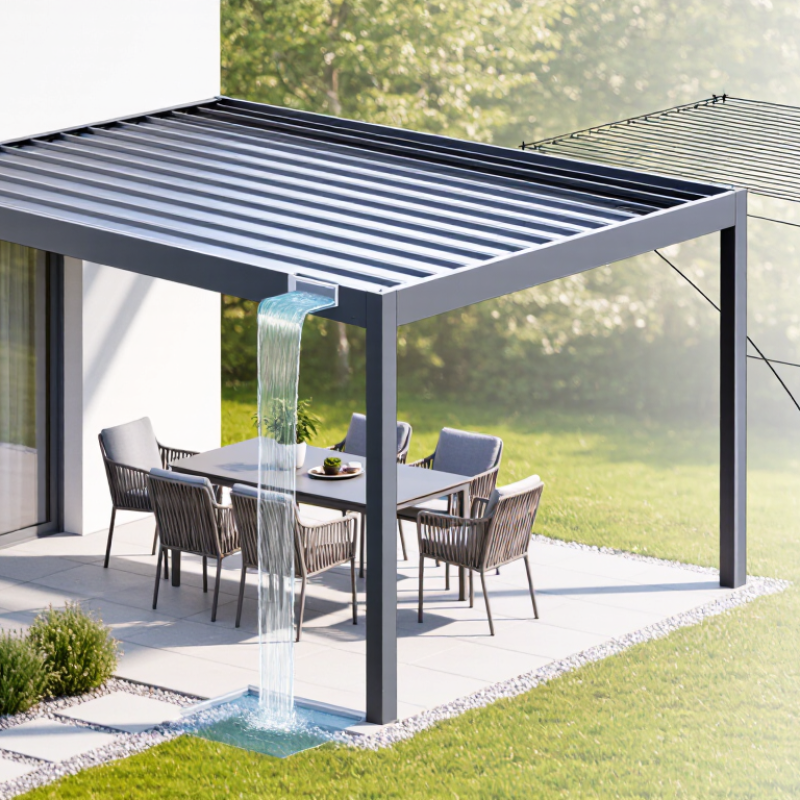
A patio louvered pergola combines a load-bearing frame with adjustable roof blades. Posts carry the structure, while beams connect the posts and support the louvers. A pivot rod or linked mechanism tilts the blades; an electric actuator or hand crank controls that movement. Small parts matter. Hinges, fasteners, and blade seals affect noise, alignment, and weather resistance.
Look for clear specifications on frame material, anchoring, drainage, and tested wind and snow loads. Water needs a path: many systems channel rain through gutters inside the beams and down through the posts. Check where that water exits before installation. The U.S. Department of Energy’s Energy Saver guidance reports that exterior awnings can reduce summer solar heat gain by up to 65% on south-facing windows and 77% on west-facing windows. Those figures apply to awnings, not pergolas. Louver gaps, blade angle, and site exposure can change results substantially.
Tips: Stand beneath the proposed footprint and note where afternoon sun lands. Measure twice. Ask for load and drainage details in writing, and remember that adjustable louvers do not create a fully sealed roof. I’d treat that distinction as easy to overlook, especially when comparing product descriptions.
How Adjustable Louvers Manage Sunlight, Rain, and Airflow
Adjustable louvers turn a pergola roof into a simple sunlight control. Tilt them open to brighten a shaded patio, or angle them to soften harsh afternoon glare. At midday, narrow strips of sun can move across a table as the louvers shift. Small adjustments matter. That matters.
During a shower, closing the louvers can direct water toward built-in gutters and drainage channels. Check that the roof has a slight pitch and that outlets stay clear of leaves. Even a well-designed roof may not keep out wind-driven rain from every direction. A little spray can sneak in. I would not assume “closed” always means fully weatherproof; product specifications and installation details matter.
Louvers also affect airflow. Open them wider to release warm air, especially when a covered patio feels stuffy on a humid evening. Partly closed blades can provide shade while still allowing a breeze through. The trade-off is real: more open space usually means more sun, while a tighter angle may reduce ventilation. Watch how the sun crosses your patio before choosing an adjustment. Its position changes, and the most comfortable setting may need to change with it.
What Is the Best Patio Louvered Pergola for 2026? — How Adjustable Louvers Manage Sunlight, Rain, and Airflow
| Factor | Louver Position or Feature | Effect on Sunlight | Effect on Rain | Effect on Airflow | What to Check |
|---|---|---|---|---|---|
| Direct sun control | Louvers angled to reduce direct overhead exposure | Creates adjustable shade; the amount of shade changes with louver angle, sun direction, and time of day. | Not a rain-sealing position by itself; water may pass between louvers. | Usually allows some air movement through the roof. | Check the available adjustment range and whether the louvers can be positioned independently or only as a group. |
| Open-sky setting | Louvers fully or substantially open | Lets in the most direct sunlight and daylight. | Rain can pass through the roof opening. | Provides the greatest overhead ventilation. | Confirm that the open position suits the patio layout and that controls are accessible. |
| Rain-management setting | Louvers closed according to the system’s instructions | Blocks most direct overhead sunlight. | Designed systems may direct water into integrated channels and toward drainage outlets. Performance depends on seals, installation, drainage, and the manufacturer’s specifications. | Reduces airflow through the roof. | Look for a defined water-management path, suitable gutters or outlets, and clear instructions for heavy rain and wind-driven rain. |
| Fresh-air comfort | Louvers partially open or angled | Balances shade and daylight; the result varies with sun angle and orientation. | Partial openings generally do not provide a rain-tight cover. | Allows air to move through the roof, although nearby walls, screens, and wind conditions affect ventilation. | Consider the patio’s exposure and whether side screens or walls could restrict cross-ventilation. |
| Manual adjustment | Hand-operated crank or similar mechanism | Allows the user to adjust shade when needed. | Rain response requires someone to operate the system unless automated features are included. | Can be adjusted to suit changing comfort needs. | Check operating effort, control location, and the system’s maintenance requirements. |
| Motorized adjustment | Electric motor operated by a switch or remote | Makes frequent angle adjustments more convenient. | Convenience does not guarantee rain protection; verify whether weather sensors are included and what they control. | Enables quick adjustments as conditions change. | Check power requirements, manual operation during outages, and whether sensors are optional or included. |
| Wind and storm readiness | Use only within the system’s stated operating limits | Not primarily a sunlight feature. | Wind-driven rain can enter even when louvers are closed. | Strong winds can affect operation and structural loading. | Review project-specific wind ratings, anchoring requirements, and instructions for securing or opening the louvers in severe weather. |
| Snow and standing-water considerations | Follow the specified position and load limits | Not primarily a sunlight feature. | Blocked outlets or debris can interfere with drainage and contribute to water buildup. | Not primarily an airflow feature. | Check snow-load guidance, drainage maintenance instructions, and whether the design is suitable for local conditions. |
| Overall selection | Choose based on climate, patio exposure, and how often adjustments are needed | Prioritize a useful adjustment range and orientation suited to the sun path. | Prioritize documented drainage details if rain cover is important. | Prioritize adjustable openings and an unobstructed airflow path for ventilation. | Compare structural specifications, installation requirements, controls, drainage, warranty terms, and local building-code requirements. |
Note: Louver range, water resistance, wind and snow ratings, controls, and drainage design vary by model and installation. Verify specifications for the exact system and site before purchase.
Comparing Pergola Materials, Controls, and Installation Types
For 2026, the best patio louvered pergola depends on your climate, maintenance tolerance, and installation site. Aluminum is lightweight and usually needs little upkeep. Wood offers a natural look, but it may need regular sealing. Steel can feel sturdy, though its protective finish deserves attention in wet or coastal conditions. Check the product’s wind and snow ratings rather than judging strength by appearance alone. Small detail, big difference.
Manual louvers are simple and avoid electrical work. Motorized controls make angle changes easier, especially on larger roofs, but require suitable power and weather protection. Some systems include rain sensors; these can help, but they do not replace checking drainage or securing furniture before a storm. I would not call one control type best for everyone. Convenience has a cost, and even useful features can need maintenance.
Tips: Compare warranties, drainage paths, and louver operation before choosing. Ask how the frame will be anchored. An attached pergola can use house support, but the connection must suit the structure. A freestanding model offers more placement options and needs a properly prepared base. Look for level ground, clear water runoff, and enough room for louvers to open fully. Installation details matter more than brochure photos suggest.
Factors to Consider When Choosing a Pergola for 2026
For a 2026 patio louvered pergola, start with the weather, not the color. NOAA’s 1991–2020 U.S. Climate Normals provide local temperature and precipitation baselines. Use them to think through rain exposure, drainage, and how often you’ll want shade. Then check the structure’s published wind and water limits. A sleek roof is less useful if its louvers cannot handle your site’s conditions.
Operation matters, too. Do you want manual adjustment, or a motorized system with a rain sensor? Check whether louvers can direct water into gutters, and where that water will discharge. Materials deserve equal attention: coastal air, damp winters, and strong sun can affect finishes and hardware differently. The American Society of Landscape Architects’ 2024 residential trends survey found that 80% of respondents identified low-maintenance landscapes as a leading preference. That supports choosing accessible, easy-to-clean components—not assuming any material is maintenance-free. It isn’t.
Finally, measure the patio with chairs pulled out and doors fully open. A pergola that fits on paper may crowd a dining table or block a window. Compare warranty terms, replacement-part availability, and installation requirements before choosing. One overlooked detail: louvers can create changing strips of light across a room. Check the indoor view at different times of day.
Choosing a Patio Louvered Pergola for 2026: Seasonal Daylight to Consider
Approximate astronomical daylight hours by month at 40°N latitude. Longer days can mean more potential sun exposure, so consider adjustable louvers, orientation, and local shade conditions when planning a pergola.
Values are approximate day lengths calculated for 40°N; actual sunlight on a patio varies with location, weather, nearby buildings, trees, and pergola orientation.
Features That Make a Patio Louvered Pergola the Best Fit
What Is the Best Patio Louvered Pergola for 2026?
Features That Make a Patio Louvered Pergola the Best Fit
The best patio louvered pergola suits your climate, space, and daily routine. Adjustable louvers let you change the amount of sun overhead, while a sturdy frame helps the structure feel steady in ordinary use. Look for clear guidance on wind and snow limits, materials, and care. These details matter more than a long feature list. A model that fits a compact deck may feel cramped over a wide dining area.
Think about how water leaves the roof when the louvers close. Integrated gutters and drainage channels can help direct rain away from seating, but they need occasional cleaning. Check the opening mechanism, too. Smooth adjustments are useful when clouds move in during lunch. I would not assume every pergola offers the same weather protection; gaps and installation quality can change the result. That detail is easy to overlook.
Tips: Measure the patio and note nearby doors, lights, and trees before choosing a size. Ask how the louvers operate during a power outage, if motorized. Check local climate guidance and installation requirements. Shade matters. So does drainage.