
>

10 Best Hood Filters for Commercial Kitchens in 2026

Choosing from the 10 Best Hood Filters for Commercial Kitchens in 2026 means looking beyond price and appearance. A Hood Filter helps capture grease before it travels through the exhaust system, so its fit and maintenance routine matter. Grease control matters. But no single design suits every kitchen. Cooking volume, menu, hood dimensions, and cleaning access all affect the right choice.

This guide compares common filter styles and practical features, including construction, stated airflow performance, durability, and ease of cleaning. A filter that looks sturdy may still be the wrong size. Check the manufacturer’s measurements and installation guidance before ordering. We also consider everyday details: how easily a filter lifts from its housing, whether its surfaces are simple to inspect, and how cleaning affects staff routines. Small details count. Product specifications can vary, and performance depends on the full exhaust setup—not the filter alone. Treat ratings as useful evidence, not a guarantee. A compact café and a high-volume grill line have different demands. Use these picks as a starting point, then confirm compatibility with your hood and qualified ventilation professional.
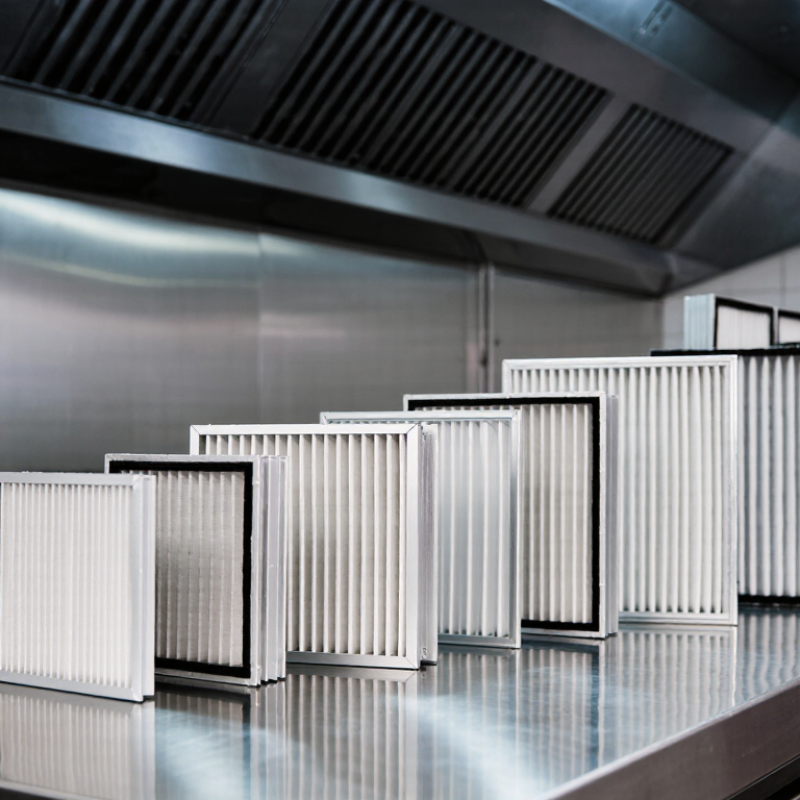
10 Best Hood Filters for Commercial Kitchens in 2026

How Commercial Kitchen Hood Filters Capture Grease and Smoke

Inside a commercial hood, a baffle filter catches grease by forcing rising air through alternating channels. As airflow turns, heavier oil droplets strike the metal surfaces, merge, and drain into a collection trough. This is impaction, not magic. The filter needs the correct position so grease drains instead of pooling along its lower edge. After a busy frying shift, the filter may look darker and feel slick; that residue shows why regular cleaning matters. Fine particles can still pass through.

Smoke behaves differently. It contains tiny airborne particles, and some may be captured when they contact the filter’s surfaces. But a standard grease filter does not remove every smoke particle, gas, or odor. Its performance depends on the filter design, cooking load, and airflow through the hood. A clogged filter can restrict that airflow, while a poorly seated one may let grease-laden air bypass its edges. Not every kitchen runs the same way. Checking for uneven buildup and following the filter’s cleaning instructions can help reveal problems before they become harder to manage.

Key Factors for Choosing a Hood Filter in 2026

Choosing a hood filter starts with the cooking you actually do. A grill station produces heavier grease than a low-volume soup line. Match the filter’s material and design to the equipment, expected heat, and grease load. Stainless steel is durable and resists corrosion, while aluminum can be lighter and easier to handle. Check that the filter fits securely, with no gaps around its edges.

Airflow matters, too. A filter that is too restrictive can reduce capture, while a poorly suited design may let grease travel farther into the exhaust system. Ask a qualified ventilation professional to confirm compatibility with the hood and fan. Look for clear cleaning instructions and a filter that staff can remove without awkward lifting. Small details matter. A filter that is difficult to wash may be cleaned less often, even when the schedule says otherwise.

Consider maintenance before purchase, not after. Baffle filters are commonly selected for commercial cooking because their angled passages help collect grease and allow routine washing. Still, no filter replaces regular cleaning of the hood and ductwork. Compare filter dimensions, construction, expected service life, and replacement availability. Then check applicable local requirements with the responsible building or fire-safety authority. One choice rarely suits every kitchen; the best fit depends on real cooking conditions, not just the product description.

Ten Top Hood Filters for Commercial Kitchens in 2026

Ten top hood filters for commercial kitchens in 2026 are best judged by cooking load, fit, and cleaning demands—not by a universal ranking. Common options include stainless-steel, aluminum, and galvanized-steel baffle filters; high-capacity, low-profile, and heavy-duty baffle designs; spark-arresting filters; listed mesh filters; and activated-carbon odor filters. Electrostatic precipitators are another useful stage, but they are not a substitute for grease filters. Check the hood and filter listings before choosing. A low-cost mesh filter may look suitable, yet it can be wrong for a particular exhaust system.

Material matters. Stainless steel usually suits frequent washing, while lighter aluminum is easier to handle but may dent. Spark-arresting designs fit certain solid-fuel applications, not every line. Carbon media targets odors, not grease. Small distinction. The U.S. Department of Energy’s Better Buildings kitchen-ventilation guidance reports that demand-controlled ventilation can reduce exhaust-fan energy use by up to 50%. That figure describes the ventilation system, not a filter’s measured performance. The distinction is easy to miss.

For dependable selection, check dimensions, airflow compatibility, grease-filter listing, and the manufacturer’s cleaning instructions. NFPA 96 ties inspection and cleaning frequency to cooking volume and equipment use, so a busy fryer station needs closer attention than a lightly used prep line. Keep a spare set. Filters that fit poorly can leave gaps, and even a sound filter performs badly when grease buildup restricts airflow. A tidy specification sheet is helpful, but kitchen conditions can still surprise you.

Comparing Filter Materials, Sizes, and Performance

Commercial hood filters differ in material, size, and how they handle grease-laden air. Stainless steel baffle filters are sturdy and commonly used in busy kitchens. Their angled channels redirect airflow and collect grease, but the heavier panels need secure, correctly sized supports. Aluminum filters weigh less and are easier to lift for cleaning. They can dent more easily, so check their condition during routine maintenance.

Mesh filters have a different structure. Their layered design can capture grease, but performance depends on the hood system and cleaning schedule. A clogged filter restricts airflow and may let grease build up where it should not. Clean filters thoroughly. Follow the equipment manual for approved cleaning methods, and replace damaged units rather than relying on appearance alone.

Size affects both fit and airflow. Measure the hood opening, then confirm the filter’s actual dimensions and required orientation; nominal sizes may not match the opening exactly. A loose edge can allow air to bypass the filter, while a panel that is too large may not seat properly. Fit matters. Compare filter type, material, and maintenance needs against the kitchen’s cooking volume. There is no universal winner, and a quick measurement can still be wrong.

10 Best Hood Filters for Commercial Kitchens in 2026 — Comparing Filter Materials, Sizes, and Performance
Filter Type Typical Material Common Nominal Sizes Performance Characteristics Best Suited For Practical Considerations
Standard baffle filter Stainless steel 10 × 20 in; 16 × 20 in; 20 × 20 in Captures grease droplets as exhaust air changes direction through the baffles. Durable and washable; pressure drop depends on the filter design and airflow. Everyday use in many commercial cooking operations. Check the hood’s specified filter size, orientation, and listing. Clean regularly to prevent grease buildup.
Heavy-duty baffle filter Welded or formed stainless steel 16 × 20 in; 20 × 20 in; 20 × 25 in Rigid construction supports frequent cleaning and demanding service. Grease separation and airflow vary by design. High-use kitchens and cooking lines with frequent filter handling. Greater weight can make removal and cleaning more demanding. Confirm that the hood can accommodate the filter.
High-capacity baffle filter Stainless steel, often with a deeper or multi-channel profile 16 × 20 in; 20 × 20 in; 20 × 25 in Designed to provide additional grease-holding capacity compared with some standard profiles; actual capacity and resistance are model-specific. Cooking operations with heavier grease loading, where the hood is designed for this filter style. “High capacity” is not a standardized performance value. Review tested specifications and hood compatibility.
Aluminum baffle filter Aluminum 10 × 20 in; 16 × 20 in; 20 × 20 in Lightweight baffle construction can capture grease while remaining easy to handle. Durability and cleaning limits depend on construction. Installations that require a lighter filter and are specifically designed for aluminum units. Check temperature, cleaning-chemical, and hood-listing requirements; aluminum is generally less robust than stainless steel.
Galvanized-steel baffle filter Galvanized steel 16 × 20 in; 20 × 20 in Rigid baffle-style grease filtration. Performance depends on the filter’s tested design and condition. Compatible hood systems where a galvanized filter is specified. Protective coating can be affected by wear or harsh cleaning. Replace a filter if corrosion or coating damage develops.
Low-profile baffle filter Stainless steel or aluminum 10 × 20 in; 16 × 20 in Compact profile can fit hoods with limited filter depth. Grease capture and airflow depend on the baffle geometry. Shallower hood assemblies or replacement applications with a matching low-profile specification. Do not choose by face dimensions alone; verify depth, installation angle, and retaining hardware.
Mesh grease filter Layered aluminum or stainless-steel mesh Common panel sizes include 10 × 20 in and 20 × 20 in Mesh intercepts some grease but can load with grease quickly and may restrict airflow as it becomes dirty. Only applications where the hood manufacturer and applicable code permit the specific filter. Not a universal substitute for a listed commercial grease filter. Verify suitability with the hood documentation and local authority.
Disposable panel filter Fibrous media in a framed panel Common panel sizes include 16 × 20 in and 20 × 20 in Media can capture particles, but disposable HVAC-style panels are not automatically suitable for grease-laden kitchen exhaust. Non-grease applications or systems expressly designed and approved for that filter. Do not install as a replacement for a required commercial hood grease filter unless the system documentation and local code allow it.
Activated-carbon odor filter Activated carbon in a cartridge or panel Size and depth vary by housing; match the specified cartridge dimensions Adsorbs some odor compounds. It is an odor-control component, not a grease-removal filter. Odor treatment downstream of appropriate grease filtration, where the exhaust system is designed for carbon media. Carbon has a finite service life and requires replacement. It must not replace the required grease-filter stage.
Electrostatic air-cleaning unit Metal collection cells with electrically charged components Unit-specific; selected by system airflow and housing dimensions Can collect fine particles using an electrical charging and collection process; performance depends on airflow, maintenance, and the unit design. Engineered exhaust systems requiring additional particulate control. This is a powered air-cleaning device, not a drop-in hood filter. Installation, cleaning, and electrical requirements are system-specific.

Selection note: Listed sizes are common nominal examples, not universal standards; actual dimensions, depth, airflow rating, and fit vary. Choose a filter approved for the specific hood and cooking application, and verify applicable codes and maintenance instructions with the hood documentation and local authority.

Cleaning, Maintenance, and Replacement Guidelines

Commercial hood filters need regular care to keep grease from collecting in the exhaust system. Let cooking equipment cool, then remove each filter carefully. Clean it with a detergent approved for the filter material, following its care instructions. A soft brush can loosen residue from the channels. Rinse thoroughly and let the filter dry before reinstalling it. Never mix cleaning chemicals. A shiny front can still hide grease on the back, so inspect both sides.

Set cleaning frequency according to cooking volume and the type of food prepared. Busy fry stations may need more frequent attention than low-volume prep areas. Check filters during routine kitchen checks for clogged channels, bent edges, corrosion, or a loose fit. Follow local fire-safety requirements and equipment guidance when setting a schedule. Replace a filter if it is cracked, badly warped, or still clogged after proper cleaning. Small gaps matter; they can let grease pass into the hood.

Tips: Keep a simple cleaning log with dates and filter locations. Use it to spot filters that soil faster. Don’t rush the final check. Confirm every filter sits securely in its frame before cooking resumes.

10 Best Hood Filters for Commercial Kitchens in 2026 — Cleaning, Maintenance, and Replacement Guidelines

NFPA 96 exhaust-system inspection intervals vary by cooking volume. The chart shows the maximum interval in months.

These are exhaust-system inspection intervals, not filter-cleaning intervals. Clean hood filters whenever grease buildup requires it, and follow applicable fire codes and local requirements.

Newsletter

Keep up on our always evolving product features and technology. Enter your e-mail and subscribe to our newsletter.