Best Garden Canopy Manufacturers in China
Choosing among the best Garden Canopy manufacturers in China takes more than comparing prices or viewing attractive product photos. Buyers need to understand how a supplier builds each structure, selects materials, and handles quality checks. A canopy may look sturdy in a showroom, yet feel unstable when wind catches its fabric. Small construction details matter.
This guide explores the qualities that distinguish capable manufacturers, including frame design, fabric options, available sizes, and customization services. It also considers communication, sample policies, production capacity, and shipping support. These details can help importers, retailers, and project planners narrow their choices with greater confidence.
Look closely at specifications. Ask whether the frame uses steel or aluminum, and request clear information about coatings, fabric weight, and connection points. Product photos alone are not proof of durability. Where possible, review samples, inspection records, and references from comparable orders. Some suppliers may describe a product as weather-resistant without explaining the conditions or test methods. That gap deserves a question.
There is no universal “best” manufacturer for every buyer. A compact garden canopy for a family patio has different needs from a large shelter used at a commercial event. Budget, order volume, branding, and delivery timelines all shape the right choice. Even careful research cannot remove every risk. It can, however, make decisions more informed and expose assumptions before a large order is placed. The sections ahead offer a practical framework for evaluating Chinese manufacturers and matching their capabilities to real project requirements.
Garden Canopies in China: Product Types, Uses, and Market Scope
Best Garden Canopy Manufacturers in China
Garden Canopies in China: Product Types, Uses, and Market Scope
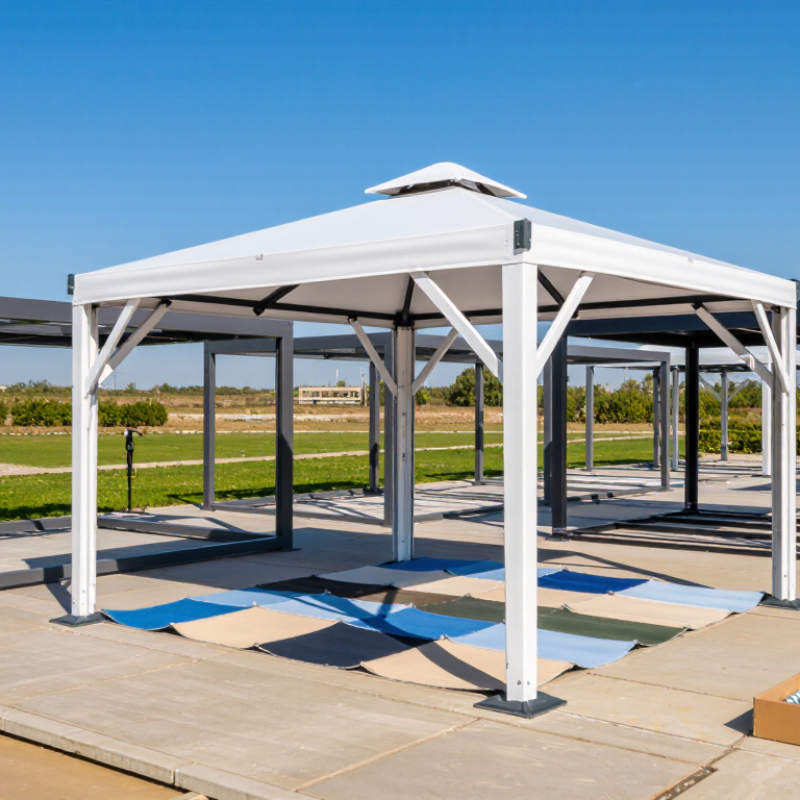
China’s garden canopy market serves homes, hospitality venues, event planners, and outdoor retailers. Common options include folding pop-up shelters, fixed patio canopies, pergola-style covers, and compact shade sails. Frames may use steel or aluminum, while covers often use treated polyester or other outdoor fabrics. Each choice suits different needs. A café patio may need steady daily shade, while a weekend market stall needs quick setup and easy transport.
Tips: Ask for frame dimensions, fabric weight, water-resistance details, and replacement-part availability. Request a sample or clear product photographs. Check how the canopy is packed and whether assembly instructions are easy to follow. Small details matter.
Manufacturers in China offer products for domestic projects and export supply, with customization often available for size, color, printing, and packaging. Before choosing a supplier, compare drawings, material specifications, sample quality, production lead times, and inspection procedures. Ask how performance claims were tested; wording alone is not proof. For windy sites, confirm suitable anchoring and safe-use guidance rather than assuming a canopy can withstand every condition. I have seen specifications look complete on paper, yet leave out practical setup details. That gap deserves a closer look.
Garden Canopy Examples: Covered Footprint
Footprints are calculated from example length × width dimensions. Compact pop-up canopies suit small gardens and temporary shade, while larger formats can cover outdoor dining or gathering areas. These are illustrative configurations, not market averages; actual sizes vary by design and manufacturer.
Frame and Fabric Specifications: Aluminum, Steel, and 300D–600D Polyester
When comparing garden canopy manufacturers in China, inspect frame material and fabric as a matched system. Aluminum is light and resists rust, making it practical for frequent setup and movement. Check tube diameter, wall thickness, joint fit, and locking pins; “aluminum frame” alone says little about strength. Steel frames often feel steadier and may suit semi-permanent use, but coating quality matters. Look closely at welds and corners for chipped paint, rough edges, or early corrosion. Heavier is not always better. Portability matters too.
Fabric denier gives a useful, though incomplete, clue. 300D polyester can be easier to handle, while 600D fabric is generally heavier and more substantial. Neither number confirms UV resistance, waterproof performance, or long-term color retention. Ask for fabric weight, coating details, seam construction, and test conditions, then compare the actual samples. Feel the underside. Check the seams after gently pulling them, and look for reinforced corners where fabric meets the frame. A tight weave can still leak at needle holes, and thick fabric may hold more heat beneath a canopy. That trade-off is easy to miss. Request clear specifications and inspect a fully assembled unit outdoors, where fit, drainage, and frame movement become easier to judge.
UV-Protection Benchmark: UPF 50+ Blocks at Least 98% of UV Radiation
Best Garden Canopy Manufacturers in China
When comparing garden canopy manufacturers in China, look beyond frame strength and fabric color. Ask for test documentation showing the canopy fabric’s UPF rating. UPF 50+ means the tested material blocks at least 98% of UV radiation under specified test conditions. It is a useful benchmark, not a promise that every spot beneath a canopy is fully protected. Seams, openings, and changing sunlight still matter.
Tips: Check that reports identify the fabric and test method. Inspect stitching and coverage, too. A rating label alone is not enough.
In a garden, protection depends on more than fabric. Sunlight can reach people from the sides, and pale paving may reflect it upward. Compare canopy dimensions, side panels, and how securely the structure stays taut. Ask whether the rating applies to the finished fabric, not just a sample from an earlier batch. That detail can be easy to miss. Fabric may also behave differently when wet, stretched, or worn, so request care guidance and replacement-fabric options. A slightly heavier canopy can feel less convenient to move, but thin fabric may offer less dependable coverage over time.
Best Garden Canopy Manufacturers in China - UV-Protection Benchmark: UPF 50+ Blocks at Least 98% of UV Radiation
| Fabric UPF Rating | Maximum UV Transmission | Minimum UV Blocked | Protection Category | Canopy Evaluation Benchmark |
| UPF 15 | About 6.67% | About 93.33% | Good protection | Entry-level reference; compare test results and intended outdoor use. |
| UPF 30 | About 3.33% | About 96.67% | Very good protection | Useful comparison point for fabrics offering stronger UV attenuation. |
| UPF 40 | Up to 2.5% | At least 97.5% | Excellent protection | Compare the rating with the test method and the exact fabric specification. |
| UPF 50 | Up to 2% | At least 98% | Excellent protection | A clear benchmark for a canopy fabric claiming UPF 50 performance. |
| UPF 50+ | No more than 2% | At least 98% | Highest listed category in common UPF rating systems | Preferred UV-protection benchmark; request a valid report for the specific fabric. |
How to read the figures: UPF is the ratio of UV radiation measured through fabric to the amount incident on it; the percentages shown are the corresponding transmission and blocking values. A fabric UPF rating does not by itself measure the protection of the entire canopy setup. Open sides, gaps, sun angle, reflected UV, and installation can affect shade protection.
How to Evaluate Manufacturers: OEM/ODM, MOQ, Certifications, and Testing
When comparing garden canopy manufacturers in China, check whether they offer OEM, ODM, or both. OEM usually means producing to your drawings and specifications; ODM may include design support and ready-to-adapt models. Ask who owns tooling, fabric patterns, and revised drawings. A clear answer matters more than a polished catalog. Request a sample with the frame, joints, canopy fabric, and stitching you expect in production.
MOQ can vary by size, fabric color, packaging, and customization. Ask for the minimum order in writing, including any setup charges and costs for mixed colors. A low MOQ sounds attractive. But confirm it applies to your exact configuration, not just a standard model. One awkward detail: sample quality may be better than the bulk run, so agree on inspection criteria before placing an order.
Review certification documents carefully. Check the issuing organization, product scope, model numbers, and validity dates; a certificate for one fabric may not cover the complete canopy. Ask for material test reports and, where practical, arrange checks on frame stability, corrosion resistance, seam strength, and water performance. Request photos or video of the test setup, plus results tied to your sample or production batch. No single report proves everything. Keep your specifications, approved sample, and inspection records aligned.
Leading Chinese Garden Canopy Manufacturers by Product Specialization
Best Garden Canopy Manufacturers in China
Chinese garden canopy manufacturers often focus on distinct product types rather than every design. Some specialize in lightweight aluminum frames with adjustable fabric roofs. Others produce steel gazebos for patios, cafés, or garden events. Timber pergolas and compact pop-up shelters serve different needs. Matching the factory’s core experience to your intended use can make specifications clearer.
A specialist should explain frame dimensions, fabric weight, drainage, and replacement-part options. Ask for drawings and material details, not just attractive photos. For a retractable canopy, check how the mechanism moves and where water drains. For a fixed structure, inspect joint design and coating samples. Small details matter. Even experienced buyers can overvalue appearance and overlook installation space or wind exposure; those assumptions deserve a second look.
Tips: Request close-up photos of welds, seams, and connectors. Compare the written specifications with the sample you receive. Clarify packing dimensions, assembly steps, and available spare parts before ordering. If a supplier’s answers stay vague, pause and ask again.